Inclement Weather Alert: February 25, 2026
Due to the impact of the snowstorm, NJIT day and evening classes will be remote on Wednesday, February 25th. Library services will be remote. Please see NJIT E-mail for additional details.
One of the primary objectives for students of the Chemistry Ph.D. program is the successful completion of an original research project in close mentorship by their research adviser and the presentation and defense of the Ph.D. dissertation. This intense research experience provides the education and training necessary for the student to substantiate his/her expertise and develop the skills necessary to become an independent professional. By the end of their Ph.D. work, students will have exhibited and/or engaged in the following:
In the Chemistry Ph.D. program, students will learn critical skills needed to pursue independent research investigations, collaborate on research projects or teach in an academic setting. Through the program, students will produce research articles that demonstrate a high level of knowledge and innovation in chemistry, as well as exhibit thoroughness in their research and honesty in their presentations to compete for positions in industry and academia. Overall we specifically aim for our Ph.D. chemistry students to meet the following learning outcomes:
Complete their Ph.D. requirements in five years or less.
The capability of learning and working independently.
Ability to find positions in their areas of chemistry.
Each Ph.D. graduate is expected to publish his/her research in respected refereed journals.
Broad understanding of major concepts, advanced theoretical principles, as well as experimental methods and findings in the field of chemistry.
Ability to effectively communicate and collaborate with professional conduct in a classroom and laboratory setting.
Demonstrate efficient problem-solving skills and ability to think critically to address problems in analytical, inorganic, organic and physical chemistry.
Demonstrate knowledge of lab procedures and adherence to ethical research conduct in order to properly conduct experiments, analyze data and interpret results.
Demonstrate effective written and oral communication skills, in order to communicate research and complex findings to specialist and general audiences.
Demonstrate effective understanding and application of modern tools and equipment used for chemical analysis.
Proficient use of computational methods used for chemical simulation.
Demonstrate effective use of research tools needed to investigate and evaluate scientific journals for relevant findings or information.
Demonstrate strict adherence to safety and chemical hygiene regulations and practices.
Starting Salary, NJIT Average
In 2016, the Food and Drug Administration hired the most employees titled “Chemistry,” with an average salary of $108,445.



The M.S. in Pharmaceutical Chemistry will provide advanced training to students interested in the pharmaceutical and health sciences. The program will train students in quantitative methods that are especially relevant to New Jersey’s high concentration of medical, pharmaceutical, environmental, and biotechnology industries.
The goal of the M.S. program is to prepare students for a successful career in the pharmaceutical industry with strong skills in modern chemical techniques, as well as an understanding of issues such as drug action, drug design, and drug development.
Students of the program will exhibit:
Through their advanced coursework and research opportunities, we aim for our students of the Pharmaceutical Chemistry M.S. program to meet the following learning outcomes:
Starting Salary, NJIT Average
Mid-Career Salary, National Average
How much does a chemist in the federal government get paid? On average, a “Chemist” in the federal government gets paid $111,329.

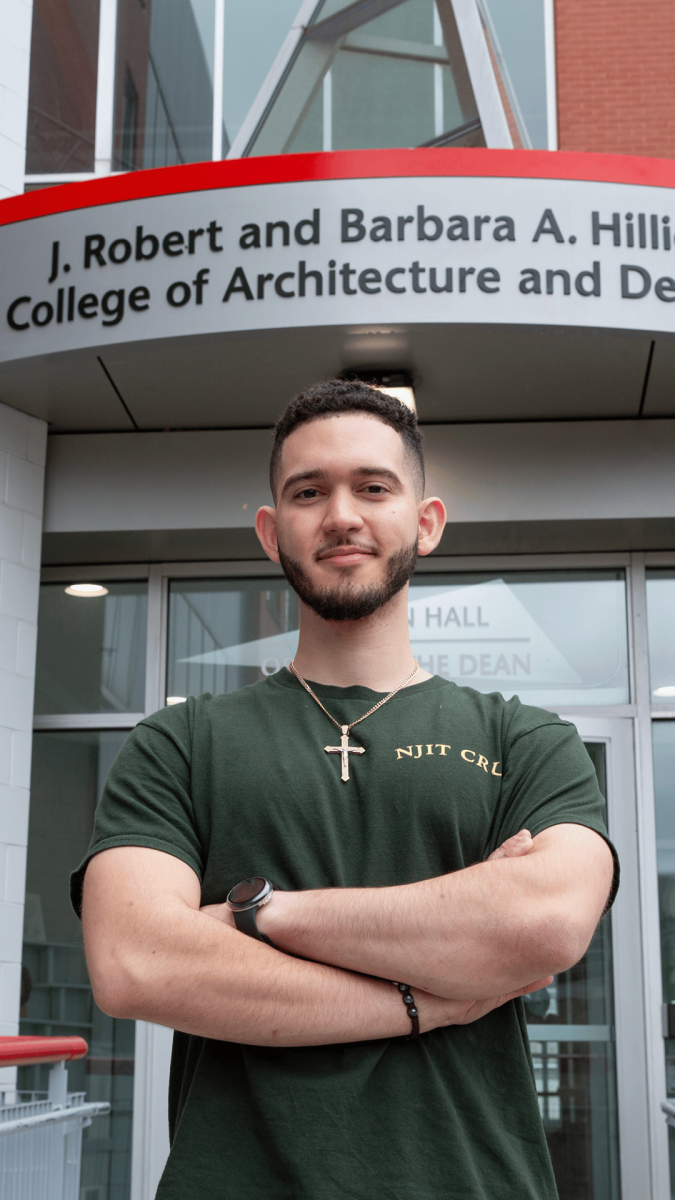
Need Help? We’re here to advise you.
In the Chemistry M.S. program, students will continue advanced theoretical studies in the chemical sciences in addition to practical, career-focused studies and research opportunities. The objective of the program is to prepare students with the foundation of knowledge and lab experience that they can apply to related Ph.D. programs or launch successful careers.
We expect that, as a student and/or graduate of the program, you will exhibit and/or engage in the following:
Continued Excellence in Chemistry: Students will be motivated to enjoy and understand chemistry and see value in further education (Ph.D.) and academic or industrial careers in their area.
Career-focused Study: Students will strengthen their education to that of a strong chemist capable of working successfully and learning independently as individuals in their target area of chemistry — within the many chemical industrial positions available. These students will serve to form strong industry–academic alliances for further interaction and benefit of both parties.
Professional Science Communication: Students will improve and raise the level of fundamental understanding in chemistry and provide research knowledge, so they will better inform the general public or future students as teachers.
The Chemistry M.S. program offers students the opportunity to earn meaningful research experience alongside faculty at the university’s cutting-edge facilities, as well as through the university’s private and institutional research partnerships. Students will be able to engage in their research focus of interest in order to learn skills they need to prepare them for successful careers in academic, industry and government research. Along with research and study in their chosen field within the chemical sciences, we specifically aim for our students to meet the following learning outcomes:
Broad understanding of major concepts, advanced theoretical principles, as well as experimental methods and findings in the field of chemistry.
Ability to effectively communicate and collaborate with professional conduct in a classroom and laboratory setting.
Demonstrate efficient problem-solving skills and ability to think critically to address problems in analytical, inorganic, organic and physical chemistry.
Demonstrate knowledge of lab procedures and adherence to ethical research conduct in order to properly conduct experiments, analyze data and interpret results.
Demonstrate effective written and oral communication skills, in order to communicate research and complex findings to specialist and general audiences.
Demonstrate effective understanding and application of modern tools and equipment used for chemical analysis.
Proficient use of computational methods used for chemical simulation.
Demonstrate effective use of research tools needed to investigate and evaluate scientific journals for relevant findings or information.
Demonstrate strict adherence to safety and chemical hygiene regulations and practices.
Starting Salary, NJIT Average
In 2016, the Food and Drug Administration hired the most employees titled “Chemistry,” with an average salary of $108,445.

The objective of the Professional Science Master’s Cell and Gene Therapy Sciences option in Master of Science in Pharmaceutical Chemistry is to prepare students, as well as professional scientists and engineers, for dynamic careers in the biopharmaceutical industry. The program will focus on providing integrated coursework and training in current biotechnology industry practices. Students of the program will combine their advanced theoretical study with meaningful hands-on expertise gained by engaging in career-focused research at the university’s cutting-edge facilities and research partnerships.
We expect that students of the program will exhibit:

Through their advanced coursework and research opportunities, we aim for students of the program to meet the following learning outcomes:
Starting Salary, NJIT Average
In 2016, the Food and Drug Administration hired the most employees titled “Chemistry,” with an average salary of $108,445.
Need Help? We’re here to advise you.
The B.S. in Chemistry prepares students for a career as a professional chemist, investigating the composition, structure, properties and change of matter. Chemistry mainly studies interactions and transformations between atoms and molecules. Chemistry is also a central science because it bridges other sciences such as physics and biology. Furthermore, chemistry is the foundation for scientists and engineers to improve the life of humankind.
Students and/or graduates of the program will strive for success in the following objectives:
The B.S. in Chemistry is constructed to provide students the fundamental knowledge and laboratory skills to enter the workforce at different levels. The degree emphasizes a quantitative methodological approach to chemistry. By the end of the course, students should be able to meet the following learning outcomes:
Explain atomic structure and write chemical formula for simple compounds
Perform chemical calculations systematically using dimensional analysis or multiplication by one
Calculate moles, molecular and empirical formula of a compound from basic principles
Balance chemical equations
Identify various types of chemical reactions and apply the concept of limiting reagent to calculate percentage yield of products
Apply various gas laws and the first law of thermodynamics to chemical problems
Calculate the energy changes in chemical reactions
Explain the quantum mechanical basis for the sub-structure of the atom
Write the electronic configuration for the elements in the periodic table
Draw the Lewis dot structures for simple molecules
Use VSEPR to predict shapes of molecules and whether a molecule will have a dipole moment
Identify sigma and pi bonds and explain the hybridization of the molecules
Describe the differences in bonding patterns between solids, liquids, and gases
Predict changes in freezing point, elevation in boiling point and osmotic pressure when a solute dissolves in a pure solvent
Starting Salary, NJIT Average
In 2016, the Food and Drug Administration hired the most employees titled “Chemistry,” with an average salary of $108,445.
