Bachelor of Arts

Degree Overview

  • Delivery Format: on-campus
  • Required Credits: 136

Program Details

Our mission is to prepare you to enter the workforce as a skilled and experienced engineer who is ready on day one to jump onto complex projects in research labs and companies with your own ideas and strategies. We expect that, as a student or graduate of the Chemical Engineering B.S. program, you will exhibit the following in these areas:

  • Engineering Practice: Graduates of our program are successfully engaged in the practice of chemical engineering within industry, academe, and government working in a wide array of technical specialties including but not limited to process and plant design operations.
  • Professional Growth:  Graduates of our program advance their skills through professional growth and development activities such as graduate study in engineering or complementary disciplines, and continuing education; some graduates will transition into other professional fields such as business, law, and medicine through further education.
  • Service: Graduates of our program perform service to society and the engineering profession through participation in professional societies, government, civic organizations, and humanitarian endeavors.
 

What You Will Learn:

In the Chemical Engineering program, you will gain a foundational and practical understanding of engineering principles and design, while also learning to apply skills from many disciplines toward solving real-world problems.  To that end, we will encourage you to seek out experiences and mentors on- and off-campus to advance your knowledge of the field by learning at the sides of professional engineers. We view this as critical to jumpstarting your careers.

We specifically aim for our students to meet the following learning outcomes:

  • An ability to identify, formulate, and solve complex engineering problems by applying principles of engineering, science, and mathematics.
  • An ability to apply engineering design to produce solutions that meet specified needs with consideration of public health, safety, and welfare, as well as global, cultural, social, environmental, and economic factors.
  • An ability to communicate effectively with a range of audiences.
  • An ability to recognize ethical and professional responsibilities in engineering situations and make informed judgments, which must consider the impact of engineering solutions in global, economic, environmental, and societal contexts.
  • An ability to function effectively on a team whose members together provide leadership, create a collaborative environment, establish goals, plan tasks, and meet objectives.
  • An ability to develop and conduct appropriate experimentation, analyze and interpret data, and use engineering judgment to draw conclusions.
  • An ability to acquire and apply new knowledge as needed, using appropriate learning strategies.

Admissions & curriculum

Explore this area of study

Chemical Engineering Salaries

$75,900

Starting Salary, NJIT Average

$86,991

Mid-Career Salary, National Average

NJIT’s Chemical Engineering program is in the top 100 in the country

Career Prospects

Where do Chemical Engineering majors work?

Common Job Titles
  • Chemical Engineer
  • Process Engineer
  • Manufacturing Engineer
  • Product Engineer
  • Research And Development Engineer
Top Employers
  • Colgate-Palmolive
  • FM Global
  • L'Oreal USA
  • Phillips 66
  • TEVA Pharmaceuticals
What our students are saying
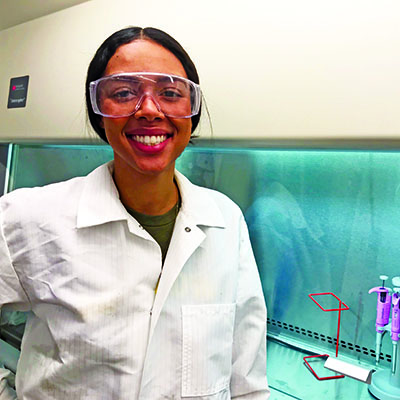
  • Kerri-Lee  Chintersingh
    I’m interested in current challenges the energy community faces."
    Kerri-Lee Chintersingh
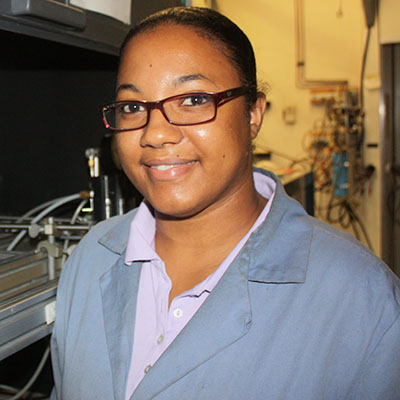
  • Victoria Harbour
    What I love about research at NJIT is that primary investigators draw on creative and hardworking thinkers throughout the campus community. "
    Victoria Harbour
  • Mehnaz  Mursalat
    I’m working on microfluidic biosensors for cancer detection. We hope this technology will replace invasive biopsies. "
    Mehnaz Mursalat

Degree Overview

  • Delivery Format: on-campus
  • Required Credits: 130

Program Details

Manufacturing Engineering Technology will prepare graduates with the technical and leadership skills necessary for:

• Manufacturing competitiveness.

• Entering careers in manufacturing process and systems design, operations, quality, continuous improvement, lean manufacturing and sustainability.

What You Will Learn:

Graduates must:

  • Demonstrate an ability to apply the following to the solution of manufacturing programs to achieve manufacturing competitiveness:
  • Materials and manufacturing processes.
  • Product design process, tooling and assembly.
  • Manufacturing systems, automation and operations.
  • Statistics, quality and continuous improvement, and industrial organization and management.
  • Have a capstone or integrating experience that develops and illustrates student competencies in applying both technical and nontechnical skills in successfully solving manufacturing problems.

Admissions & curriculum

Explore this area of study

Manufacturing Engineering Technology Salaries

$49,946

Starting Salary, NJIT Average

$66,541

Mid-Career Salary, National Average

Manufacturing Engineers focus on the design and operation of integrated systems for the production of high-quality products.


Career Prospects

Where do Industrial Engineering Technology majors work?

Common Job Titles
  • Manufacturing Engineer
  • Operations Manager
  • Quality Engineer
  • Automation Engineer
Top Employers
  • Arora Engineers Inc.
  • The Boeing Company
  • The Dow Chemical Company
  • Lockheed Martin
What our students are saying
  • Seif Issa
    Getting a degree from a great school like NJIT gave me the opportunity to choose the job I wanted."
    Seif Issa
  • Hilsson Angeles
    NJIT was my dream school."
    Hilsson Angeles

Degree Overview

  • Delivery Format: on-campus
  • Required Credits: 128

Program Details

NJIT’s Electrical Engineering program provides EE students with a rigorous learning experience and prepares them for professional careers. In order to meet the mission of both the institution and the Electrical and Computer Engineering Department, we expect that as a graduate of the Electrical Engineering B.S. program, you will exhibit the following:

  • Graduates will succeed in electrical engineering areas or other fields that require analytical and professional skills.
  • Graduates will pursue professional development, including continuing or advanced education, relevant to their career plans.
  • Graduates will contribute to their fields or professions and society

What You Will Learn:

By the time they graduate, our undergraduate Electrical Engineering students will have spent considerable time on complex design projects learning research techniques, strategy and execution, working alongside experts in many facets of this diverse discipline. They will gain fundamental knowledge about the Electrical Engineer’s approach to understanding and solve device and systems-level challenges. Along with expertise in designing and managing a project, we expect all of our students to demonstrate that they possess the following knowledge and skill sets:

  • An ability to apply knowledge of mathematics, science, and engineering
  • An ability to design and conduct experiments, as well as to analyze and interpret data
  • An ability to design a system, component, or process to meet desired needs within realistic constraints such as economic, environmental, social, political, ethical, health and safety, manufacturability and sustainability
  • An ability to function on multidisciplinary teams
  • An ability to identify, formulate, and solve engineering problems
  • An understanding of professional and ethical responsibility
  • An ability to communicate effectively
  • The broad education necessary to understand the impact of engineering solutions in a global, economic, environmental, and social context
  • A recognition of the need for, and an ability to engage in, life-long learning
  • A knowledge of contemporary issues
  • (An ability to use the techniques, skills, and modern engineering tools necessary for engineering practice

Admissions & curriculum

Explore this area of study

Electrical Engineering Salaries

$67,500

Starting Salary, NJIT Average

$72,564

Mid-Career Salary, National Average

Top Ranked Online Master's in Engineering Programs - U.S. News & World Report, 2025

Career Prospects

Where do Electrical Engineering majors work?

Common Job Titles
  • Power Systems Engineer
  • Telecommunication Engineer
  • Computer Network Architect
  • Control Systems and Robotics Engineer
  • Electronics Engineer
Top Employers
  • National Grid
  • Dominion Energy
  • Exelon Corporation
  • PSE&G
  • General Electric (GE) Power
What our students are saying
  • Cem  Erkam
    Everything is so close! I have everything I want - food, shopping, friends, and New York City. I go into Manhattan every weekend."
    Cem Erkam
  • Abbas  Kiani
    As a doctoral candidate, NJIT gave me the best opportunity to perform interesting and instructive projects."
    Abbas Kiani
  • Olivia   Hadlaw
    While my main focus is on my classes, I'm always looking for opportunities outside of them such as traveling to conferences."
    Olivia Hadlaw

Degree Overview

  • Delivery Format: on-campus
  • Required Credits: 129

Program Details

The Computer Engineering BS Program will provide students with a rigorous learning experience and prepare them for professional careers in the field. We expect each of our graduates to:

  • Succeed in computer engineering areas or other diverse fields that require analytical and professional skills.
  • Pursue professional development, including continuing or advanced education, relevant to their career plans.
  • Contribute to their fields or professions and society.

What You Will Learn:

While students in the Computer Engineering B.S. program will learn a wide range of skills, we specifically aim for all of our students to meet the following learning outcomes:

  • An ability to apply knowledge of mathematics, science, and engineering;
  • An ability to design and conduct experiments, as well as to analyze and interpret data;
  • An ability to design a system, component, or process to meet desired needs within realistic constraints such as economic, environmental, social, political, ethical, health and safety, manufacturability and sustainability;
  • An ability to function on multidisciplinary teams;
  • An ability to identify, formulate, and solve engineering problems;
  • An understanding of professional and ethical responsibility;
  • An ability to communicate effectively;
  • The broad education necessary to understand the impact of engineering solutions in a global, economic, environmental, and social context;
  • A recognition of the need for, and an ability to engage in, life-long learning;
  • A knowledge of contemporary issues;
  • An ability to use the techniques, skills, and modern engineering tools necessary for engineering practice

Admissions & curriculum

Explore this area of study

Computer Engineering Salaries

$86,400

Starting Salary, NJIT Average

$93,915

Mid-Career Salary, National Average

NJIT’s graduate programs in Computer Engineering are ranked in the top 100 in the U.S

Career Prospects

Where do Computer Engineering majors work?

Common Job Titles
  • Software Engineer
  • Computer Hardware Design Engineer
  • Network Engineer
  • Computer Systems Engineer
  • Embedded Systems Engineer
Top Employers
  • Harris Corporation
  • Altice USA
  • Cognizant Technology Solutions
  • Schneider Electric
  • Public Service Enterprise Group
What our students are saying
  • James  Basuino
    My courses in machine learning are a key source of inspiration as I head off to solve problems as an R&D engineer."
    James Basuino
  • Jingjing  Yao
    I chose to complete my Ph.D. at NJIT because I knew I would receive the professional training I needed to prepare for an academic career."
    Jingjing Yao
  • Rozana  Atieh
    As a commuter, it was really easy to make friends. NJIT has a very tight-knit community that welcomes you. I love NJIT! "
    Rozana Atieh

Degree Overview

  • Delivery Format: on-campus
  • Required Credits: 120

Program Details

The mission of the Department of Civil and Environmental Engineering is to educate a diverse student body to be employed in the engineering profession, to encourage research and scholarship among our faculty and students and to promote service to the engineering profession and society. Our program objectives are reflected in the achievements of our recent alumni in these areas:  

  • Engineering Practice: Alumni will successfully engage in the practice of civil engineering within industry, government, and private practice, working toward sustainable solutions in a wide array of technical specialties including construction, transportation, water resources and environmental, geotechnical and structural engineering
  • Professional Growth: Alumni will advance their skills through professional growth and development activities such as graduate study in engineering, research and development, professional registration and continuing education; some graduates will transition into other professional fields such as business and law through further education.  
  • Service: Alumni will perform service to society and the engineering profession through membership and participation in professional societies, government, educational institutions, civic organizations, charitable giving and other humanitarian endeavors.

What You Will Learn:

By the time they graduate from the Civil Engineering program, our students should have acquired the following:

  1. An ability to identify, formulate and solve complex engineering problems by applying principles of engineering, science and mathematics
  2. An ability to apply engineering design to produce solutions that meet specified needs with consideration of public health, safety and welfare, as well as global, cultural, social, environmental and economic factors
  3. An ability to communicate effectively with a range of audiences
  4. An ability to recognize ethical and professional responsibilities in engineering situations and make informed judgments, which must consider the impact of engineering solutions in global, economic, environmental and societal contexts
  5. An ability to function effectively on a team whose members together provide leadership, create a collaborative and inclusive environment, establish goals, plan tasks and meet objectives
  6. An ability to develop and conduct appropriate experimentation, analyze and interpret data and use engineering judgment to draw conclusions
  7. An ability to acquire and apply new knowledge as needed, using appropriate learning strategies

Admissions & curriculum

Explore this area of study

Civil Engineering Salaries

$74,600

Starting Salary, NJIT Average

$74,723

Mid-Career Salary, National Average

Top ranked MS in Civil Engineering

Career Prospects

Where do Civil Engineering majors work?

Common Job Titles
  • Civil Engineer
  • Geotechnical Engineer
  • Structural Engineer
  • Design Engineer
  • Construction Management Engineer
Top Employers
  • AECOM
  • Jacobs Engineering Group Inc.
  • WSP Parsons Brinckerhoff
  • HNTB
  • Langan
What our students are saying
  • Vatsal  Shah
    NJIT provides its students with the technical skills required to be an engineer, but also the mindset needed to tackle the challenges within our region."
    Vatsal Shah
  • Aswina  Ranasinghe
    Professors in my department go out of their way to make sure students succeed. "
    Aswina Ranasinghe
  • Andrew  Pennock
    What’s unique and special about NJIT is how available professors are to talk one-on-one to discuss career directions."
    Andrew Pennock

Degree Overview

  • Delivery Format: on-campus
  • Required Credits: 134-136

Program Details

The BME program prepares students for productive careers related broadly to biomedical engineering.  It is anticipated that BME graduates will embark upon diverse career paths: serve the medical device, pharmaceutical, and biotechnology industries, and use their education in a variety of related endeavors including medicine, dentistry, law, business, government, and other engineering and scientific fields.

While working within their selected career path, we expect that our alumni will demonstrate the following traits:

  • BME alumni are integrators and we expect our graduates to integrate their fundamental knowledge of sciences, mathematics, liberal arts, and engineering analysis into actions that address and solve a wide range of problems, especially those related to medicine and biology.
  • BME alumni continue their professional growth, and we expect our graduates to advance their skills through professional growth and development opportunities provided by participation in a professional society, continuing education, or graduate study in engineering or other professional fields.
  • BME alumni are engaged in service, and we expect our graduates to engage in service to their chosen professional societies as well as their local, national or global communities.

What You Will Learn:

At graduation, undergraduate Biomedical Engineering students will have spent considerable time in labs learning research techniques, strategy and execution working alongside renowned experts in many facets of this diverse discipline. They will gain fundamental knowledge about the Biomedical Engineer’s approach to understanding and solving healthcare challenges. Along with expertise in a specialty, we expect all of our students to demonstrate that they possess the following knowledge and skill sets:

  • An ability to apply knowledge of mathematics, science, and engineering
  • An ability to design and conduct experiments, as well as to analyze and interpret data
  • An ability to design a system, component, or process to meet desired needs within realistic constraints in these frameworks: economic, environmental, social, political, ethical, health and safety, manufacturability and sustainability
  • An ability to function on multidisciplinary teams
  • An ability to identify, formulate and solve engineering problems
  • An understanding of professional and ethical responsibility
  • An ability to communicate effectively
  • The broad education necessary to understand the impact of engineering solutions in a global, economic, environmental and societal context
  • A recognition of the need for, and an ability to engage in, life-long learning
  • A knowledge of contemporary issues
  • An ability to use the techniques, skills and modern engineering tools necessary for engineering practice.

Admissions & curriculum

Explore this area of study

Biomedical Engineering Salaries

$68,000

Starting Salary, NJIT Average

$80,767

Mid-Career Salary, National Average

#85 in Best Engineering Schools

Career Prospects

Where do Biomedical Engineering majors work?

Common Job Titles
  • Medical Device Engineer
  • Clinical Engineer
  • Biomedical Research Scientist
  • Rehabilitation Engineer
  • Regulatory Affairs Specialist
Top Employers
  • Cognizant Technology Solutions
  • Maquet Getinge Group
  • Upstart Product Development
  • Stryker Orthopaedics
  • Edwards Lifesciences
What our students are saying
  • Margaret  Christian
    I’m really grateful to the Honors College for giving me the chance to do research."
    Margaret Christian
  • Madhusan  Duwadi
    I was able to get research experience during my freshmen year, which is really cool."
    Madhusan Duwadi
  • Brianna  Bohn
    We do a lot of labs in my major and there is so much genuine interaction with professors in these classes and lots of teamwork. "
    Brianna Bohn

Contact Us

Need Help? We’re here to advise you.

Degree Overview

  • Delivery Format: on-campus
  • Required Credits: 128

Program Details

  • Enable students to develop basic computer programming, database and security fundamentals that can be applied to the medical domain.
  • Enable students to develop expertise in Medical Software, Electronic Health Records, Wireless Medical Devices, Medical Web/App Design, Big Data, Intelligent Systems applied to diagnosis and Intelligent Home Design to support independent living as people age.

Community College Articulation Agreements

Agreements between several Community Colleges and NJIT have been drawn up which guarantee that students with a specific degree from the Community College will be accepted in this program... [Learn More]

What You Will Learn:

  • Basic computer programming, database and security fundaments that can be applied to any domain.
  • Choice of concentration to master a field of interest: Electronic Health Records, Medical Web/App Design, Medical Software, Big Data, Intelligent Systems/Homes (cloud-based data analytics using systems such as Hadoop).

Admissions & curriculum

Explore this area of study

Medical Informatics Technology Salaries

$63,000

Starting Salary, NJIT Average

$67,500

Mid-Career Salary, National Average

Employment for health information professionals is expected to grow by 23 percent from 2012 to 2022.

Career Prospects

Where do Biomedical Engineering Technology majors work?

Common Job Titles
  • Clinical Engineer
  • Process Engineer
  • Quality Assurance Engineer
  • Medical Device Engineer
  • Project Engineer
Top Employers
  • Collibra
  • NJII
  • St. Joseph's Healthcare System
  • SJHS
  • Montefiore Information Technology
What our students are saying
  • Seif Issa
    Getting a degree from a great school like NJIT gave me the opportunity to choose the job I wanted."
    Seif Issa
  • Hilsson Angeles
    NJIT was my dream school."
    Hilsson Angeles

Contact Us

Need Help? We’re here to advise you.