Degree Overview

  • Delivery Format: on-campus
  • Required Credits: 12

Program Details

Students will learn to develop sustainable solutions to environmental problems, preparing to work with regional, national and global communities to protect the environment and improve water quality. Jobs in this field are essential in planning, designing and constructing water and wastewater treatment plants, solid waste disposal systems, site remediation approaches and emission control measures.

What You Will Learn:

  • Physical Processes of Environmental Systems - Physical processes in various media (open water, porous media) under various hydraulic regimes (laminar and turbulent). Transport by diffusion, convection, and dispersion is considered along with absorption.
  • Environmental Microbiology - Microbiology of natural and human impacted environment, fundamental microbiology in water treatment engineering, microbial detection methodologies, waterborne disease outbreaks, microbial risk assessment, biotechnologies for renewable energy, and other emerging topics
  • Site Remediation - Regulations, cleanup standards, remedial investigations, feasibility studies, risk assessment, and safety. Established and innovative cleanup technologies such as incineration, containment, bioremediation, vapor extraction and ground water recovery.
  • Physical and Chemical Treatment - Physical and chemical operations and processes employed in the treatment of water and wastewater. Gas transfer, coagulation, flocculation, solid-liquid separation, filtration, and disinfection.
  • Biological Treatment - Principles of evaluation and control of water pollution that describe aerobic treatment processes such as oxidation ponds, trickling filters, and activated sludge; and anaerobic processes, and sludge handling and disposal as wall as biodegradability study techniques for various wastes.
  • Environmental Impact Analysis - Environmental problems, federal and state standards, methodology for developing impact statements, case studies based on recent experience, basis for assessment and decision making.
  • Stormwater Management - With an emphasis on design practices, you will learn regulatory framework, an overview of structural and non-structural BMPs, groundwater recharge analysis, estimate of runoff, and design of detention basin and drainage systems.
  • Geotechnical Aspects of Solid Waste - municipal landfill, dredged materials, coal and incinerator ashes, identification and classification of waste materials, geological criteria for siting, laboratory and field testing, design for impoundment and isolation of waste, methods of stability analyses of landfill sites, techniques for stabilizing waste sites, leachate and gas collection and venting systems.
  • Legal Aspects in Environmental Engineering - Control of air, water, and solid waste pollution by federal, state, and local government statutes and international law. Preparation of environmental impact statements and the right of private citizens to bring suit under federal clean air and water pollution legislation are discussed, as well as limitations on these rights.

Admissions & curriculum

Explore this area of study

Environmental Engineering Salaries

$48,750

Starting Salary, NJIT Average

$63,447

Mid-Career Salary, National Average

NJIT’s graduate programs in Environmental Engineering rank in the top 75 in the U.S.
Career Prospects

Where do Environmental Engineering majors work?

Common Job Titles
  • Environmental Engineer
  • Water Resources/Drainage Engineer
  • Environmental Specialist
  • Senior Environmental Project Manager
  • Air Quality Engineer
Top Employers
  • AECOM
  • Jacobs Engineering Group Inc.
  • WSP Parsons Brinckerhoff
  • Langan
  • Stantec
What our students are saying
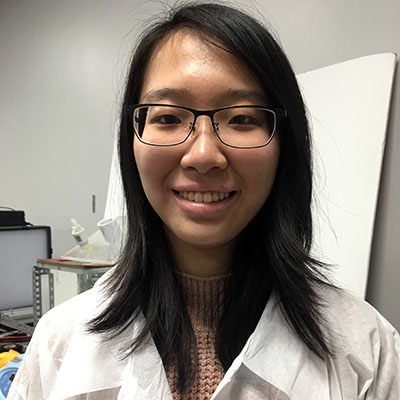
  • Wenxin  Ye
    I’m from Beijing, and I’ve been aware of environmental issues since I was a kid. I’m here to learn how to improve and fix these problems."
    Wenxin Ye
  • Ahmed Khaled  Abdella
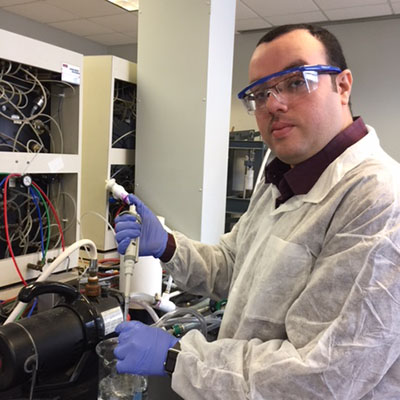
    I work on nanobubbles. My target is to help develop simple, cheap, eco-friendly and safe technologies for all parts of the world."
    Ahmed Khaled Abdella
  • Hilsson Angeles
    NJIT was my dream school."
    Hilsson Angeles

Degree Overview

  • Delivery Format: on-campus
  • Required Credits: 12

Program Details

What will I learn?

  • Data Visualization and Interpretation – Theory and practical knowledge about how to design, read, and understand visual representations of data. Hands-on knowledge about state-of the-art tools, e.g., Tableau, Python, and web-based libraries like D3.js.
  • Spatio-Temporal Urban Analytics - Essential concepts and skills needed to efficiently develop spatiotemporal thinking. Big data analysis and visualization techniques applied to spatio-temporal urban data. Knowledge about the R programming environment.
  • Elements of Visual Design- theories of design, techniques of composition, and technologies of electronic and print publishing. Modules include both design principles and hands-on practice in visual literacy, layout and design, and graphic tools. 
  • Advanced Information Design -  Design and creation of multimedia objects, usability heuristics, navigation theory, contemporary design practices and online community building
  • Visual Informatics for Network and Flow  - Knowledge of open source tools to visualize and interpret network and flow data. Collect network and flow data and create their own visual applications.
  • Customer Discovery – User-centered design evaluation techniques for understanding potential user's practice, preferences and mental models. Knowledge of a basic set of qualitative user/customer discovery methods which is essential for both the lean startup entrepreneur and those engaged in design innovation.
  • User Experience Design – Process of creating compelling interaction designs for digital products from the idea stage into creating a simple and intuitive user experience blueprint. You will 'learn by doing' in a team environment, enabling you to practice the techniques with coaching from instructors. 
  • Web Systems Development - Learn web development principles, as well as professionally relevant skills including industry standards, conventions, and procedures within large-scale programming projects. 
  • Data Analytics for Information Systems - Learn and conduct Python, MATLAB and R based manipulation of data, along with graduate level introduction to data analysis, probability and statistics from an information systems perspective.

What You Will Learn:

Admissions & curriculum

Contact Us

Need Help? We’re here to advise you.

Degree Overview

  • Delivery Format: on-campus
  • Required Credits: 12

Program Details

Covers an array of topics including information retrieval, multimedia systems, open source web design, web mining, web services, middleware, and authentication, as well a variety of media such as text, images, video, and audio — all to produce a rich, rewarding, dynamic and data-driven web experience. 

View the Curriculum

What You Will Learn:

Students in the Web Systems Development Graduate Certificate Program will learn a wide range of leadership and management skills in addition to the following skills: 

  • Java programming. 
  • Information retrieval. 
  • Web mining

Admissions & curriculum

Explore this area of study

Information Systems Salaries

$70,000

Starting Salary, NJIT Average

$74,000

Mid-Career Salary, National Average

College Factual ranked NJIT the No. 1 Best Computer Information Systems College Nationally.

Career Prospects

Where do Information Systems majors work?

Common Job Titles
  • Consulting Analyst
  • Logistics Specialist
  • Advanced Repair Agent
  • Information Technology Resident
Top Employers
  • Accenture
  • Amazon
  • Google Inc.
  • PJM Interconnection
  • Geek Squad
What our students are saying
  • Pallavi Moulick
    I got the best out of my courses and landed a full-time job after my first year."
    Pallavi Moulick
  • Hilsson Angeles
    NJIT was my dream school."
    Hilsson Angeles
  • Seif Issa
    Getting a degree from a great school like NJIT gave me the opportunity to choose the job I wanted."
    Seif Issa

Contact Us

Need Help? We’re here to advise you.

Degree Overview

  • Delivery Format: on-campus
  • Required Credits: 12

Program Details

The graduate certificate in User Experience Essentials (UXE) exposes students to the process of usability testing and knowledge transfer between general audiences, technology designers, programmers, project managers, and administration.

What You Will Learn:

Students in the User Experience Essentials Graduate Certificate Program will learn a wide range of leadership and management skills in addition to the following skills: 

  •  Audience analysis (audience theory and research traditions, audience formation and experience, reception studies, etc.).
  •  User experience theories and applications (uses and gratifications, media functions versus media use, information-processing theory, etc.).
  •  Empirical communications research methodologies (content analysis, focus groups, in-depth interviews, thematic analysis, and surveys).
  •  Ability to draw inferences and make actionable recommendations based on user experience data.
  •  A research design that is user-centered, process-oriented and motivated by outcomes.

Admissions & curriculum

Contact Us

Need Help? We’re here to advise you.

Degree Overview

  • Delivery Format: on-campus
  • Required Credits: 12

Program Details

Examines urban travel patterns and community and land activity through case studies, along with various urban problems subject to engineering analysis and the modern techniques used to solve them. Additionally, reviews distribution logistics that emphasize system-engineering techniques to optimize corporate profit and customer service, as well as traffic laws, ordinances, regulatory measures, signal timing, parking and more. 

View the Curriculum

What You Will Learn:

Students in the Transportation Studies Graduate Certificate Program will learn a wide range of leadership and management skills in addition to the following: 

  • Fundamental concepts in transportation planning
  • Traffic Control
  • Mathematical modeling and simulation
  • Transportation systems analysis

Admissions & curriculum

Explore this area of study

Transportation Salaries

$69,000

Starting Salary, NJIT Average

$72,000

Mid-Career Salary, National Average

NJIT’s Civil Engineering graduate programs rank in the top 100 in the country.

Career Prospects

Where do Transportation majors work?

Common Job Titles
  • Transportation Engineer
  • Traffic Engineer
  • Intelligent Transportation Systems (ITS) Engineer
  • Fleet Operations Manager
  • Transportation System Analyst
Top Employers
  • New Jersey Department of Transportation (NJDOT)
  • The Port Authority of NY & NJ
  • NJ Transit
  • UPS
  • CSX Railroad
What our students are saying
  • Seif Issa
    Getting a degree from a great school like NJIT gave me the opportunity to choose the job I wanted."
    Seif Issa
  • Hilsson Angeles
    NJIT was my dream school."
    Hilsson Angeles

Contact Us

Need Help? We’re here to advise you.

Degree Overview

  • Delivery Format: on-campus
  • Required Credits: 12

Program Details

Enables students to dig deep into advanced professional and technical communication and quickly apply their newfound knowledge.

What You Will Learn:

Students in the Technical Communication Essentials Graduate Certificate Program will learn a wide range of leadership and management skills in addition to the following skills: 

  •  Technical and report writing. 
  •  Usability analysis. 
  •  Ethics. 
  •  Information literacy. 
  •  Elements of visual design (design theories, composition techniques, electronic and print publishing technologies). 
  •  Content management and information architecture focusing on methodologies such as DITA and DocBook (in-demand proprietary software free to students). 
  •  Professional and technical editing.

Admissions & curriculum

Contact Us

Need Help? We’re here to advise you.

Degree Overview

  • Delivery Format: on-campus
  • Required Credits: 12

Program Details

Enables students to build flexible manufacturing solutions for small- to medium-size companies, and develop methodologies for evaluating the manufacturability of new designs from an assembly perspective. This program relates to all manufacturing industries and all transportation and distribution service industries. 

The confluence of information technology and systems engineering has made the roles of industrial engineering and engineering management relevant in a wide range of industries. The supply chain contributes a very substantial portion to total product cost.  Managing it requires the optimization of the entire system and its various components, that include among others, transportation, inventory, warehousing, materials handling, and customer service.  

View the Curriculum

What You Will Learn:

Students in the Supply Chain Engineering Graduate Certificate Program will learn a wide range of leadership and management skills in addition to the following skills: 

  • Supply chain design, implementation and control, and supply chain analytics concepts. 
  • Distribution logistics (transportation modes, inventory policies, warehousing and order processing, and more). 
  • Management science (linear programming, Markov chains, queuing systems, and deterministic and stochastic inventory models, and more) 
  •  Project management (cost considerations, cash flow forecasting, financial and performance control, documentation). 
  •  Advanced engineering statistics (probability, statistical inference, randomized blocks, factorial design, Taguchi’s contributions and more)
  • Engineering cost and production economics (alternative investment evaluation, budgeting activity-based costing, quality costs, life-cycle management and more).


The NJIT supply chain initiative will help enable you to build flexible manufacturing solutions for use within small to medium-sized companies. You will help develop a methodology for evaluating the quality manufacturability of new designs from an assembly perspective. This program is related to all manufacturing industries and all transportation/distribution related service industries.

Admissions & curriculum

What our students are saying
  • Hilsson Angeles
    NJIT was my dream school."
    Hilsson Angeles
  • Seif Issa
    Getting a degree from a great school like NJIT gave me the opportunity to choose the job I wanted."
    Seif Issa

Contact Us

Need Help? We’re here to advise you.