Inclement Weather Alert: February 25, 2026
Due to the impact of the snowstorm, NJIT day and evening classes will be remote on Wednesday, February 25th. Library services will be remote. Please see NJIT E-mail for additional details.
Master's of Science
One of the primary objectives of the Physics M.S. program is to provide students with the academic foundation and research experience they will need for professional development, as well as for graduate study at the Ph. D. Level. Through their coursework and research during their M.S. theses project, majors are prepared for a successful career or to become Ph.D. candidates in physics, applied physics, materials science and related disciplines. Thus, students will demonstrate and take part in:
Academic Excellence: Students will excel in academic study of principles of physics as well as research focuses they choose from a wide range of areas, such as optical science, astronomy and solar-terrestrial physics, laser physics and others.
Real-World Experience: Students will gain expertise in basic laboratory equipment and field techniques through on-campus opportunities at NJIT and the university’s distinguished research partnerships.
Communication and Collaboration: Students will effectively collaborate on research toward their thesis and may play a supporting role in the form of searching and preparing literature reviews based on research papers that are relevant to the topic of their theses.
If you are interested in an advanced research-driven education in applied physics, engineering and technology, the Applied Physics M.S. program offers a distinguished and diverse academic environment to take your next step. While students in the Applied Physics M.S. Program get to earn a wide range of knowledge and skills from areas that they are passionate about, we specifically aim for our students to meet the following learning outcomes:
Upon graduation, students should acquire the fundamental set of knowledge covered by the required courses.
Upon graduation, most of the students who consider the next level of Graduate education should be able to prepare for Ph.D. qualifier exams in Physics and Applied Physics at NJIT or other Universities.
Upon graduation, most of the students should be able to acquire a necessary depth of knowledge in the area of specialization, such as optics, biophysics, material science, or astronomy to be admitted to and successfully proceed with the Ph.D. studies at NJIT or other Universities.
Upon graduation, students should be able to acquire skills to identify scientific problems, perform literature review on the problem, and identify the solution venues in research environment.
Upon graduation, students should be able to demonstrate the ability to function effectively as a Member of a Research Team with improved qualification as Members of Technical Staff in Industry. Students should become more knowledgeable and competitive on a job market.
Upon graduation, a student should be able to formulate a research question and develop a systematic approach to address it, at both the conceptual and technical levels.
Starting Salary, NJIT Average
Mid-Career Salary, National Average
This degree also opens a door to continue education at the graduate level.



The Master of Science in Biology is designed to provide students with advanced knowledge of both plant and animal biology, as well as microbiology. Through their advanced study and research experiences, the program aims for graduates:
To be provided with a broad background in the life sciences at different levels of biological organization (from molecular, cellular, and organismal biology, to populations, communities and ecosystems).
To be provided with a comprehensive education in biology that stresses scientific reasoning and problem solving across the spectrum of disciplines within biology.
To be provided with extensive hands-on training in laboratory skills and/or field techniques.
To be provided thorough training in written and oral communication of scientific information.
To be engaged in scientific inquiry and foster life-long learning.
To be prepared to make informed political and societal decisions relevant to the biological sciences.
While students in the program gain focused skills and theoretical knowledge helpful for launching their chosen career in biological sciences, we specifically aim for students to meet the following learning outcomes:
Students will integrate math, physical sciences and technology to answer biological questions using the scientific method.
Students will demonstrate proficiency of lab and field techniques in their area of specialization.
Students will master and retain fundamental concepts in biology.
Students will demonstrate the skill to assess and analyze data with objectivity.
Students will demonstrate proficiency in searching, reading and evaluating the scientific literature.
Students will demonstrate a thorough understanding and competency in a specific discipline within the biological sciences.
Students will be able to communicate scientific ideas effectively in both oral and written formats.
Students will be able to think critically and evaluate, design, conduct and quantitatively assess innovative research in a biological discipline.
Students will have acquired the skills and knowledge needed for employment or advanced graduate or professional study in discipline related areas.
Students will be able to read, understand, and critically interpret the primary biological literature in their area of interest.
Students will recognize and be able to apply basic ethical principles to basic and applied biological practice and will understand the role of biological science, scientists, and practitioners in society.
Starting Salary, NJIT Average
Mid-Career Salary, National Average
A bachelor’s degree in biological or biomedical sciences is the fourth most popular degree option nationwide.



Need Help? We’re here to advise you.
Students of the M.A. program will engage in advanced academic study and conduct their own dynamic scholarly research that seeks to recount diverse perspectives and provide a fuller understanding of complex issues we face today. Above all, the program is designed to enrich students' lives by exposing them to some of the major experiences and events, people and cultures, books and ideas that have shaped our modern world.
We expect that students/graduates of the History M.A. program will the exhibit and/or engage in the following:
Academic Excellence: Students will excel in their history coursework, as well as engage in internships available at local historical organizations.
Professionalism: Students hone professional communication, collaboration and research skills needed to enhance their professional career and increase their opportunities for advancement.
Career Development: Students will prepare for an advanced degree or careers in teaching, business, law, government, administration, and other fields related to history.
In the program, History M.A. students will engage in strong academic work and dynamic research collaborations with distinguished faculty and fellow students. For the M.A. in History, students must complete 30 credits of coursework, which includes 18 credits in an area of concentration (American History; World History; or the History of Technology, Environment, and Medicine/Health). Students must take at least 6 credits outside of their concentration, and complete either a thesis (6 credits) or a Master's Essay (3 credits). Among the many important skills that students of the program will master, Learning Outcomes specifically include:
Students will communicate effectively, both orally and in writing.
Students will examine information and data in historical sources and draw logical conclusions from them.
Students will have problem-solving skills required to learn how a past idea, event, or person has affected the present.
Students will demonstrate proficiency in seeking and using information efficiently, effectively and ethically.
Students will observe and practice applications of concepts learned in a real-world setting.
Students will develop independent research skills to examine and process information from a large number of historical documents, texts, and other sources.
Starting Salary, NJIT Average
Employment of museum and archive curators is projected to grow 14 percent from 2016 to 2026, faster than the average for all occupations.


Need Help? We’re here to advise you.
Increased breadth and depth of knowledge and problem-solving skills in the broad field of Mechanical Engineering.
Development of professional independence, creativity, leadership and the capacity for continuing professional and intellectual growth.
Successful engagement in the Mechanical Engineering design processes and the practical application of engineering theory, methods and practices.
Effective service to their professional societies as well as their local, national or global communities.
An ability to apply knowledge of mathematics, science and engineering to identify, formulate and solve problems.
An ability to design and conduct experiments, as well as to analyze and interpret data.
An ability to design a system, component or process to meet desired needs within realistic constraints such as economic, environmental, social, political, ethical, health and safety, manufacturability and sustainability.
An ability to function on multidisciplinary teams.
An understanding of professional and ethical responsibility.
An ability to communicate effectively.
The broad education necessary to understand the impact of engineering solutions in a global, economic, environmental and societal context.
Starting Salary, NJIT Average
Mid-Career Salary, National Average
Employment of mechanical engineers is projected to grow 9 percent from 2016 to 2026.



Need Help? We’re here to advise you.
The mission of the MS in Power and Energy Systems is to provide graduates with the skills and knowledge needed for careers in power and energy sectors. The program will train students in power and energy systems engineering that is especially relevant to the global energy landscape transitioning towards a zero-emission economy.
Starting Salary, NJIT Average
Mid-Career Salary, National Average
Top Ranked Online Master's in Engineering Programs - U.S. News & World Report, 2025



Our program educational objectives are reflected in the achievements of our recent alumni.
Graduates of the program will be able to:
Starting Salary, NJIT Average
Mid-Career Salary, National Average
NJIT’s graduate programs in Environmental Engineering rank in the top 75 in the U.S.
Our program’s educational objectives are reflected in the achievements of our recent alumni.
Graduates of the program will be able to:
Starting Salary, NJIT Average
Mid-Career Salary, National Average
Teaches students the skills they need to repair, renew and manage America's evolving infrastructure.
The program is focused on the advanced understanding of the fundamentals of chemical engineering, including thermodynamics, kinetics and transport phenomena. Students are provided additional exposure to the fields of research in the department, including materials and polymer processing, biotechnologies, membrane technologies, pharmaceutical engineering and materials for energy. Graduates will be prepared for leadership roles as chemical engineers or engineering managers supervising both existing and emerging processes in industry. They will also be well equipped for advancing their career in research and development.
Starting Salary, NJIT Average
Mid-Career Salary, National Average
NJIT’s Chemical Engineering program is in the top 100 in the country
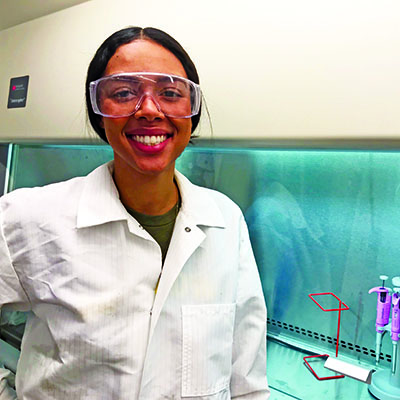

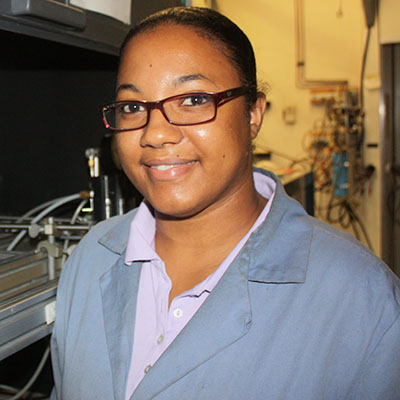
Master’s students in NJIT’s Biomedical Engineering program are expected to make significant contributions to research in their area of study, while also preparing to become leaders in academia, industry or the government. Graduates of our program are successfully engaged in the practice of biomedical engineering within industry, academia, and government.
Our graduates should demonstrate the ability to:
Masters students in NJIT’s Biomedical Engineering program are preparing for diverse fields and will work with renowned experts in these specialty areas: Biomaterials and Biocompatibility; Tissue Engineering and Regenerative Medicine;
Cellular and Orthopedic Biomechanics; Biomedical Signal Processing; Imaging and Instrumentation; Neural and Neuromuscular Engineering. However, we expect all of our master’s students to achieve these learning outcomes:
Starting Salary, NJIT Average
Mid-Career Salary, National Average
#85 in Best Engineering Schools



Upon graduation, students will be able to assume both the technical and managerial responsibilities of Occupational Health and Safety professionals.
Starting Salary, NJIT Average
Mid-Career Salary, National Average
Employment of industrial engineers is projected to grow 10 percent by 2026, faster than the average for all occupations.
