Degree Overview

  • Delivery Format: on-campus
  • Required Credits: 12

Program Details

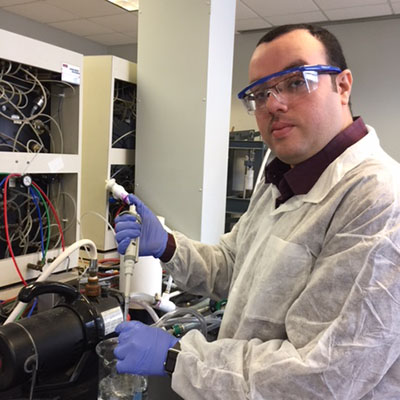
Students will learn to develop sustainable solutions to environmental problems, preparing to work with regional, national and global communities to protect the environment and improve water quality. Jobs in this field are essential in planning, designing and constructing water and wastewater treatment plants, solid waste disposal systems, site remediation approaches and emission control measures.

What You Will Learn:

  • Physical Processes of Environmental Systems - Physical processes in various media (open water, porous media) under various hydraulic regimes (laminar and turbulent). Transport by diffusion, convection, and dispersion is considered along with absorption.

  • Environmental Microbiology - Microbiology of natural and human impacted environment, fundamental microbiology in water treatment engineering, microbial detection methodologies, waterborne disease outbreaks, microbial risk assessment, biotechnologies for renewable energy, and other emerging topics

  • Site Remediation - Regulations, cleanup standards, remedial investigations, feasibility studies, risk assessment, and safety. Established and innovative cleanup technologies such as incineration, containment, bioremediation, vapor extraction and ground water recovery.

  • Physical and Chemical Treatment - Physical and chemical operations and processes employed in the treatment of water and wastewater. Gas transfer, coagulation, flocculation, solid-liquid separation, filtration, and disinfection.

  • Biological Treatment - Principles of evaluation and control of water pollution that describe aerobic treatment processes such as oxidation ponds, trickling filters, and activated sludge; and anaerobic processes, and sludge handling and disposal as wall as biodegradability study techniques for various wastes.

  • Environmental Impact Analysis - Environmental problems, federal and state standards, methodology for developing impact statements, case studies based on recent experience, basis for assessment and decision making.

  • Stormwater Management - With an emphasis on design practices, you will learn regulatory framework, an overview of structural and non-structural BMPs, groundwater recharge analysis, estimate of runoff, and design of detention basin and drainage systems.

  • Geotechnical Aspects of Solid Waste - municipal landfill, dredged materials, coal and incinerator ashes, identification and classification of waste materials, geological criteria for siting, laboratory and field testing, design for impoundment and isolation of waste, methods of stability analyses of landfill sites, techniques for stabilizing waste sites, leachate and gas collection and venting systems.

  • Legal Aspects in Environmental Engineering - Control of air, water, and solid waste pollution by federal, state, and local government statutes and international law. Preparation of environmental impact statements and the right of private citizens to bring suit under federal clean air and water pollution legislation are discussed, as well as limitations on these rights.

Admissions & curriculum

Explore this area of study

Environmental Engineering Salaries

$48,750

Starting Salary, NJIT Average

$63,447

Mid-Career Salary, National Average

NJIT’s graduate programs in Environmental Engineering rank in the top 75 in the U.S.
Learn About The department of Environmental Engineering
Career Prospects

Where do Environmental Engineering majors work?

Common Job Titles
  • Junior Civil Engineer
  • Sr. Transportation Engineering Manager
  • Hydrologist
Top Employers
  • Arcadis Inc.
  • Aecom Corporation
  • Environ International Corporation (EIC)
What our students are saying
  • Ahmed Khaled  Abdella
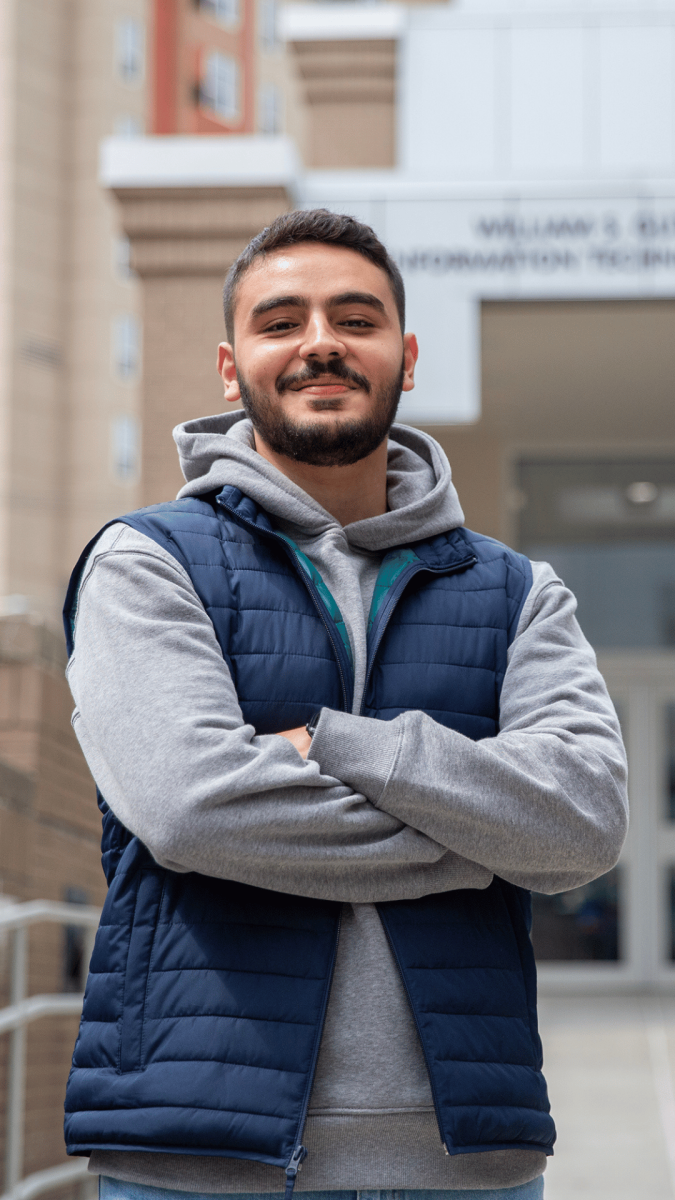
    I work on nanobubbles. My target is to help develop simple, cheap, eco-friendly and safe technologies for all parts of the world."
    Ahmed Khaled Abdella
  • Wenxin  Ye
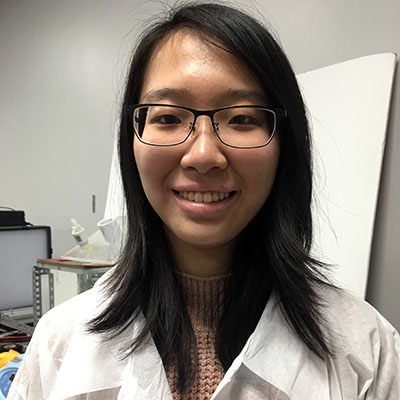
    I’m from Beijing, and I’ve been aware of environmental issues since I was a kid. I’m here to learn how to improve and fix these problems."
    Wenxin Ye

Tuition Cost

How Much does it cost to Attend NJIT?

$32,216
Average cost of attendance for NJ resident undergrads living on campus
- $18,913
Average amount of grants and scholarships per student
= $13,303
Learn More About Tuition & Costs

Environmental Engineering

What do Environmental Engineering majors do?

What our students are saying
  • Ahmed Khaled  Abdella
    I work on nanobubbles. My target is to help develop simple, cheap, eco-friendly and safe technologies for all parts of the world."
    Ahmed Khaled Abdella
  • Wenxin  Ye
    I’m from Beijing, and I’ve been aware of environmental issues since I was a kid. I’m here to learn how to improve and fix these problems."
    Wenxin Ye

Related Majors

Degree Overview

  • Delivery Format: on-campus
  • Required Credits: 120

Program Details

The mission of the Department of Civil and Environmental Engineering is to educate a diverse student body to be employed in the engineering profession, to encourage research and scholarship among our faculty and students and to promote service to the engineering profession and society. Our program objectives are reflected in the achievements of our recent alumni in these areas:  

  • Engineering Practice: Alumni will successfully engage in the practice of civil engineering within industry, government, and private practice, working toward sustainable solutions in a wide array of technical specialties including construction, transportation, water resources and environmental, geotechnical and structural engineering
  • Professional Growth: Alumni will advance their skills through professional growth and development activities such as graduate study in engineering, research and development, professional registration and continuing education; some graduates will transition into other professional fields such as business and law through further education.  
  • Service: Alumni will perform service to society and the engineering profession through membership and participation in professional societies, government, educational institutions, civic organizations, charitable giving and other humanitarian endeavors.

What You Will Learn:

By the time they graduate from the Civil Engineering program, our students should have acquired the following:

  1. An ability to identify, formulate and solve complex engineering problems by applying principles of engineering, science and mathematics
  2. An ability to apply engineering design to produce solutions that meet specified needs with consideration of public health, safety and welfare, as well as global, cultural, social, environmental and economic factors
  3. An ability to communicate effectively with a range of audiences
  4. An ability to recognize ethical and professional responsibilities in engineering situations and make informed judgments, which must consider the impact of engineering solutions in global, economic, environmental and societal contexts
  5. An ability to function effectively on a team whose members together provide leadership, create a collaborative and inclusive environment, establish goals, plan tasks and meet objectives
  6. An ability to develop and conduct appropriate experimentation, analyze and interpret data and use engineering judgment to draw conclusions
  7. An ability to acquire and apply new knowledge as needed, using appropriate learning strategies

Admissions & curriculum

Explore this area of study

Civil Engineering Salaries

$74,600

Starting Salary, NJIT Average

$74,723

Mid-Career Salary, National Average

Top ranked MS in Civil Engineering
Learn About The department of Civil Engineering
Career Prospects

Where do Civil Engineering majors work?

Common Job Titles
  • AutoCAD Drafter
  • Civil Engineer
  • Staff Engineer
  • Structural Engineer
  • Project Manager
Top Employers
  • NJ Department of Transportation
  • Banc3 Inc.
  • Stantec
  • Mott MacDonald
  • PSE&G
What our students are saying
  • Aswina  Ranasinghe
    Professors in my department go out of their way to make sure students succeed. "
    Aswina Ranasinghe
  • Andrew  Pennock
    What’s unique and special about NJIT is how available professors are to talk one-on-one to discuss career directions."
    Andrew Pennock
  • Vatsal  Shah
    NJIT provides its students with the technical skills required to be an engineer, but also the mindset needed to tackle the challenges within our region."
    Vatsal Shah

Tuition Cost

How Much does it cost to Attend NJIT?

$32,216
Average cost of attendance for NJ resident undergrads living on campus
- $18,913
Average amount of grants and scholarships per student
= $13,303
Learn More About Tuition & Costs