Degree Overview
- Delivery Format: on-campus
- Required Credits: 30
Program Details
In the Chemistry M.S. program, students will continue advanced theoretical studies in the chemical sciences in addition to practical, career-focused studies and research opportunities. The objective of the program is to prepare students with the foundation of knowledge and lab experience that they can apply to related Ph.D. programs or launch successful careers.
We expect that, as a student and/or graduate of the program, you will exhibit and/or engage in the following:
-
Continued Excellence in Chemistry: Students will be motivated to enjoy and understand chemistry and see value in further education (Ph.D.) and academic or industrial careers in their area.
-
Career-focused Study: Students will strengthen their education to that of a strong chemist capable of working successfully and learning independently as individuals in their target area of chemistry — within the many chemical industrial positions available. These students will serve to form strong industry–academic alliances for further interaction and benefit of both parties.
-
Professional Science Communication: Students will improve and raise the level of fundamental understanding in chemistry and provide research knowledge, so they will better inform the general public or future students as teachers.
What You Will Learn:
The Chemistry M.S. program offers students the opportunity to earn meaningful research experience alongside faculty at the university’s cutting-edge facilities, as well as through the university’s private and institutional research partnerships. Students will be able to engage in their research focus of interest in order to learn skills they need to prepare them for successful careers in academic, industry and government research. Along with research and study in their chosen field within the chemical sciences, we specifically aim for our students to meet the following learning outcomes:
-
Broad understanding of major concepts, advanced theoretical principles, as well as experimental methods and findings in the field of chemistry.
-
Ability to effectively communicate and collaborate with professional conduct in a classroom and laboratory setting.
-
Demonstrate efficient problem-solving skills and ability to think critically to address problems in analytical, inorganic, organic and physical chemistry.
-
Demonstrate knowledge of lab procedures and adherence to ethical research conduct in order to properly conduct experiments, analyze data and interpret results.
-
Demonstrate effective written and oral communication skills, in order to communicate research and complex findings to specialist and general audiences.
-
Demonstrate effective understanding and application of modern tools and equipment used for chemical analysis.
-
Proficient use of computational methods used for chemical simulation.
-
Demonstrate effective use of research tools needed to investigate and evaluate scientific journals for relevant findings or information.
-
Demonstrate strict adherence to safety and chemical hygiene regulations and practices.
Admissions & curriculum
30 Required Credits
Explore this area of study
Chemistry Salaries
$64,700
Starting Salary, NJIT Average
In 2016, the Food and Drug Administration hired the most employees titled “Chemistry,” with an average salary of $108,445.
Career Prospects
Where do Chemistry majors work?
Common Job Titles
- Technical Area Lead
- Operations Analyst
- Senior Scientist
- Laboratory Manager
Top Employers
- Mylan
- NYU Langone Health
- Bristol Myers Squibb
- Merck
What our students are saying
-
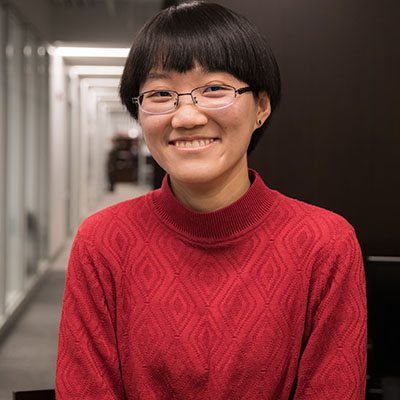 I enjoy my education at NJIT, it fosters my professional and personal growth."Jie Dou
 -
 With the excellent training I got at NJIT, I am ready to start a new journey and explore the world."Xinglei Liu
 -
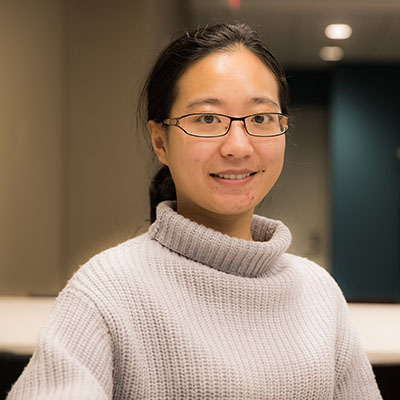 The knowledge and skills acquired in NJIT enabled me to embrace a bright future in both job market and social network."Xiangshan Liu
Tuition Cost
How Much does it cost to Attend NJIT?
$32,216
Average cost of attendance for NJ resident undergrads living on campus
- $18,913
Average amount of grants and scholarships per student
= $13,303
(Average Net Price).
Try the
Net Price Calculator
for a more
accurate estimate.
Learn More About Tuition & Costs
Core Faculty
-
Belfield, Kevin
- Dean, College of Science and Liberal Arts
-
Champagne, Pier Alexandre
- Assistant Professor
-
Gund, Tamara
- Professor
-
Chen, Hao
- Professor
-
Li, Mengyan
- Professor
-
Khalizov, Alexei
- Professor
-
Krasnoperov, Lev
-
Mitra, Somenath
- Distinguished Professor
-
Sadik, Wunmi
- Vice Provost for Faculty Affairs
-
Shakib, Farnaz
- Assistant Professor
-
Zhang, Yuanwei
- Associate Professor
Chemistry
What our students are saying
-
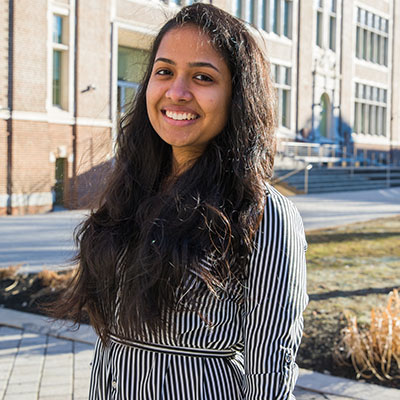 Doing master's in Pharmaceutical Chemistry was a great choice for my career."Anjali Sharma
 -
The knowledge and skills acquired in NJIT enabled me to embrace a bright future in both job market and social network."Xiangshan Liu
-
I enjoy my education at NJIT, it fosters my professional and personal growth."Jie Dou
Related Majors


Degree Overview
- Delivery Format: on-campus
- Required Credits: 120
Program Details
The B.S. in Chemistry prepares students for a career as a professional chemist, investigating the composition, structure, properties and change of matter. Chemistry mainly studies interactions and transformations between atoms and molecules. Chemistry is also a central science because it bridges other sciences such as physics and biology. Furthermore, chemistry is the foundation for scientists and engineers to improve the life of humankind.
Students and/or graduates of the program will strive for success in the following objectives:
- Research-based Inquiry: Students employ research methods appropriate to their disciplines.
- Ethical Conduct: Students demonstrate professional and civic responsibility, including respect for all individuals.
- Creativity: Students use heuristics to evaluate, analyze and synthesize innovative solutions to existing and emerging problems.
What You Will Learn:
The B.S. in Chemistry is constructed to provide students the fundamental knowledge and laboratory skills to enter the workforce at different levels. The degree emphasizes a quantitative methodological approach to chemistry. By the end of the course, students should be able to meet the following learning outcomes:
-
Explain atomic structure and write chemical formula for simple compounds
-
Perform chemical calculations systematically using dimensional analysis or multiplication by one
-
Calculate moles, molecular and empirical formula of a compound from basic principles
-
Balance chemical equations
-
Identify various types of chemical reactions and apply the concept of limiting reagent to calculate percentage yield of products
-
Apply various gas laws and the first law of thermodynamics to chemical problems
-
Calculate the energy changes in chemical reactions
-
Explain the quantum mechanical basis for the sub-structure of the atom
-
Write the electronic configuration for the elements in the periodic table
-
Draw the Lewis dot structures for simple molecules
-
Use VSEPR to predict shapes of molecules and whether a molecule will have a dipole moment
-
Identify sigma and pi bonds and explain the hybridization of the molecules
-
Describe the differences in bonding patterns between solids, liquids, and gases
-
Predict changes in freezing point, elevation in boiling point and osmotic pressure when a solute dissolves in a pure solvent
Admissions & curriculum
120 Required Credits
Accelerated Option
Explore this area of study
Chemistry Salaries
$64,700
Starting Salary, NJIT Average
In 2016, the Food and Drug Administration hired the most employees titled “Chemistry,” with an average salary of $108,445.
Career Prospects
Where do Chemistry majors work?
Common Job Titles
- Technical Area Lead
- Operations Analyst
- Senior Scientist
- Laboratory Manager
Top Employers
- Mylan
- NYU Langone Health
- Bristol Myers Squibb
- Merck
What our students are saying
-
Doing master's in Pharmaceutical Chemistry was a great choice for my career."Anjali Sharma
-
The knowledge and skills acquired in NJIT enabled me to embrace a bright future in both job market and social network."Xiangshan Liu
-
I enjoy my education at NJIT, it fosters my professional and personal growth."Jie Dou
Tuition Cost
How Much does it cost to Attend NJIT?
$32,216
Average cost of attendance for NJ resident undergrads living on campus
- $18,913
Average amount of grants and scholarships per student
= $13,303
(Average Net Price).
Try the
Net Price Calculator
for a more
accurate estimate.
Learn More About Tuition & Costs
Core Faculty
-
Belfield, Kevin
- Dean, College of Science and Liberal Arts
-
Champagne, Pier Alexandre
- Assistant Professor
-
Gund, Tamara
- Professor
-
Chen, Hao
- Professor
-
Li, Mengyan
- Professor
-
Khalizov, Alexei
- Professor
-
Krasnoperov, Lev
-
Mitra, Somenath
- Distinguished Professor
-
Sadik, Wunmi
- Vice Provost for Faculty Affairs
-
Shakib, Farnaz
- Assistant Professor
-
Zhang, Yuanwei
- Associate Professor
