Degree Overview
- Delivery Format: on-campus
- Required Credits: 12
Program Details
One of the oldest departments of Newark College of Engineering, the Otto H. York Department of Chemical and Materials Engineering awarded its first three baccalaureate degrees in 1923. This program is interdisciplinary by nature, with learn outcomes crossing both the science and the engineering materials and chemicals realms, yet more lean toward the engineering side. Chemical engineers use chemistry, biology, physics and math in an integrated engineering mode in order to manufacture materials and products to modern society. They are involved with the full scale of processes, from the laboratory bench to the pilot plant and eventually to the manufacturing facility.
What You Will Learn:
- Polymerization-Principles and Practice - The structural and synthetic aspects of polymers and examines in detail a number of bench and industrial scale polymerization methods. In addition to kinetics and mechanisms of commercially important polymerization systems, students will examine reactive modification of synthetic and natural polymers and provides an introduction to applicable characterization methods.
- Engineering Design of Plastic Products - Structure and properties of plastics including stress-strain behavior and the effect of fillers and reinforcements. Designing for impact, flexure, shear, friction, puncture, creep and fatigue. Case studies of structural, electrical, and optical applications.
- Mechanical Properties of Materials - Elements of elasticity and plasticity theory, deformation and fracture behavior of materials, the concept of dislocations and their interaction with other lattice defects, strengthening mechanisms in solids, and principles of failure analysis. Materials to be studied include metals, polymers, ceramics, glasses, and composites.
- Polymer Structures and Properties - Polymer structures and properties and their relationships from the molecular viewpoint to phenomenological descriptions. Topics include thermodynamics of a single molecule, dynamic theory and viscoelasticity of polymers, polymer solids and mechanical properties, rubbers, polymer blends and composites, biological polymers, and special applications.
- Design for Manufacturability - Methodologies used in the synthesis and analysis of product design to optimize manufacturability. The relationship of design to production processes, product material, material handling, quality costs, and CAD/CAM are presented. Emphasis is on both formed products and assembled products. Simulation and other design analysis tools are employed.
- Characterization of Materials - Introduction in chemical and materials engineering, and other engineering and science disciplines, to fundamentals and theory of different types of materials characterization tools. Methods and techniques necessary to understand and quantify diverse materials properties will be discussed. As important for many methods, basic principles of interaction of radiation and particle beams with matter will be studied. Topics include, but are not limited to: Diffraction methods; imaging via optical, scanning, transmission electron, scanning tunnelling, and field ion microscopy; microanalysis and spectroscopy, including energy dispersive, wavelength dispersive, Auger methods; secondary ion mass spectroscopy, X-ray photoelectron spectroscopy; materials preparation for analysis, including electron, ion growth, sputtering; thermal analysis: DTA, DSC; and depending on the availability and functionality of equipment, lab visits and demonstrations will be scheduled to the class to discuss some case studies.
Admissions & curriculum
Chemical Engineering Salaries
Starting Salary, NJIT Average
Mid-Career Salary, National Average
NJIT’s Chemical Engineering program is in the top 100 in the country
Where do Chemical Engineering majors work?
- Chemical Engineer
- Process Engineer
- Manufacturing Engineer
- Product Engineer
- Research And Development Engineer
- Colgate-Palmolive
- FM Global
- L'Oreal USA
- Phillips 66
- TEVA Pharmaceuticals
-
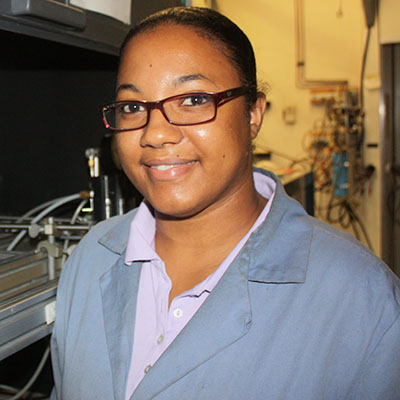
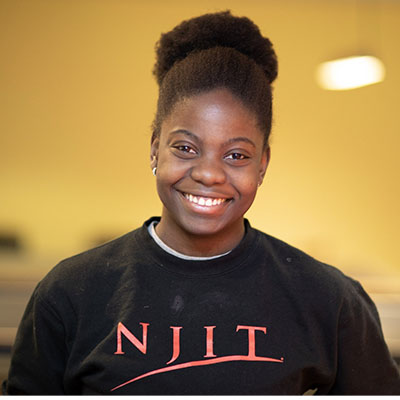
What I love about research at NJIT is that primary investigators draw on creative and hardworking thinkers throughout the campus community. "Victoria Harbour -
I’m interested in current challenges the energy community faces."Kerri-Lee Chintersingh -
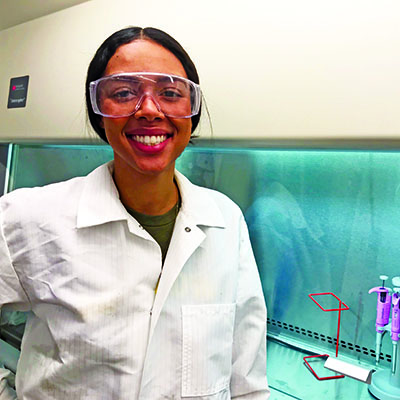
I’m working on microfluidic biosensors for cancer detection. We hope this technology will replace invasive biopsies. "Mehnaz Mursalat
Contact Us
Need Help? We’re here to advise you.

Mechanical Engineering Technology
What do Mechanical Engineering Technology majors do?
-
Getting a degree from a great school like NJIT gave me the opportunity to choose the job I wanted."Seif Issa -
NJIT was my dream school."Hilsson Angeles
Related Majors
Mechanical Engineering
What do Mechanical Engineering majors do?
-
I was definitely prepared for my job at Scaled Composites and perhaps even ahead of the curve."Michael Anderson -
My mechanical engineering degree from NJIT has opened doors to an unimaginable number of opportunities."Edwin Pimentel -
I knew I wanted to come to a technical school."Julio Marcano
Related Majors
Explore all the degrees you can earn at NJIT
Explore NowDegree Overview
- Delivery Format: on-campus
- Required Credits: 120
Program Details
- Graduates will meet or exceed the expectations of employers of mechanical engineers.
- Qualified graduates will pursue advanced study if they so desire.
- Graduates will pursue leadership positions in their profession and/or communities.
Electives Courses
What You Will Learn:
- An ability to identify, formulate, and solve complex engineering problems by applying principles of engineering, science, and mathematics
- An ability to apply engineering design to produce solutions that meet specified needs with consideration of public health, safety, and welfare, as well as global, cultural, social, environmental, and economic factors
- An ability to communicate effectively with a range of audiences
- An ability to recognize ethical and professional responsibilities in engineering situations and make informed judgments, which must consider the impact of engineering solutions in global, economic, environmental, and societal contexts
- An ability to function effectively on a team whose members together provide leadership, create a collaborative and inclusive environment, establish goals, plan tasks, and meet objectives
- An ability to develop and conduct appropriate experimentation, analyze and interpret data, and use engineering judgment to draw conclusions
- An ability to acquire and apply new knowledge as needed, using appropriate learning strategies
Admissions & curriculum
Mechanical Engineering Salaries
Starting Salary, NJIT Average
Mid-Career Salary, National Average
Employment of mechanical engineers is projected to grow 9 percent from 2016 to 2026.

Where do Mechanical Engineering majors work?
- Mechanical Designer
- Product Development Engineer
- Project Engineer
- Quality Assurance Engineer
- Automation Engineer
- Lockheed Martin
- Stryker Orthopaedics
- Honeywell
- Valcor Engineering
- Schneider Electric
-
In the summer of 2018, I had an internship at General Motors in the Supplier Quality Department."Sarah Garcon -
My mechanical engineering degree from NJIT has opened doors to an unimaginable number of opportunities."Edwin Pimentel -
I credit my NJIT degree and connections with helping me land three job offers within two weeks of graduating."Bodhi Chaudhuri