Degree Overview

  • Delivery Format: on-campus
  • Required Credits: 12

Program Details

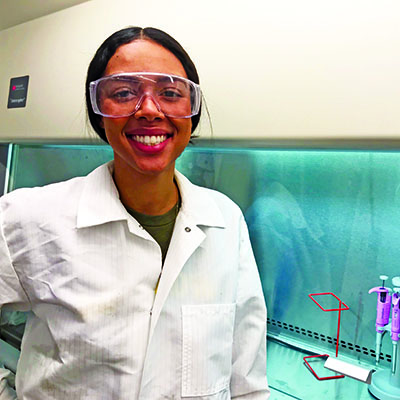
One of the oldest departments of Newark College of Engineering, the Otto H. York Department of Chemical and Materials Engineering awarded its first three baccalaureate degrees in 1923. This program is interdisciplinary by nature, with learn outcomes crossing both the science and the engineering materials and chemicals realms, yet more lean toward the engineering side. Chemical engineers use chemistry, biology, physics and math in an integrated engineering mode in order to manufacture materials and products to modern society. They are involved with the full scale of processes, from the laboratory bench to the pilot plant and eventually to the manufacturing facility.

What You Will Learn:

  • Polymerization-Principles and Practice - The structural and synthetic aspects of polymers and examines in detail a number of bench and industrial scale polymerization methods. In addition to kinetics and mechanisms of commercially important polymerization systems, students will examine reactive modification of synthetic and natural polymers and provides an introduction to applicable characterization methods.

  • Engineering Design of Plastic Products - Structure and properties of plastics including stress-strain behavior and the effect of fillers and reinforcements. Designing for impact, flexure, shear, friction, puncture, creep and fatigue. Case studies of structural, electrical, and optical applications.

  • Mechanical Properties of Materials - Elements of elasticity and plasticity theory, deformation and fracture behavior of materials, the concept of dislocations and their interaction with other lattice defects, strengthening mechanisms in solids, and principles of failure analysis. Materials to be studied include metals, polymers, ceramics, glasses, and composites.

  • Polymer Structures and Properties - Polymer structures and properties and their relationships from the molecular viewpoint to phenomenological descriptions. Topics include thermodynamics of a single molecule, dynamic theory and viscoelasticity of polymers, polymer solids and mechanical properties, rubbers, polymer blends and composites, biological polymers, and special applications.

  • Design for Manufacturability - Methodologies used in the synthesis and analysis of product design to optimize manufacturability. The relationship of design to production processes, product material, material handling, quality costs, and CAD/CAM are presented. Emphasis is on both formed products and assembled products. Simulation and other design analysis tools are employed.

  • Characterization of Materials - Introduction in chemical and materials engineering, and other engineering and science disciplines, to fundamentals and theory of different types of materials characterization tools. Methods and techniques necessary to understand and quantify diverse materials properties will be discussed. As important for many methods, basic principles of interaction of radiation and particle beams with matter will be studied. Topics include, but are not limited to: Diffraction methods; imaging via optical, scanning, transmission electron, scanning tunnelling, and field ion microscopy; microanalysis and spectroscopy, including energy dispersive, wavelength dispersive, Auger methods; secondary ion mass spectroscopy, X-ray photoelectron spectroscopy; materials preparation for analysis, including electron, ion growth, sputtering; thermal analysis: DTA, DSC; and depending on the availability and functionality of equipment, lab visits and demonstrations will be scheduled to the class to discuss some case studies.

Admissions & curriculum

Explore this area of study

Chemical Engineering Salaries

$75,900

Starting Salary, NJIT Average

$86,991

Mid-Career Salary, National Average

NJIT’s Chemical Engineering program is in the top 100 in the country
Learn About The department of Chemical Engineering
Career Prospects

Where do Chemical Engineering majors work?

Common Job Titles
  • Consulting Analyst
  • Risk Consulting
  • Cadet
  • Associate Scientist/Engineer
  • Pharmaceutical Development Technician
Top Employers
  • FM Global
  • L'Oreal USA
  • Colgate-Palmolive
  • TEVA Pharmaceuticals
  • Phillips 66
What our students are saying
  • Kerri-Lee  Chintersingh
    I’m interested in current challenges the energy community faces."
    Kerri-Lee Chintersingh
  • Andrew House
    I would recommend NJIT’s PhD program because the research we do here is some of the most cutting edge in the country. "
    Andrew House
  • Mehnaz  Mursalat
    I’m working on microfluidic biosensors for cancer detection. We hope this technology will replace invasive biopsies. "
    Mehnaz Mursalat

Tuition Cost

How Much does it cost to Attend NJIT?

$32,216
Average cost of attendance for NJ resident undergrads living on campus
- $18,913
Average amount of grants and scholarships per student
= $13,303
Learn More About Tuition & Costs

Degree Overview

  • Delivery Format: on-campus
  • Required Credits: 12

Program Details

In recent years, research into the myriad complexities of the brain and neurophysiology has gained momentum at NJIT across diverse disciplines, including biology, biomedical engineering, mathematical sciences and computing. With the formal inauguration of the university’s Institute for Brain and Neuroscience Research (IBNR) in 2017, the efforts of NJIT researchers to increase basic understanding of the brain that could lead to new healing therapies for related injuries and disease will be more sharply focused and closely coordinated.

What You Will Learn:

  • Cellular Neurophysiology - The nervous system from a functional perspective. The goal is to understand how ion channels and other components of nerve cells give rise to electrical excitability and synaptic function, and how those properties are then used for coding information and higher order function in the nervous system.

  • Systems Neuroscience - Neurophysical phenomena from a systems perspective. Basic concepts of cellular neuroscience, such as excitability, impulse conduction, and integration of activity at the cellular, before focusing on network level physiology of the nervous system and its role in the generation of behavior. The basic knowledge to understand neurobiological processes at all levels of complexity.

  • Biological Imaging Techniques - A variety of approaches to examine biological structures at different microscopic scales: conventional light microscopy, fluorescent microscopy, modern high resolution light microscopy, and electron microscopy. Optical approaches to study the dynamics of cellular function, including calcium and voltage imaging, and molecular interactions.

  • Neural Engineering - Understanding how the brain functions using engineering principles. Different instrumentation and signal processing algorithms to study how the brain functions, how to detect different pathologies and new applications for research. Basic overview of neurology, vector populations, neural networks, vision research, functional MRI, functional electrical stimulation, neural prosthetics, and other advanced research topics studying neurology.

  • Medical Imaging Systems - Detailed introduction to medical imaging physics, instrumentation, data acquisition and image processing systems for reconstruction of multi-dimensional anatomical and functional medical images. Three-Dimensional medical imaging modalities including X-ray, Computer Tomography, Magnetic Resonance Imaging, Single Photon Emission Computer Tomography, Positron Emission Tomography, Ultrasound and optical imaging modalities are included.

  • Approaches to Quantitative Analysis in the Life Sciences - Case studies of common data analytic methods used in the life sciences. The case studies are designed to help students who are interested in applications of statistical thinking to biological sciences appreciate the scope of quantitative methods, their underlying concepts, assumptions and limitations. While the mathematics of specific methods are not covered, students of the course will get and understanding of the diverse approaches to statistical inference in the life sciences.

  • Intro to Comp Neuroscience - The modeling, computational and analysis techniques for single neurons and small neuronal networks. Knowledge of neurobiology, electric circuits and numerical tools for the solution of differential equations.

  • Advanced Comp Neuroscience - Modeling and computational analysis of biological neuronal networks.

  • Computational Systems Biology - Introduction to the mathematical and computational modeling of biological systems with a focus on chemical, biochemical, metabolic and genetic networks. Knowledge of biology and numerical tools for the solution of differential equations.

Admissions & curriculum

Tuition Cost

How Much does it cost to Attend NJIT?

$32,216
Average cost of attendance for NJ resident undergrads living on campus
- $18,913
Average amount of grants and scholarships per student
= $13,303
Learn More About Tuition & Costs

Contact Us

Need Help? We’re here to advise you.

Environmental Science

What do Environmental Science majors do?

What our students are saying
  • John  Antley
    The Chemistry and Environmental Science department has dutifully prepared me for a career in industry."
    John Antley
  • Yue  Zhang
    I have learned a lot from the Chemistry and Environmental Science Department professors, especially my thesis advisor, Mengyan Li."
    Yue Zhang

Related Majors

Degree Overview

  • Delivery Format: on-campus
  • Required Credits: 12-36

Program Details

The Ph.D. in Environmental Science is designed to provide students with advanced knowledge and research experience to enter the workforce or academia. Environmental Science involves diverse areas that include chemistry, biological sciences, ecology as well as studies specific to air/water pollution and hazardous wastes. While we expect graduates of the program to possess diverse skills that meet their career interests, we expect that they will exhibit or engage in the following:

  • Academic Excellence: Advanced understanding of chemistry and biology, as well as environmental regulations and other scientific issues related to the environment.
  • Excellence in Research: The doctoral dissertation requires extensive work leading to publications. Ph.D. candidates will aspire to be at the forefront of an evolving field to solve problems that are highly relevant in present and future political environments.
  • Professional Skills: The students develop professional skills by taking courses where the stress is on real-world environmental problems.

What You Will Learn:

Students in the Environmental Science Ph.D. program learn a wide range of topics that relate to the environmental sciences, such as environmental chemistry environmental analysis, environmental law, environmental microbiology, environmental toxicology and more. Alongside advanced theoretical and academic work, students develop research and analytical skills needed to be successful leaders in their chosen focus within the environmental science field.

Overall, we aim for our Ph.D. students in Environmental Science to gain a wide range of skills and knowledge, including the following learning outcomes:

  • Advanced research leading to publications.

  • Learn about natural processes and pollutants.

  • Learn about environmental regulations and laws.

  • Develop an understanding of global environmental issues including energy utilization and its connection to the environment.

  • An ability to identify and utilize evidence-based resources and information.

  • An ability to think critically and creatively about the environmental issues.

  • Demonstrate problem-solving ability as an individual and as part of a team by using observation, experimentation and environmental regulations.

  • Show ability in scientific research and writing using laboratory experiments related to environmental pollution issues and hazardous waste issues. Students should understand issues related toxicity.

  • Demonstrate an understanding of how scientific information obtained through the laboratory and computational data are used in research, and to maintain the environmental health of our society in terms of contamination in air, water and soil.

  • Analyze effectively and accurately and use technical skills and equipment to quantify environmental phenomena, as well as use quantitative methods to describe these issues.

  • Understanding of chemical, biological and microbiological process in the environment.

Admissions & curriculum

Explore this area of study

Environmental Science Salaries

$48,963

Starting Salary, NJIT Average

$60,039

Mid-Career Salary, National Average

Environmental Protection Specialist was the 79th highest federal employment category.

Learn About The department of Environmental Science
Career Prospects

Where do Environmental Science majors work?

Common Job Titles
  • Manager
  • Claims Examiner
  • Scientist III
  • Research Scientist
  • Environmental Protection Specialist
Top Employers
  • Curly's Ice Cream
  • NJ Transit
  • Special Funds Conservation
  • Mott MacDonald
  • New Jersey Department of Environmental Protection
What our students are saying
  • John  Antley
    The Chemistry and Environmental Science department has dutifully prepared me for a career in industry."
    John Antley
  • Yue  Zhang
    I have learned a lot from the Chemistry and Environmental Science Department professors, especially my thesis advisor, Mengyan Li."
    Yue Zhang

Tuition Cost

How Much does it cost to Attend NJIT?

$32,216
Average cost of attendance for NJ resident undergrads living on campus
- $18,913
Average amount of grants and scholarships per student
= $13,303
Learn More About Tuition & Costs

Contact Us

Need Help? We’re here to advise you.

Bioinformatics

What do Bioinformatics majors do?

What our students are saying
  • Chandani   Patel
    I love this major. Merging biology with computer science will help me become a doctor."
    Chandani Patel

Related Majors

Explore all the degrees you can earn at NJIT

Explore Now

Urban Systems

What do Urban Systems majors do?

What our students are saying
  • Ha  Pham
    The faculty offered me lots of support."
    Ha Pham

Related Majors

Explore all the degrees you can earn at NJIT

Explore Now