Staff Engineer
Where do majors work?
Common Job Titles
Top Employers
Meet some students
What’s unique and special about NJIT is how available professors are to talk one-on-one to discuss career directions.
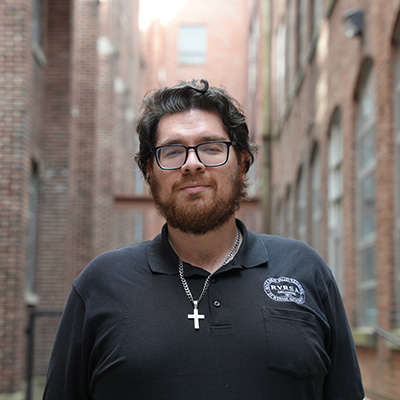
Andrew Pennock
Class of 2017
One of my high school teachers recommended NJIT and I never looked back.
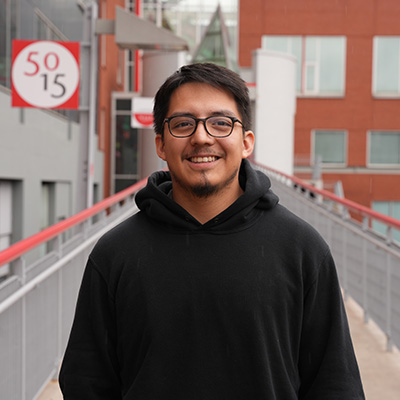
Sebastian Mercado
Class of 2022
NJIT provides its students with the technical skills required to be an engineer, but also the mindset needed to tackle the challenges within our region.
Vatsal Shah
Class of 2014
Want more? Visit us at an on-campus event.
Learn MoreRelated Majors
Explore all the degrees you can earn at NJIT
Explore NowSummary
The mission of the Department of Civil and Environmental Engineering is to educate a diverse student body to be employed in the engineering profession, to encourage research and scholarship among our faculty and students and to promote service to the engineering profession and society. Our program objectives are reflected in the achievements of our recent alumni in these areas:
- Engineering Practice: Alumni will successfully engage in the practice of civil engineering within industry, government, and private practice, working toward sustainable solutions in a wide array of technical specialties including construction, transportation, water resources and environmental, geotechnical and structural engineering
- Professional Growth: Alumni will advance their skills through professional growth and development activities such as graduate study in engineering, research and development, professional registration and continuing education; some graduates will transition into other professional fields such as business and law through further education.
- Service: Alumni will perform service to society and the engineering profession through membership and participation in professional societies, government, educational institutions, civic organizations, charitable giving and other humanitarian endeavors.
By the time they graduate from the Civil Engineering program, our students should have acquired the following:
- An ability to identify, formulate and solve complex engineering problems by applying principles of engineering, science and mathematics
- An ability to apply engineering design to produce solutions that meet specified needs with consideration of public health, safety and welfare, as well as global, cultural, social, environmental and economic factors
- An ability to communicate effectively with a range of audiences
- An ability to recognize ethical and professional responsibilities in engineering situations and make informed judgments, which must consider the impact of engineering solutions in global, economic, environmental and societal contexts
- An ability to function effectively on a team whose members together provide leadership, create a collaborative and inclusive environment, establish goals, plan tasks and meet objectives
- An ability to develop and conduct appropriate experimentation, analyze and interpret data and use engineering judgment to draw conclusions
- An ability to acquire and apply new knowledge as needed, using appropriate learning strategies
|
120
|
Required Credits |
View the Curriculum
Course listing and prerequisitesCore Faculty
Marhaba, Taha
Distinguished Professor and Chairman, Civil & Environmental Engineering
View ProfileCastro, Eduardo
Senior University Lecturer
View ProfileMeegoda, Jay
Distinguished Professor
View ProfileSaigal, Sunil
Distinguished Professor
View Profile
Environmental Engineering
Mechanical Engineering
Architecture