Urban Design
What our students are saying
-
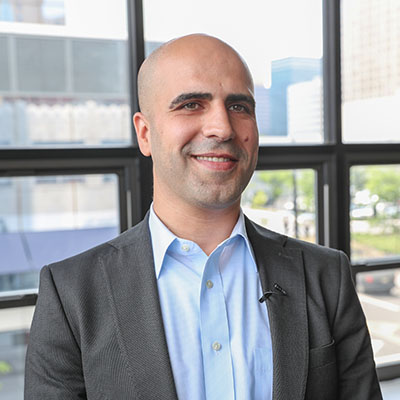 I use the knowledge of my Infrastructure Planning degree all the time."Samer Hanini
 -
 Getting a degree from a great school like NJIT gave me the opportunity to choose the job I wanted."Seif Issa
 -
 NJIT was my dream school."Hilsson Angeles
Related Majors


Industrial Design
What do Industrial Design majors do?
What our students are saying
-
 Through my design class I was able to work alongside a ton of industry experts. I have definitely grown because of the connections I have made."Andrew Elcock
 -
 My aim is to use design as a vehicle to understand and create positive social change."Jenna Stuiso
 -
 NJIT taught me that design is about telling a story."Jonathan Ferrer
Related Majors


Digital Design
What do Digital Design majors do?
What our students are saying
-
 I launched my post-NJIT career as an applications engineer at Formlabs."Amos Dudley
 -
Getting a degree from a great school like NJIT gave me the opportunity to choose the job I wanted."Seif Issa
-
NJIT was my dream school."Hilsson Angeles
Related Majors


Architecture
What do Architecture majors do?
What our students are saying
-
 Working at Callison RTKL after graduating, I saw a lot of my experience at NJIT really having an impact in the field right away."Jonathan IsaacsClass of '18Architecture
 -
 The graduate program provided me with a diverse education."Carol Hong
 -
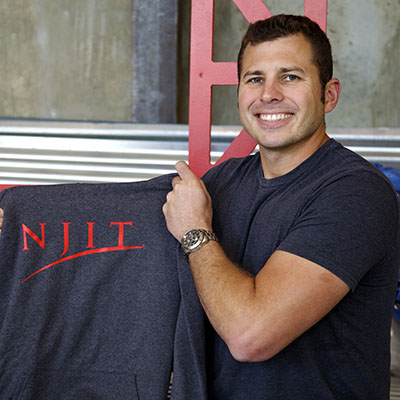 I worked very hard at NJIT, and I'll be honest--that degree has gotten me exactly where I am today."Tom BuryClass of '02Architecture
Related Majors


Degree Overview
- Delivery Format: on-campus
- Required Credits: 30
Program Details
Our program educational objectives are reflected in the achievements of our recent alumni.
- Research and/or Practice: Alumni will successfully engage in research and/or practice of transportation planning, engineering and management within industry, government, and private practice, working toward sustainable solutions. Alumni will be able to synthesize technical knowledge of analysis and design to identify, formulate and solve problems of professional interest and importance.
- Professional Growth: Alumni will advance their skills through innovation, professional growth and development activities such as research and doctoral study, professional registration, and continuing education.
- Service: Alumni will perform service to society and the profession through membership and participation in professional societies, government, educational institutions, civic organizations, and humanitarian endeavors.
What You Will Learn:
Graduates of the program will be able to:
- Specify or design and experiment to meet a need, conduct the experiment, and analyze and explain the resulting data.
- Identify, formulate, and solve complex transportation problems by selecting and applying appropriate tools and techniques.
- Synthesize advanced technical knowledge in a traditional or emerging area of knowledge in a specialized area of transportation.
Admissions & curriculum
30 Required Credits
Explore this area of study
Salaries
$69,000
Starting Salary, NJIT Average
$72,000
Mid-Career Salary, National Average
NJIT’s Civil Engineering graduate programs rank in the top 100 in the country.
Career Prospects
Where do Transportation majors work?
Common Job Titles
- Transportation Engineer
- Traffic Engineer
- Intelligent Transportation Systems (ITS) Engineer
- Fleet Operations Manager
- Transportation System Analyst
Top Employers
- New Jersey Department of Transportation (NJDOT)
- The Port Authority of NY & NJ
- NJ Transit
- UPS
- CSX Railroad
What our students are saying
-
Getting a degree from a great school like NJIT gave me the opportunity to choose the job I wanted."Seif Issa
-
NJIT was my dream school."Hilsson Angeles
Tuition Cost
How Much does it cost to Attend NJIT?
$43,260
Average cost of attendance for NJ resident graduate students living on campus
- $18,913
Average amount of grants and scholarships per student
= $24,347
(Estimated Net Price).
Try the
Net Price Calculator
for a more
accurate estimate.
Learn More About Tuition & Costs
Degree Overview
- Delivery Format: on-campus
- Required Credits: 30
Program Details
Educate professionals and provide them with the skills required to work in the pharmaceutical field, with particular emphasis on the engineering aspects of drug manufacturing, pharmaceutical production, pharmaceutical development, and pharmaceutical operations.
What You Will Learn:
Students in the MS Pharma Engineering Master's Degree Program will learn a wide range of leadership and management skills in addition to the following skills:
- An ability to identify, formulate, and solve complex engineering problems by applying principles of engineering, science, and mathematics.
- An ability to apply engineering design to produce solutions that meet specified needs with consideration of public health, safety, and welfare, as well as global, cultural, social, environmental, and economic factors.
- An ability to communicate effectively with a range of audiences.
- An ability to recognize ethical and professional responsibilities in engineering situations and make informed judgments, which must consider the impact of engineering solutions in global, economic, environmental, and societal contexts.
- An ability to function effectively on a team whose members together provide leadership, create a collaborative and inclusive environment, establish goals, plan tasks, and meet objectives.
- An ability to develop and conduct appropriate experimentation, analyze and interpret data, and use engineering judgment to draw conclusions.
- An ability to acquire and apply new knowledge as needed, using appropriate learning strategies.
Admissions & curriculum
30 Required Credits
Explore this area of study
Salaries
$75,900
Starting Salary, NJIT Average
$86,991
Mid-Career Salary, National Average
NJIT’s Chemical Engineering program is in the top 100 in the country
Career Prospects
Where do Chemical Engineering majors work?
Common Job Titles
- Chemical Engineer
- Process Engineer
- Manufacturing Engineer
- Product Engineer
- Research And Development Engineer
Top Employers
- Colgate-Palmolive
- FM Global
- L'Oreal USA
- Phillips 66
- TEVA Pharmaceuticals
What our students are saying
-
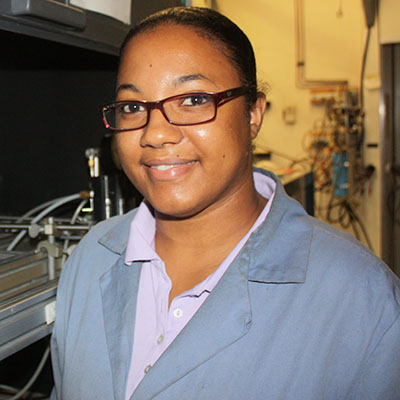 I’m interested in current challenges the energy community faces."Kerri-Lee Chintersingh
 -
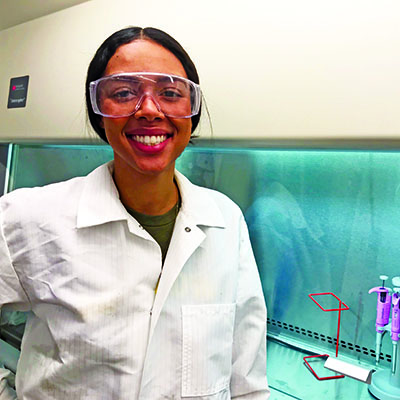 What I love about research at NJIT is that primary investigators draw on creative and hardworking thinkers throughout the campus community. "Victoria Harbour
 -
 I’m working on microfluidic biosensors for cancer detection. We hope this technology will replace invasive biopsies. "Mehnaz Mursalat
Tuition Cost
How Much does it cost to Attend NJIT?
$43,260
Average cost of attendance for NJ resident graduate students living on campus
- $18,913
Average amount of grants and scholarships per student
= $24,347
(Estimated Net Price).
Try the
Net Price Calculator
for a more
accurate estimate.
Learn More About Tuition & Costs
Contact Us
Need Help? We’re here to advise you.
Degree Overview
- Delivery Format: on-campus
- Required Credits: 30
Program Details
The IT Administration and Security program educates students in the concepts, principles, techniques and practices needed to administer a modern IT environment and its security. Students will gain extensive practical experience doing IT administration. Security will be a component of core courses in addition to a specific security course. Those who complete the program will be well prepared to play leadership roles as database, network, security and web services administrators, as enterprise application administrators and IT administration managers.
What You Will Learn:
Students in the M.S. IT Administration & Security degree program will learn a wide range of leadership and management skills in addition to the following skills:
• Network systems design, management and security.
• Network services administration.
• Wireless networks security and administration.
• Database administration and management.
• Auditing for computer security and information systems.
• Internet and higher-layer protocols.
Admissions & curriculum
30 Required Credits
Explore this area of study
Salaries
$65,300
Starting Salary, NJIT Average
$78,962
Mid-Career Salary, National Average
Top 50 for Best Online Graduate Computer Information Technology Programs - U.S. News & World Report, 2025
Career Prospects
Where do Information Technology majors work?
Common Job Titles
- IT Controls Analyst
- Cyber Security Consultant
- Security Analyst
- Web Developer
- Network Engineer
Top Employers
- UPS
- oXya - A Hitachi Data Systems Company
- Prudential Financial
- Optum - a UnitedHealth Group Company
- TD Ameritrade
What our students are saying
-
 After graduation, I am headed to Merck & Co. for a 2 ½ year rotational program in IT. "Jake Ponulak
 -
NJIT was my dream school."Hilsson Angeles
-
Getting a degree from a great school like NJIT gave me the opportunity to choose the job I wanted."Seif Issa
Tuition Cost
How Much does it cost to Attend NJIT?
$43,260
Average cost of attendance for NJ resident graduate students living on campus
- $18,913
Average amount of grants and scholarships per student
= $24,347
(Estimated Net Price).
Try the
Net Price Calculator
for a more
accurate estimate.
Learn More About Tuition & Costs
Core Faculty
-
Deek, Fadi
- Distinguished Professor
- Distinguished Professor
-
Halper, Michael
- Chair
- Chair
-
Kehoe, DJ
- Senior University Lecturer
- Senior University Lecturer
-
Nersesian, Eric
- Senior University Lecturer
- Senior University Lecturer
-
Sequeira, Marc
- Senior University Lecturer
- Senior University Lecturer
-
Watrous-deVersterre, Lori
- Senior University Lecturer
- Senior University Lecturer
Degree Overview
- Delivery Format: on-campus
- Required Credits: 30
Program Details
- Prepare students for productive careers and amplify their potential for lifelong personal and professional growth.
- Prepare students to conduct research with an emphasis on applied, interdisciplinary efforts that encompass architecture, design and science, including physical and life sciences, engineering, mathematics, infrastructure systems, computing information, communication technologies and management.
- Prepare students for service in urban environments and the broader society of the city, state, nation and global community by conducting public policy studies, making educational opportunities widely available and initiating community‐building projects.
- Prepare students to contribute to economic development through the state’s largest business incubator system through workforce development, joint ventures with government and the business community and the development of intellectual property.
- Prepare graduates for leadership positions as professionals and citizens.
- Provide educational opportunities for a diverse student body.
- Respond to the needs of large and small businesses, state and local governmental agencies and civic organizations.
- Partner with educational institutions at all levels to accomplish its mission.
- Advance the uses of sciences, technology, engineering and mathematics as a means of improving the quality of life.
What You Will Learn:
- Apply knowledge from computing, mathematics, statistics and management to effective Information Systems practice.
- Demonstrate the capability to analyze problems and systems and identify, define and design appropriate computing Information Systems and Information Technology solutions, tools and methodologies.
- Demonstrate a working knowledge of the Software Development Life Cycle, which includes requirements analysis, systems design, implementation, testing, deployment, maintenance and evaluation, and apply it to Information Systems projects that solve problems where computing solutions are appropriate.
- Function effectively on teams in order to accomplish a desired goal.
- Understand of the ethical, societal and professional responsibilities of the Information Systems professional.
- Communicate effectively in both oral and written modes.
- Identify and analyze the bidirectional impact of sociotechnical problems and computing on individuals, organizations and society, including ethical, legal, security and policy issues.
- Invoke the current techniques, skills, tools and methodologies necessary to become an effective Information Systems professional.
- Engage in continuing professional development and understand the purpose of research in the Information Systems and computing fields, and how this benefits current practice.
- Understand the processes that support the delivery and management of Information Systems within a business, managerial and organizational environment.
Admissions & curriculum
30 Required Credits
Explore this area of study
Salaries
$70,000
Starting Salary, NJIT Average
$74,000
Mid-Career Salary, National Average
College Factual ranked NJIT the No. 1 Best Computer Information Systems College Nationally.
Career Prospects
Where do Information Systems majors work?
Common Job Titles
- Consulting Analyst
- Logistics Specialist
- Advanced Repair Agent
- Information Technology Resident
Top Employers
- Accenture
- Amazon
- Google Inc.
- PJM Interconnection
- Geek Squad
What our students are saying
-
 I got the best out of my courses and landed a full-time job after my first year."Pallavi Moulick
 -
Getting a degree from a great school like NJIT gave me the opportunity to choose the job I wanted."Seif Issa
-
NJIT was my dream school."Hilsson Angeles
Tuition Cost
How Much does it cost to Attend NJIT?
$43,260
Average cost of attendance for NJ resident graduate students living on campus
- $18,913
Average amount of grants and scholarships per student
= $24,347
(Estimated Net Price).
Try the
Net Price Calculator
for a more
accurate estimate.
Learn More About Tuition & Costs
Contact Us
Need Help? We’re here to advise you.
Degree Overview
- Delivery Format: on-campus
- Required Credits: 30
Program Details
To educate engineers, expand knowledge and develop new tools for solving complex technological problems. This program offers students unusual opportunities to specialize in advanced phases of electrical engineering and provides state-of-the-art training at advanced levels in areas of technical specialization, including faculty-supervised research.
What You Will Learn:
Students in the MS Electrical Engineering Master's Degree Program will learn a wide range of leadership and management skills in addition to the following skills:
- Linear systems.
- Random signal analysis.
- Project management.
- Decision analysis.
Admissions & curriculum
30 Required Credits
Explore this area of study
Salaries
$67,500
Starting Salary, NJIT Average
$72,564
Mid-Career Salary, National Average
Top Ranked Online Master's in Engineering Programs - U.S. News & World Report, 2025
Career Prospects
Where do Electrical Engineering majors work?
Common Job Titles
- Power Systems Engineer
- Telecommunication Engineer
- Computer Network Architect
- Control Systems and Robotics Engineer
- Electronics Engineer
Top Employers
- National Grid
- Dominion Energy
- Exelon Corporation
- PSE&G
- General Electric (GE) Power
What our students are saying
-
 While my main focus is on my classes, I'm always looking for opportunities outside of them such as traveling to conferences."Olivia Hadlaw
 -
 Everything is so close! I have everything I want - food, shopping, friends, and New York City. I go into Manhattan every weekend."Cem Erkam
 -
 As a doctoral candidate, NJIT gave me the best opportunity to perform interesting and instructive projects."Abbas Kiani
Tuition Cost
How Much does it cost to Attend NJIT?
$43,260
Average cost of attendance for NJ resident graduate students living on campus
- $18,913
Average amount of grants and scholarships per student
= $24,347
(Estimated Net Price).
Try the
Net Price Calculator
for a more
accurate estimate.
Learn More About Tuition & Costs
Core Faculty
-
Abdi, Ali
- Professor
- Professor
-
Akansu, Ali
- Professor
- Professor
-
Ansari, Nirwan
- Distinguished Professor
- Distinguished Professor
-
Carpinelli, John
- Professor
- Professor
-
Dhawan, Atam
- Chief Strategic Innovation Officer
- Distinguished Professor
-
Friedland, Bernard
-
Grebel, Haim
- Professor
- Professor
-
Haimovich, Alexander
- Emeritus
-
Hou, Edwin
- Professor
- Professor
-
Kam, Moshe
- Interim Provost and Executive Vice President of Academic Affairs
- Provost
-
Savir, Jacob
- Distinguished Professor
- Distinguished Professor
-
Zhou, Mengchu
- Distinguished Professor
- Distinguished Professor
Degree Overview
- Delivery Format: on-campus
- Required Credits: 30
Program Details
Our program educational objectives are reflected in the achievements of our recent alumni.
- Research and/or Practice: Alumni will successfully engage in research and/or practice of civil engineering within industry, government, and private practice, working toward sustainable solutions in one or more technical specialty including construction, environmental, geotechnical, structural, transportation, and water resources. Alumni will be able to synthesize technical knowledge of engineering analysis and design to identify, formulate and solve problems of professional interest and importance.
- Professional Growth: Alumni will advance their skills through innovation, professional growth and development activities such as research and doctoral study in engineering, professional registration, and continuing education.
- Service: Alumni will perform service to society and the engineering profession through membership and participation in professional societies, government, educational institutions, civic organizations, and humanitarian endeavors.
What You Will Learn:
Graduates of the program will be able to:
- Specify or design and experiment to meet a need, conduct the experiment, and analyze and explain the resulting data;
- Identify, formulate, and solve complex civil engineering problems by selecting and applying appropriate tools and techniques; and
- Synthesize advanced technical knowledge in a traditional or emerging area of knowledge in a specialized area of civil engineering.
Admissions & curriculum
30 Required Credits
Explore this area of study
Salaries
$74,600
Starting Salary, NJIT Average
$74,723
Mid-Career Salary, National Average
Top ranked MS in Civil Engineering
Career Prospects
Where do Civil Engineering majors work?
Common Job Titles
- Civil Engineer
- Geotechnical Engineer
- Structural Engineer
- Design Engineer
- Construction Management Engineer
Top Employers
- AECOM
- Jacobs Engineering Group Inc.
- WSP Parsons Brinckerhoff
- HNTB
- Langan
What our students are saying
-
 NJIT’s CEE department has provided me with a number of enriching opportunities, from engaging in design competitions to taking part in professional development activities."Taylor Hernandez
 -
 The most rewarding part of my studies has been the opportunity to study under professors who are well versed in their topics."Edward Grimsland
 -
 NJIT is one of the top colleges for civil engineering, and given how practical the curriculum is, it supplements learning in a positive way. "Jason Lin
Tuition Cost
How Much does it cost to Attend NJIT?
$43,260
Average cost of attendance for NJ resident graduate students living on campus
- $18,913
Average amount of grants and scholarships per student
= $24,347
(Estimated Net Price).
Try the
Net Price Calculator
for a more
accurate estimate.
Learn More About Tuition & Costs
Core Faculty
-
Adams, Matthew
- Associate Professor
- Associate Professor
-
Bagheri, Sima
-
Bandelt, Matthew
- Acting Dean, Newark College of Engineering
- Associate Professor
-
Karaa, Fadi
- Associate Professor
- Associate Professor
-
Konon, Walter
- Professor
-
Meegoda, Jay
- Distinguished Professor
- Distinguished Professor
-
Saadeghvaziri, Mohamad
- Professor
- Professor
-
Saigal, Sunil
- Distinguished Professor
- Distinguished Professor
-
Wecharatana, Methi
- Professor
- Professor
Contact Us
Need Help? We’re here to advise you.
