Inclement Weather Alert: February 25, 2026
Due to the impact of the snowstorm, NJIT day and evening classes will be remote on Wednesday, February 25th. Library services will be remote. Please see NJIT E-mail for additional details.
Prepare students for productive careers and amplify their potential for lifelong personal and professional growth.
Prepare students to conduct research with an emphasis on applied, interdisciplinary efforts encompassing architecture, design, including the physical and life sciences, engineering, mathematics, infrastructure systems, computing information, communications technologies and management.
Prepare students for service to urban environments and the broader society of the city, state, nation and global community by conducting public policy studies, making educational opportunities widely available and initiating community‐building projects.
Prepare students to contribute to economic development through the state’s largest business incubator system, workforce development, joint ventures with government and the business community, and through the development of intellectual property.
Prepare graduates for positions of leadership as professionals and as citizens; provide educational opportunities for a diverse student body; respond to the needs of large and small businesses, state and local governmental agencies and civic organizations; and advance the use of sciences, technology, engineering and mathematics as a means of improving the quality of life.
Apply knowledge from computing, mathematics, statistics and management to ensure effective Information Systems practice.
Analyze problems and systems
Identify, define and design appropriate computing, IS and IT solutions, tools and methodologies.
Achieve and demonstrate a working knowledge of the Software Development Life Cycle, which includes requirements analysis, systems design, implementation, testing, deployment, maintenance and evaluation, and apply it to Information Systems projects that solve problems where computing solutions are appropriate.
Function effectively on teams in order to accomplish a desired goal.
Understand the ethical, societal and professional responsibilities of the Information Systems professional.
Communicate effectively in both oral and written modes.
Identify and analyze the bidirectional impact of sociotechnical problems and computing on individuals, organizations and society, including ethical, legal, security and policy issues.
Invoke current techniques, skills, tools and methodologies necessary to becoming an effective Information Systems professional.
Understand the need to engage in continuing professional development, and to understand the purpose of research in the Information Systems and computing fields, and how this benefits current practice.
Understand processes that support the delivery and management of Information Systems within a business, managerial and organizational environment.
Starting Salary, NJIT Average
Mid-Career Salary, National Average
College Factual ranked NJIT the No. 1 Best Computer Information Systems College Nationally.

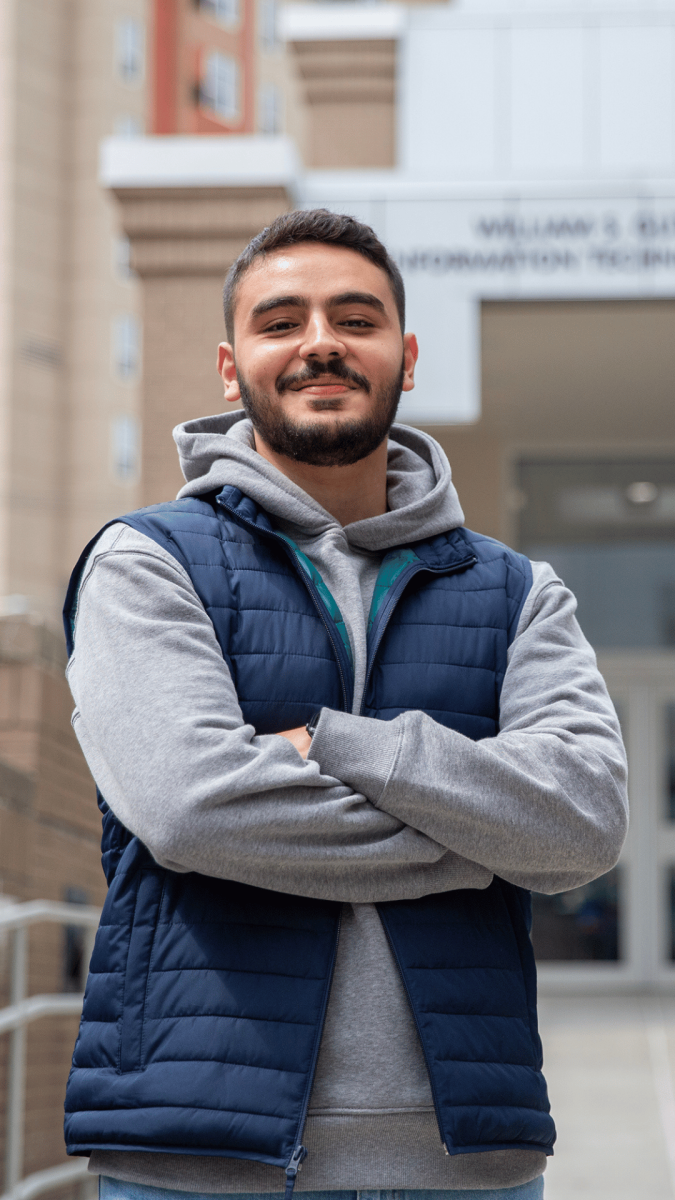
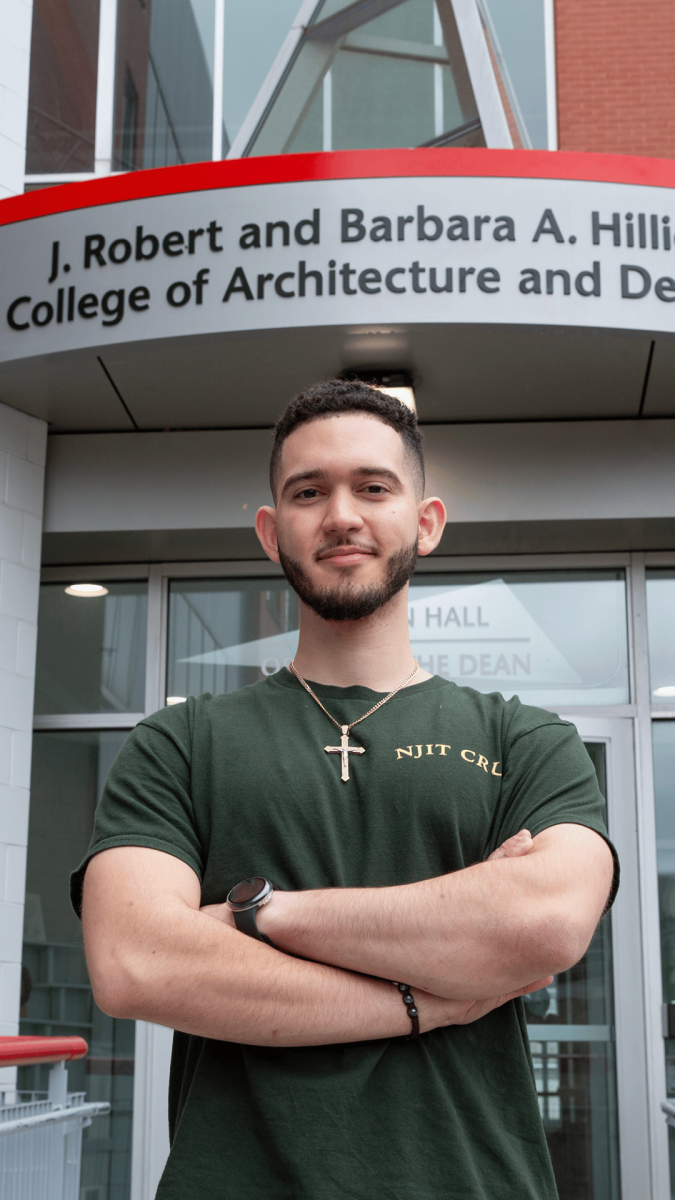
Need Help? We’re here to advise you.
One of the primary responsibilities of the physics department is to educate the next generation of scientists, engineers and scientifically informed citizenry through research-intensive education in the physical sciences and related technologies. The program provides students with critical interdisciplinary knowledge — offering a general physics option with a broad exposure to several major areas of physics. Students of the program will also be able to advance their studies through double major in Computer Science and Applied Physics and Applied Mathematics and Applied Physics (B.S. programs) options.
Through their coursework and research focuses, students of the Applied Physics B.S. program will exhibit the following:
While students in the Applied Physics B.S. Program earn a wide range of skills and knowledge through the program, we specifically aim for our students to meet the following learning outcomes:
Starting Salary, NJIT Average
Mid-Career Salary, National Average
This degree also opens a door to continue education at the graduate level.

Need Help? We’re here to advise you.
The goals for undergraduate biology majors describe broad areas of knowledge and skill. They have been identified by the Biological Sciences Faculty as essential for all biology majors to acquire before graduation.
This knowledge and associated skills will be acquired through a course structure that guides students through required core courses, flexible breadth requirement courses, and student-centered elective courses in the Department of Biological Sciences. It is critical for students to understand that no single course provides absolute knowledge/skill for a particular goal but instead academic success is achieved through academic integration and retention across all courses in the curriculum.
Biological Principles
Upon graduation, all biology majors should be able to integrate the principles described in the outcomes below at several levels of biological organization.
Use the principles of gene structure and expression to deduce mechanisms by which characteristics of organisms and populations are inherited.
Relate biological structure to function at various levels of an organization and in an evolutionary context.
Describe the mechanisms by which organisms develop from single cells.
Use the theory of biological evolution to explain the diversity of life.
Use the principles of bioenergetics to explain the activities of cells and the interactions of cells and organisms with each other and their environments.
Reasoning and Problem-Solving Skills
Upon graduation, all biology majors should be able to
Use observation and experiment to investigate biological phenomena and solve the problem.
Analyze and interpret in writing scientific information gathered through laboratory, field, and library research.
Speak effectively about scientific topics, issues, and problems in formal and informal contexts.
Use quantitative methods to describe and analyze biological phenomena.
Use technical skills and equipment to describe and quantify biological phenomena.
Recognize and discuss the social and ethical implications of the conduct of research in biology and its technological application to human problems.
Interact with others in a skilled, cooperative fashion to discuss issues and solve problems.
Interested in medical school or healthcare? NJIT offers accelerated (3+4) and traditional pre-health programs through Honors College with 94% accepted to US medical schools. Honors College
Starting Salary, NJIT Average
Mid-Career Salary, National Average
A bachelor’s degree in biological or biomedical sciences is the fourth most popular degree option nationwide.


Need Help? We’re here to advise you.
The goals for undergraduate biology majors describe broad areas of knowledge and skill. They have been identified by the Biological Sciences Faculty as essential for all biology majors to acquire before graduation.
This knowledge and associated skills will be acquired through a course structure that guides students through required core courses, flexible breadth requirement courses, and student-centered elective courses in the Department of Biological Sciences. It is critical for students to understand that no single course provides absolute knowledge/skill for a particular goal but instead academic success is achieved through academic integration and retention across all courses in the curriculum.
Biological Principles
Upon graduation, all biology majors should be able to integrate the principles described in the outcomes below at several levels of biological organization.
Reasoning and Problem-Solving Skills
Upon graduation, all biology majors should be able to
Interested in medical school or healthcare? NJIT offers accelerated (3+4) and traditional pre-health programs through Honors College with 94% accepted to US medical schools. Honors College
Starting Salary, NJIT Average
Mid-Career Salary, National Average
A bachelor’s degree in biological or biomedical sciences is the fourth most popular degree option nationwide.
Need Help? We’re here to advise you.
Students who major in NJIT’s History B.A. will engage in comprehensive academic study and conduct their own dynamic scholarly research that seeks to recount diverse perspectives and provide fuller understanding of complex issues we face today. Students will enjoy a personalized and interdisciplinary approach to learning, which will combine in-depth historical study and research with varied aspects of disciplines such as science, engineering, and medicine.
We expect that, as a student and/or graduate of the History B.A. program, you will exhibit and/or engage in the following:
Academic Excellence: Students will excel in their history coursework and will have his or her program approved by the head of the history department at NJIT or by an advisor designated by the head of the department.
Student Collaboration: Students will partner with NJIT’s distinguished history scholars, teachers, and students committed to historical inquiry at the highest levels.
Career Development: Students will plan for an advanced degree or exciting careers such as an educator, researcher, communicator or writer/editor, a public advocate or an entrepreneur.
In the program, History B.A students at NJIT will engage in strong academic work and dynamic research collaborations with distinguished faculty and fellow students. Through their work, History B.A. students will be able to apply useful skills in careers that require strong background in reading and writing. They will also develop a sharp analytical eye, as well as the ability to comprehend and communicate diverse perspectives, complex problems and solutions. We aim for students of the program to meet the following specific learning outcomes:
Students can communicate effectively, both orally and in writing.
Students examine information and data in historical sources and draw logical conclusions from them.
Students will have problem-solving skills required to learn how a past idea, event, or person has affected the present.
Students demonstrate proficiency in seeking and using information efficiently, effectively, and ethically.
Students observe and practice applications of concepts learned in a real-world setting.
Students develop independent research skills to examine and process information from a large number of historical documents, texts, and other sources.
Starting Salary, NJIT Average
Employment of museum and archive curators is projected to grow 14 percent from 2016 to 2026, faster than the average for all occupations.
Need Help? We’re here to advise you.
As a nationally and internationally recognized Ph.D. program, NJIT’s Applied Physics Ph.D. program prepares Ph.D. candidates with practical skills and theoretical knowledge for a successful career in academic or government organizations and private industry. Students will prepare for passing their written qualifier exams, as well as gain the theoretical and experimental background needed for their research, which they will orally present and defend as part of their Ph.D. thesis. Throughout their study as a Ph.D. candidate, students will exhibit the following:
Academic Excellence: Students will demonstrate compressive knowledge in their area of concentrations, formulate advanced research questions independently and propose methods of investigation to research currently unsolved problems.
Real-World Research Experience: Students will gain expertise and demonstrate broad knowledge of their field, its tools and techniques, and use this to develop new knowledge using ethical standards of conduct.
Professional Communication and Collaboration: Students will develop top-level communication skills to collaborate and speak effectively about scientific topics, issues and research at national and international meetings.
Upon graduation all Ph.D. students in Applied Physics should be able to meet the following learning outcomes:
Formulate advanced research questions independently and propose methods of investigation, including the design of experiments to investigate currently unsolved problems.
Demonstrate and apply comprehensive knowledge in the area of concentration to identify, find, evaluate, articulate and use scientific information at a high level of proficiency.
Apply quantitative methods to describe and analyze phenomena.
Publish at least one scientific article as the first author in peer-reviewed journals in the area of concentration.
Present at least one professional talk at the National or International Conference in the area of concentration.
Demonstrate broad knowledge of the field, its tools and techniques to develop new knowledge.
Identify, find, evaluate, articulate and use scientific information associated with their field.
Interact with other professional and student researchers in a skilled, cooperative fashion to discuss issues and solve scientific problems at a high level of proficiency.
Conduct research and develop relationships using ethical, professional standards of conduct.
Recognize and discuss the social and ethical implications of the conduct of research and its technological application to human problems.
Demonstrate ethical conduct in performing and reporting on scientific research.
Effectively interpret in writing, scientific information gathered through laboratory and library research.
Speak effectively about scientific topics, issues, and problems in informal and formal contexts at a level expected at national and international meetings.
Starting Salary, NJIT Average
Mid-Career Salary, National Average
This degree also opens a door to continue education at the graduate level.
One of the primary objectives of the Physics M.S. program is to provide students with the academic foundation and research experience they will need for professional development, as well as for graduate study at the Ph. D. Level. Through their coursework and research during their M.S. theses project, majors are prepared for a successful career or to become Ph.D. candidates in physics, applied physics, materials science and related disciplines. Thus, students will demonstrate and take part in:
Academic Excellence: Students will excel in academic study of principles of physics as well as research focuses they choose from a wide range of areas, such as optical science, astronomy and solar-terrestrial physics, laser physics and others.
Real-World Experience: Students will gain expertise in basic laboratory equipment and field techniques through on-campus opportunities at NJIT and the university’s distinguished research partnerships.
Communication and Collaboration: Students will effectively collaborate on research toward their thesis and may play a supporting role in the form of searching and preparing literature reviews based on research papers that are relevant to the topic of their theses.
If you are interested in an advanced research-driven education in applied physics, engineering and technology, the Applied Physics M.S. program offers a distinguished and diverse academic environment to take your next step. While students in the Applied Physics M.S. Program get to earn a wide range of knowledge and skills from areas that they are passionate about, we specifically aim for our students to meet the following learning outcomes:
Upon graduation, students should acquire the fundamental set of knowledge covered by the required courses.
Upon graduation, most of the students who consider the next level of Graduate education should be able to prepare for Ph.D. qualifier exams in Physics and Applied Physics at NJIT or other Universities.
Upon graduation, most of the students should be able to acquire a necessary depth of knowledge in the area of specialization, such as optics, biophysics, material science, or astronomy to be admitted to and successfully proceed with the Ph.D. studies at NJIT or other Universities.
Upon graduation, students should be able to acquire skills to identify scientific problems, perform literature review on the problem, and identify the solution venues in research environment.
Upon graduation, students should be able to demonstrate the ability to function effectively as a Member of a Research Team with improved qualification as Members of Technical Staff in Industry. Students should become more knowledgeable and competitive on a job market.
Upon graduation, a student should be able to formulate a research question and develop a systematic approach to address it, at both the conceptual and technical levels.
Starting Salary, NJIT Average
Mid-Career Salary, National Average
This degree also opens a door to continue education at the graduate level.
The objective of the Ph.D. program is to produce scientists capable of performing significant independent research in their area of specialization, and of effectively communicating their work to other scientists, policy-makers, and the general public. This is achieved through three types of training:
Critical-thinking and quantitative skills to understand current issues in biology, including critical analysis of the primary literature in their chosen area of specialization.
High-level research techniques — an appropriate combination of laboratory, computational and literature based skills — and use these to complete a dissertation that expands our understanding of a particular area of biology. Upon completion, a graduating student will be capable of planning and conducting a hypothesis-driven research program.
Professional communication of their work both formally and informally, to audiences as diverse as the general public, undergraduates, or world-renowned researchers in their field of specialization. This crucial skill will enable them to pursue careers in academia, government, private industry or non-profit organizations.
Students who complete the program are expected to leave with considerable expertise in their broader research field and in the narrower context of their specific research projects. Overall, we expect graduates of the Biology Ph.D. program at NJIT to meet the following learning outcomes:
They will have the ability to design and conduct scientifically sound experiments or theoretical studies. They will be able to discuss critically the approaches and results obtained.
They will have learned to analyze and interpret various forms of experimental data and/or theoretical results, put them in a larger conceptual framework, and critically assess their general biological relevance.
They will understand ethical principles and regulatory restrictions that govern the use of animals, humans, and environmental resources in biological research approaches.
They will have developed a broad understanding of biology and related disciplines in the larger human and global context.
They will have obtained the depth and breadth of knowledge, as well as the language and critical thinking skills needed to operate in a multidisciplinary environment, be it in academia of elsewhere.
They will have gained the ability to effectively communicate scientific data, ideas, concepts, and relevance to both experts and broader audiences. This pertains to both written and oral communications.
They will be well prepared to obtain gainful employment in private, government, industry, or academic sectors. For example, they will be qualified and competitive in the search for postdoctoral research positions in industry or academia.
Starting Salary, NJIT Average
Mid-Career Salary, National Average
A bachelor’s degree in biological or biomedical sciences is the fourth most popular degree option nationwide.


Need Help? We’re here to advise you.
The Master of Science in Biology is designed to provide students with advanced knowledge of both plant and animal biology, as well as microbiology. Through their advanced study and research experiences, the program aims for graduates:
To be provided with a broad background in the life sciences at different levels of biological organization (from molecular, cellular, and organismal biology, to populations, communities and ecosystems).
To be provided with a comprehensive education in biology that stresses scientific reasoning and problem solving across the spectrum of disciplines within biology.
To be provided with extensive hands-on training in laboratory skills and/or field techniques.
To be provided thorough training in written and oral communication of scientific information.
To be engaged in scientific inquiry and foster life-long learning.
To be prepared to make informed political and societal decisions relevant to the biological sciences.
While students in the program gain focused skills and theoretical knowledge helpful for launching their chosen career in biological sciences, we specifically aim for students to meet the following learning outcomes:
Students will integrate math, physical sciences and technology to answer biological questions using the scientific method.
Students will demonstrate proficiency of lab and field techniques in their area of specialization.
Students will master and retain fundamental concepts in biology.
Students will demonstrate the skill to assess and analyze data with objectivity.
Students will demonstrate proficiency in searching, reading and evaluating the scientific literature.
Students will demonstrate a thorough understanding and competency in a specific discipline within the biological sciences.
Students will be able to communicate scientific ideas effectively in both oral and written formats.
Students will be able to think critically and evaluate, design, conduct and quantitatively assess innovative research in a biological discipline.
Students will have acquired the skills and knowledge needed for employment or advanced graduate or professional study in discipline related areas.
Students will be able to read, understand, and critically interpret the primary biological literature in their area of interest.
Students will recognize and be able to apply basic ethical principles to basic and applied biological practice and will understand the role of biological science, scientists, and practitioners in society.
Starting Salary, NJIT Average
Mid-Career Salary, National Average
A bachelor’s degree in biological or biomedical sciences is the fourth most popular degree option nationwide.
Need Help? We’re here to advise you.
Students of the M.A. program will engage in advanced academic study and conduct their own dynamic scholarly research that seeks to recount diverse perspectives and provide a fuller understanding of complex issues we face today. Above all, the program is designed to enrich students' lives by exposing them to some of the major experiences and events, people and cultures, books and ideas that have shaped our modern world.
We expect that students/graduates of the History M.A. program will the exhibit and/or engage in the following:
Academic Excellence: Students will excel in their history coursework, as well as engage in internships available at local historical organizations.
Professionalism: Students hone professional communication, collaboration and research skills needed to enhance their professional career and increase their opportunities for advancement.
Career Development: Students will prepare for an advanced degree or careers in teaching, business, law, government, administration, and other fields related to history.
In the program, History M.A. students will engage in strong academic work and dynamic research collaborations with distinguished faculty and fellow students. For the M.A. in History, students must complete 30 credits of coursework, which includes 18 credits in an area of concentration (American History; World History; or the History of Technology, Environment, and Medicine/Health). Students must take at least 6 credits outside of their concentration, and complete either a thesis (6 credits) or a Master's Essay (3 credits). Among the many important skills that students of the program will master, Learning Outcomes specifically include:
Students will communicate effectively, both orally and in writing.
Students will examine information and data in historical sources and draw logical conclusions from them.
Students will have problem-solving skills required to learn how a past idea, event, or person has affected the present.
Students will demonstrate proficiency in seeking and using information efficiently, effectively and ethically.
Students will observe and practice applications of concepts learned in a real-world setting.
Students will develop independent research skills to examine and process information from a large number of historical documents, texts, and other sources.
Starting Salary, NJIT Average
Employment of museum and archive curators is projected to grow 14 percent from 2016 to 2026, faster than the average for all occupations.
Need Help? We’re here to advise you.
