Degree Overview
- Delivery Format: on-campus
- Required Credits: 60
Program Details
Our program educational objectives are reflected in the achievements of our recent alumni.
- Research and/or Practice: Alumni will successfully engage in the research and/or practice of civil engineering within academia, industry, government, and private practice, working toward sustainable solutions in a technical specialty area including construction, environmental, geotechnical, structural, transportation, and water resources. Alumni will be able to synthesize technical knowledge of engineering analysis, and design to identify, formulate and solve problems of professional interest and importance.
- Professional Growth: Alumni will advance their skills through research, innovation, professional growth and development activities such as research in civil engineering.
- Service: Alumni will perform service to society and the engineering profession through membership and participation in professional societies, government, educational institutions, civic organizations, and humanitarian endeavors.
What You Will Learn:
Graduates of Ph.D. in Civil Engineering program will be able to:
- Evaluate the effectiveness of a designed experiment and the implications of the resulting data;
- Verify and justify the solution to a complex civil engineering problem, including the use of appropriate tools and techniques;
- Develop and evaluate new, advanced technical knowledge in a specialized area of civil engineering; and
- Synthesize and explain the relevance and application of new, advanced technical knowledge in both technical and non-technical terms.
Admissions & curriculum
Salaries
Starting Salary, NJIT Average
Mid-Career Salary, National Average
Top ranked MS in Civil Engineering
Where do Civil Engineering majors work?
- Civil Engineer
- Geotechnical Engineer
- Structural Engineer
- Design Engineer
- Construction Management Engineer
- AECOM
- Jacobs Engineering Group Inc.
- WSP Parsons Brinckerhoff
- HNTB
- Langan
What our students are saying
-
 The knowledge and skills I’ve gained here have opened doors for me, and I carry those experiences with great pride."Anthony J. Rodriguez Diaz
 -
 I’m proud of the interdisciplinary approach I’ve developed, using my civil engineering studies to strengthen my architectural work. "Oscar Villalobos
 -
 NJIT has helped me shape a path where I can approach projects with both creativity and technical insight, which I’ve learned is a highly valued skill in the industry."Christopher Lema
Tuition Cost
How Much does it cost to Attend NJIT?
Core Faculty
-
Adams, Matthew
- Associate Professor
- Associate Professor
-
Bagheri, Sima
-
Bandelt, Matthew
- Acting Dean, Newark College of Engineering
- Associate Professor
-
Karaa, Fadi
- Associate Professor
- Associate Professor
-
Konon, Walter
- Professor
-
Meegoda, Jay
- Distinguished Professor
- Distinguished Professor
-
Saadeghvaziri, Mohamad
- Professor
- Professor
-
Saigal, Sunil
- Distinguished Professor
- Distinguished Professor
-
Wecharatana, Methi
- Professor
- Professor
Degree Overview
- Delivery Format: on-campus
- Required Credits: 36
Program Details
Ph.D. students in NJIT’s Chemical Engineering program are expected to originate and advance research in their area of study, while also preparing to become leaders in academia, industry or the government. The Ph.D. candidate enters as a student, progresses as an apprentice scholar, and graduates as a colleague of his or her mentor.
What You Will Learn:
- An ability to identify, formulate, and solve complex engineering problems by applying principles of engineering, science, and mathematics.
- An ability to apply engineering design to produce solutions that meet specified needs with consideration of public health, safety, and welfare, as well as global, cultural, social, environmental, and economic factors.
- An ability to communicate effectively with a range of audiences.
- An ability to recognize ethical and professional responsibilities in engineering situations and make informed judgments, which must consider the impact of engineering solutions in global, economic, environmental, and societal contexts.
- An ability to function effectively on a team whose members together provide leadership, create a collaborative and inclusive environment, establish goals, plan tasks, and meet objectives.
- An ability to develop and conduct appropriate experimentation, analyze and interpret data, and use engineering judgment to draw conclusions.
- An ability to acquire and apply new knowledge as needed, using appropriate learning strategies.
Admissions & curriculum
Salaries
Starting Salary, NJIT Average
Mid-Career Salary, National Average
NJIT’s Chemical Engineering program is in the top 100 in the country
Where do Chemical Engineering majors work?
- Chemical Engineer
- Process Engineer
- Manufacturing Engineer
- Product Engineer
- Research And Development Engineer
- Colgate-Palmolive
- FM Global
- L'Oreal USA
- Phillips 66
- TEVA Pharmaceuticals
What our students are saying
-
 I’m working on microfluidic biosensors for cancer detection. We hope this technology will replace invasive biopsies. "Mehnaz Mursalat
 -
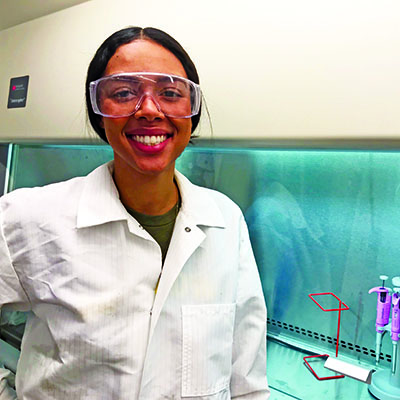 What I love about research at NJIT is that primary investigators draw on creative and hardworking thinkers throughout the campus community. "Victoria Harbour
 -
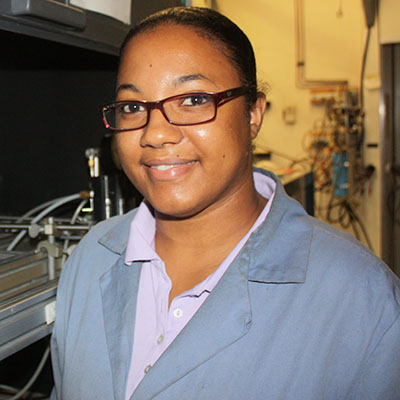 I’m interested in current challenges the energy community faces."Kerri-Lee Chintersingh
Tuition Cost
How Much does it cost to Attend NJIT?
Core Faculty
-
Armenante, Piero
- Distinguished Professor
- Distinguished Professor
-
Axe, Lisa
- Chair
- Chair
-
Barat, Robert
-
Basuray, Sagnik
- Associate Professor
- Associate Professor
-
Dave, Rajesh
- Distinguished Professor
- Distinguished Professor
-
Guvendiren, Murat
- Associate Professor
- Associate Professor
-
Khusid, Boris
- Professor
- Professor
-
Simon, Laurent
- Vice Provost for UG Studies
- Professor
-
Sirkar, Kamalesh
- Distinguished Professor
- Distinguished Professor
-
Wang, Xianqin
- Professor
- Professor
Contact Us
Need Help? We’re here to advise you.
Degree Overview
- Delivery Format: on-campus
- Required Credits: 60-61
Program Details
Ph.D. students in NJIT’s Biomedical Engineering program are expected to originate and advance research in their area of study, while also preparing to become leaders in academia, industry or the government. The Ph.D. candidate enters as a student, progresses as an apprentice scholar and graduates as a colleague of his or her mentor.
What You Will Learn:
Doctoral students in NJIT’s Biomedical Engineering program are preparing for diverse fields and will work with renowned experts in these specialty areas:
- Biomaterials and Biocompatibility;
- Tissue Engineering and Regenerative Medicine;
- Cellular and Orthopedic Biomechanics;
- Biomedical Signal Processing;
- Imaging and Instrumentation;
- Neural and Neuromuscular Engineering
However, we expect all of our Ph.D. students to achieve these learning outcomes:
- Develop independence in research problem-solving skills at an advanced level
- Acquire the depth of knowledge in your area of concentration to achieve a doctoral level of expertise
- Learn new methods of investigation
- Develop new skills appropriate for the student’s area of specialization
- Cooperate with laboratory staff and students and contribute to the scholarship in the lab
- Acquire sufficient breadth of knowledge to encourage new skills and problem- solving approaches that allow continuous learning and development
- Develop an understanding of the diversity of research methods employed by successful investigators by completing two laboratory rotations, one in an engineering laboratory and the second in a life science laboratory
- Attend at least one scientific conference as the primary presenter of a paper.
- Understand the conduct and support of research and development
- Develop ethical reasoning skills
- Improve communication skills for teaching and research dissemination
Admissions & curriculum
Salaries
Starting Salary, NJIT Average
Mid-Career Salary, National Average
#85 in Best Engineering Schools
Where do Biomedical Engineering majors work?
- Medical Device Engineer
- Clinical Engineer
- Biomedical Research Scientist
- Rehabilitation Engineer
- Regulatory Affairs Specialist
- Cognizant Technology Solutions
- Maquet Getinge Group
- Upstart Product Development
- Stryker Orthopaedics
- Edwards Lifesciences
What our students are saying
-
 We do a lot of labs in my major and there is so much genuine interaction with professors in these classes and lots of teamwork. "Brianna Bohn
 -
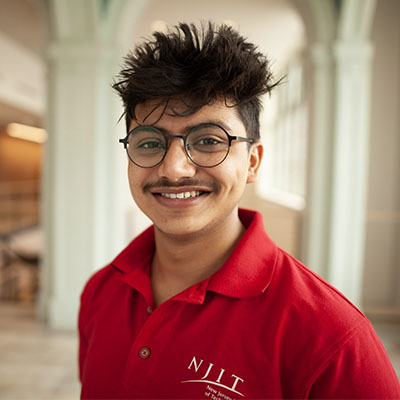 I was able to get research experience during my freshmen year, which is really cool."Madhusan Duwadi
 -
 I’m really grateful to the Honors College for giving me the chance to do research."Margaret Christian
Tuition Cost
How Much does it cost to Attend NJIT?
Core Faculty
-
Adamovich, Sergei
- Professor
- Professor
-
Alvarez, Tara
- Distinguished Professor
- Distinguished Professor
-
Biswal, Bharat
- Distinguished Professor
- Distinguished Professor
-
Chandra, Namas
-
Lee, Eunjung
- Associate Professor
- Associate Professor
-
Miri, Amir
- Associate Professor
- Associate Professor
-
Pal, Saikat
- Associate Professor
- Associate Professor
-
Pfister, Bryan
- Chair
- Chair
-
Sahin, Mesut
- Professor
- Professor
-
Zhou, Xianlian
- Associate Professor
- Associate Professor
Degree Overview
- Delivery Format: on-campus
- Required Credits: 30
Program Details
Our program educational objectives are reflected in the achievements of our recent alumni.
- Research and/or Practice: Alumni will successfully engage in research and/or practice of environmental engineering within industry, government, and private practice, working toward sustainable solutions in one or more technical specialty. Alumni will be able to synthesize technical knowledge of engineering analysis and design to identify, formulate and solve problems of professional interest and importance.
- Professional Growth: Alumni will advance their skills through innovation, professional growth and development activities such as research and doctoral study, professional registration, and continuing education.
- Service: Alumni will perform service to society and the engineering profession through membership and participation in professional societies, government, educational institutions, civic organizations, and humanitarian endeavors.
What You Will Learn:
Graduates of the program will be able to:
- Specify or design and experiment to meet a need, conduct the experiment, and analyze and explain the resulting data;
- Identify, formulate, and solve complex environmental problems by selecting and applying appropriate tools and techniques; and
- Synthesize advanced technical knowledge in a traditional or emerging area of knowledge in a specialized area of environmental engineering.
Admissions & curriculum
Salaries
Starting Salary, NJIT Average
Mid-Career Salary, National Average
NJIT’s graduate programs in Environmental Engineering rank in the top 75 in the U.S.
Where do Environmental Engineering majors work?
- Environmental Engineer
- Water Resources/Drainage Engineer
- Environmental Specialist
- Senior Environmental Project Manager
- Air Quality Engineer
- AECOM
- Jacobs Engineering Group Inc.
- WSP Parsons Brinckerhoff
- Langan
- Stantec
What our students are saying
-
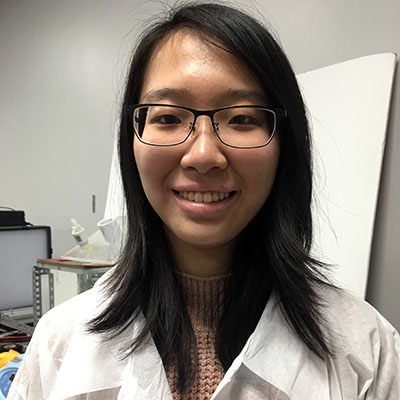 I’m from Beijing, and I’ve been aware of environmental issues since I was a kid. I’m here to learn how to improve and fix these problems."Wenxin Ye
 -
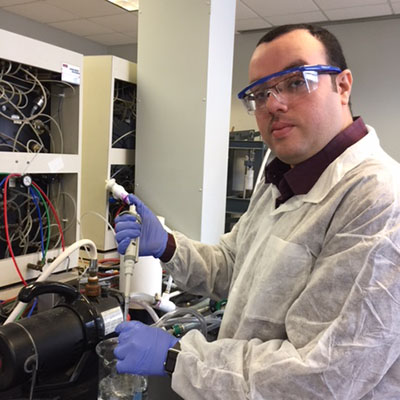 I work on nanobubbles. My target is to help develop simple, cheap, eco-friendly and safe technologies for all parts of the world."Ahmed Khaled Abdella
 -
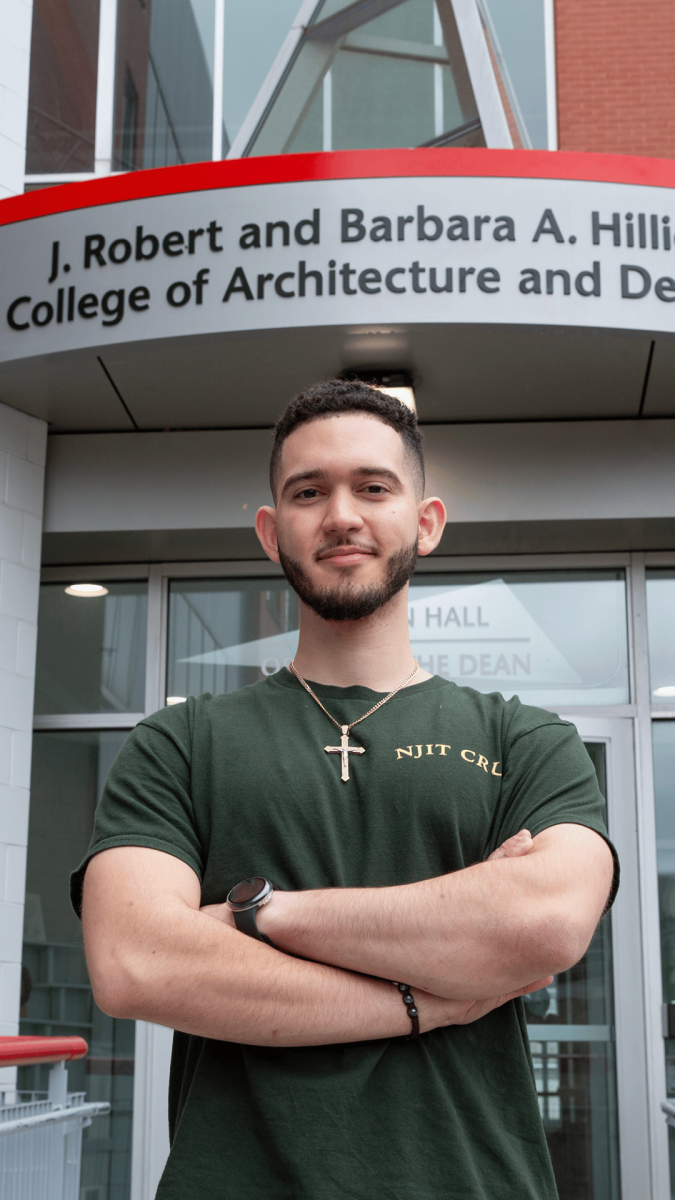 NJIT was my dream school."Hilsson Angeles
Tuition Cost
How Much does it cost to Attend NJIT?
Degree Overview
- Delivery Format: on-campus
- Required Credits: 30
Program Details
Our program’s educational objectives are reflected in the achievements of our recent alumni.
- Research and Practice: Alumni will successfully engage in research, practice, or both, related to critical infrastructure systems within the industry, government and private practice, where they will work toward sustainable solutions. Alumni will be able to organize, analyze, manage, restore, upgrade and secure the nation’s infrastructure across its multiple inter-dependent and complex sectors.
- Professional Growth: Alumni will advance their skills by embracing innovation, professional growth and development activities such as research and doctoral study in engineering, professional registration, and continuing education.
- Service: Alumni will perform service to society and the engineering profession through membership and participation in professional societies, government, educational institutions, civic organizations and humanitarian endeavors.
What You Will Learn:
Graduates of the program will be able to:
- Specify or design and experiment to meet a need, conduct experiments and analyze and explain the resulting data.
- Identify, formulate and solve complex problems by selecting and applying appropriate tools and techniques.
- Synthesize advanced technical knowledge in civil systems, lifecycle planning, asset management, program management, inter-dependent engineered systems, information systems, architecture, and management.
Admissions & curriculum
Salaries
Starting Salary, NJIT Average
Mid-Career Salary, National Average
Teaches students the skills they need to repair, renew and manage America's evolving infrastructure.
Where do Critical Infrastructure Systems majors work?
- Infrastructure Project Manager
- Asset Manager
- Infrastructure and Community Resilience Manager
- Civil Engineer
- Utility Systems Engineer
- AECOM
- Jacobs Engineering Group Inc.
- WSP Parsons Brinckerhoff
- PSE&G
- The Port Authority of NY & NJ
What our students are saying
-
NJIT was my dream school."Hilsson Angeles
-
 Getting a degree from a great school like NJIT gave me the opportunity to choose the job I wanted."Seif Issa
Tuition Cost
How Much does it cost to Attend NJIT?
Core Faculty
-
Adams, Matthew
- Associate Professor
- Associate Professor
-
Bandelt, Matthew
- Acting Dean, Newark College of Engineering
- Associate Professor
-
Karaa, Fadi
- Associate Professor
- Associate Professor
-
Konon, Walter
- Professor
-
Saadeghvaziri, Mohamad
- Professor
- Professor
-
Saigal, Sunil
- Distinguished Professor
- Distinguished Professor
-
Wecharatana, Methi
- Professor
- Professor
Degree Overview
- Delivery Format: on-campus
- Required Credits: 30
Program Details
The program is focused on the advanced understanding of the fundamentals of chemical engineering, including thermodynamics, kinetics and transport phenomena. Students are provided additional exposure to the fields of research in the department, including materials and polymer processing, biotechnologies, membrane technologies, pharmaceutical engineering and materials for energy. Graduates will be prepared for leadership roles as chemical engineers or engineering managers supervising both existing and emerging processes in industry. They will also be well equipped for advancing their career in research and development.
What You Will Learn:
- An ability to identify, formulate, and solve complex engineering problems by applying principles of engineering, science, and mathematics.
- An ability to apply engineering design to produce solutions that meet specified needs with consideration of public health, safety, and welfare, as well as global, cultural, social, environmental, and economic factors.
- An ability to communicate effectively with a range of audiences.
- An ability to recognize ethical and professional responsibilities in engineering situations and make informed judgments, which must consider the impact of engineering solutions in global, economic, environmental, and societal contexts.
- An ability to function effectively on a team whose members together provide leadership, create a collaborative and inclusive environment, establish goals, plan tasks, and meet objectives.
- An ability to develop and conduct appropriate experimentation, analyze and interpret data, and use engineering judgment to draw conclusions.
- An ability to acquire and apply new knowledge as needed, using appropriate learning strategies.
Admissions & curriculum
Salaries
Starting Salary, NJIT Average
Mid-Career Salary, National Average
NJIT’s Chemical Engineering program is in the top 100 in the country
Where do Chemical Engineering majors work?
- Chemical Engineer
- Process Engineer
- Manufacturing Engineer
- Product Engineer
- Research And Development Engineer
- Colgate-Palmolive
- FM Global
- L'Oreal USA
- Phillips 66
- TEVA Pharmaceuticals
What our students are saying
-
I’m working on microfluidic biosensors for cancer detection. We hope this technology will replace invasive biopsies. "Mehnaz Mursalat
-
What I love about research at NJIT is that primary investigators draw on creative and hardworking thinkers throughout the campus community. "Victoria Harbour
-
I’m interested in current challenges the energy community faces."Kerri-Lee Chintersingh
Tuition Cost
How Much does it cost to Attend NJIT?
Core Faculty
-
Armenante, Piero
- Distinguished Professor
- Distinguished Professor
-
Axe, Lisa
- Chair
- Chair
-
Barat, Robert
-
Basuray, Sagnik
- Associate Professor
- Associate Professor
-
Dave, Rajesh
- Distinguished Professor
- Distinguished Professor
-
Guvendiren, Murat
- Associate Professor
- Associate Professor
-
Khusid, Boris
- Professor
- Professor
-
Simon, Laurent
- Vice Provost for UG Studies
- Professor
-
Sirkar, Kamalesh
- Distinguished Professor
- Distinguished Professor
-
Wang, Xianqin
- Professor
- Professor
Degree Overview
- Delivery Format: on-campus
- Required Credits: 30
Program Details
Master’s students in NJIT’s Biomedical Engineering program are expected to make significant contributions to research in their area of study, while also preparing to become leaders in academia, industry or the government. Graduates of our program are successfully engaged in the practice of biomedical engineering within industry, academia, and government.
Our graduates should demonstrate the ability to:
- Evaluate the safety, efficiency, and effectiveness of medical equipment
- Diagnose and interpret data, using signal processing techniques
- Research new materials to be used for products, such as implants
- Design and develop medical diagnostic and clinical instrumentation, equipment and procedures, using the principles of engineering
- Develop models or computer simulations of human behavioral systems to obtain data for measuring or controlling life processes
- Manage teams of engineers by creating schedules, tracking inventory, creating and using budgets and overseeing contract obligations and deadlines
- Evaluate the safety, efficiency, and effectiveness of biomedical equipment
- Adapt or design computer hardware or software for medical use
- Analyze new medical procedures to forecast likely outcomes
- Design and deliver technology to assist people with disabilities
- Advise and assist in the application of instrumentation in clinical environments
- Advise hospital administrators on the planning, acquisition, and use of medical equipment
- Install, adjust, maintain, repair, or provide technical support for biomedical equipment
- Conduct training or in-services to educate clinicians and other personnel on proper use of equipment
- Write documents describing protocols, policies, standards for use, maintenance and repair of medical equipment
- Conduct preventative maintenance on equipment
- Keep documentation of service histories on all biomedical equipment
What You Will Learn:
Masters students in NJIT’s Biomedical Engineering program are preparing for diverse fields and will work with renowned experts in these specialty areas: Biomaterials and Biocompatibility; Tissue Engineering and Regenerative Medicine;
Cellular and Orthopedic Biomechanics; Biomedical Signal Processing; Imaging and Instrumentation; Neural and Neuromuscular Engineering. However, we expect all of our master’s students to achieve these learning outcomes:
- Develop independence in research problem-solving skills at an advanced level
- Acquire the depth of knowledge in your area of concentration to achieve a master’s level of expertise
- Learn new methods of investigation
- Develop new skills appropriate for the student’s area of specialization
- Cooperate with laboratory staff and students and contribute to the scholarship in the lab
- Acquire sufficient breadth of knowledge to encourage new skills and problem- solving approaches that allow continuous learning and development
- Develop an understanding of the diversity of research methods employed by successful investigators
- Understand the conduct and support of research and development
- Develop ethical reasoning skills
- Improve communication skills for teaching and research dissemination
Admissions & curriculum
Salaries
Starting Salary, NJIT Average
Mid-Career Salary, National Average
#85 in Best Engineering Schools
Where do Biomedical Engineering majors work?
- Medical Device Engineer
- Clinical Engineer
- Biomedical Research Scientist
- Rehabilitation Engineer
- Regulatory Affairs Specialist
- Cognizant Technology Solutions
- Maquet Getinge Group
- Upstart Product Development
- Stryker Orthopaedics
- Edwards Lifesciences
What our students are saying
-
I was able to get research experience during my freshmen year, which is really cool."Madhusan Duwadi
-
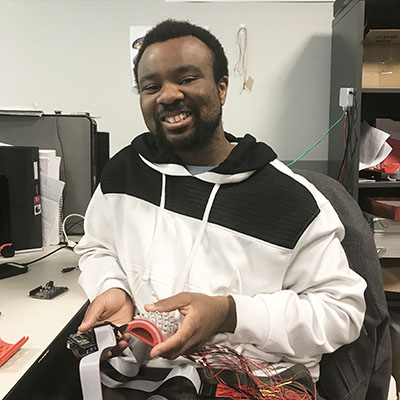 I work on biomechanical devices for rehabilitation. What motivates me is turning health-related challenges into practical solutions."Oyindamola Owoeye
 -
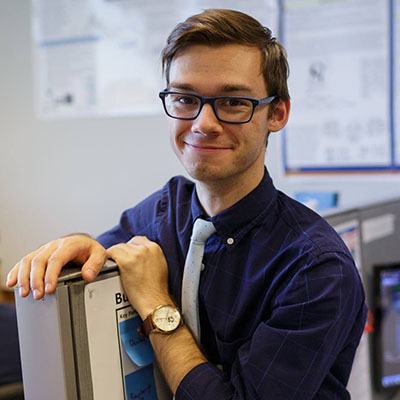 I chose to complete my master's in BME at NJIT because I could design a program that fit my needs. "John Vito d'Antonio-Bertagnoli
Tuition Cost
How Much does it cost to Attend NJIT?
Core Faculty
-
Adamovich, Sergei
- Professor
- Professor
-
Alvarez, Tara
- Distinguished Professor
- Distinguished Professor
-
Biswal, Bharat
- Distinguished Professor
- Distinguished Professor
-
Chandra, Namas
-
Lee, Eunjung
- Associate Professor
- Associate Professor
-
Miri, Amir
- Associate Professor
- Associate Professor
-
Pal, Saikat
- Associate Professor
- Associate Professor
-
Pfister, Bryan
- Chair
- Chair
-
Sahin, Mesut
- Professor
- Professor
Contact Us
Need Help? We’re here to advise you.