Degree Overview

  • Delivery Format: online
  • Required Credits: 30 - 45

Admissions & curriculum

Explore this area of study

Digital Design Salaries

$52,000

Starting Salary, NJIT Average

$75,000

Mid-Career Salary, National Average

UI/UX and Motion Graphics Designers earn around $100K median annually

Learn About The department of Digital Design
What our students are saying
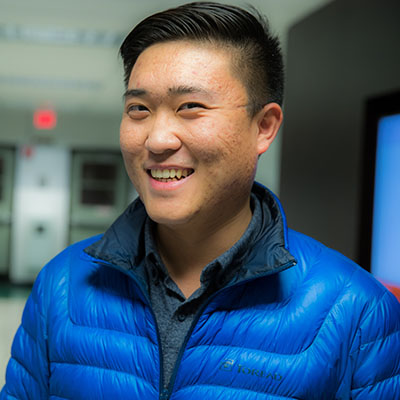
  • Amos  Dudley
    I launched my post-NJIT career as an applications engineer at Formlabs."
    Amos Dudley

Tuition Cost

How Much does it cost to Attend NJIT?

$32,216
Average cost of attendance for NJ resident undergrads living on campus
- $18,913
Average amount of grants and scholarships per student
= $13,303
Learn More About Tuition & Costs

Food Sales & Distribution Guidelines

General Policy and Compliance

Close All Expand All

These guidelines align with the City of Newark’s health and safety regulations, which are designed to ensure public health and safe food handling at events. The University has worked closely with the Newark Health Department to understand and implement their food sales and distribution requirements.

Yes, the guidelines apply to all NJIT facilities located within Newark, NJ, including off-campus locations. The City of Newark’s Food Handler’s Ordinance requires all individuals handling, preparing, or serving food to obtain a valid food handler’s permit.

Gourmet Dining (GD) must approve any outside food served at an NJIT event. Once GD grants approval, food may be purchased from an external vendor, provided that at least one individual with a valid Food Handler’s Certification is present at the event. If food is ordered directly through GD, a Food Handler’s Certification is not required.

Food Handler’s Certification & Training

Close All Expand All

At least one certified individual must be present at any event where food is being served (excluding prepackaged, non-TCS foods). The City of Newark accepts certifications from the following organizations:

No, you are not required to use your NJIT email, but the certification must include your full name.

Only one certified individual must be present at events where food is served. That individual must be present for the duration of the event. Anyone without the certification may not serve food items.

Yes, student organizations may use their budgets to cover the cost of certification if funds are available. OSIL is working on ways to make Food Handler’s Certification more accessible and will provide guidance to student organizations on complying with the new guidelines.

No, NJIT does not offer its own training. Individuals must obtain certification through an approved provider such as ServSafe.

Homemade Foods & Potlucks

Close All Expand All

No, homemade foods, including baked goods and potluck-style contributions, are not permitted, even if a Food Handler’s Certification is present. This restriction ensures all food served at events meets safety standards and comes from licensed, inspected facilities.

Yes, these guidelines apply to organized events and food distribution, not personal food exchanges between individuals. If food is gifted or shared privately and aligns with ethics guidelines, it is not subject to these rules.

More Information

Close All Expand All

For additional information, please visit the Food Sales and Distribution policy page available online at www.njit.edu/foodsales or contact Newark’s Food and Drug Bureau at (973) 733-3734 or online https://www.newarknj.gov/card/food-and-drug-bureau.

  • Students & Student Organizations should contact the Office of Student Involvement & Leadership at osil@njit.edu or (973) 596-3694. 
  • Residence Life staff and groups affiliated with Residence Life should contact reslife@njit.edu or call (973)-596-5347. 
  • Faculty and Staff should contact Human Resources at hr@njit.edu or call (973) 596-3140.

Degree Overview

  • Delivery Format: online
  • Required Credits: 12

Admissions & curriculum

Explore this area of study

Business Administration Salaries

$108,125

Starting Salary, NJIT Average

Top 50 Nationally for Entrepreneurship Studies - The Princeton Review, 2025

Learn About The department of Business Administration

Tuition Cost

How Much does it cost to Attend NJIT?

$32,216
Average cost of attendance for NJ resident undergrads living on campus
- $18,913
Average amount of grants and scholarships per student
= $13,303
Learn More About Tuition & Costs

Best Practices Related to Academic Integrity

Academic integrity is crucial to the reputation of any post-secondary institution including NJIT.  Academic dishonesty diminishes our reputation as a high-performance university. It is vital that we, as an institution, do our best to prevent academic dishonesty by communicating with our students on a regular basis and be willing to take swift action when policies are violated. Below, please find a series of recommendations to prevent and address violations in your classes.

This document is organized into six broad categories:

  1. General Procedures

  2. General Classroom Practices

  3. Examinations

  4. Plagiarism

  5. Falsification & Fabrication

  6. Cheating

  7. Information for Faculty

  8. Suggestions to Eliminate or Discover Violations During Virtual Exams

General Procedures

  1. All suspected or confirmed cases of academic dishonesty or misconduct must be referred to the Dean of Students using the online reporting tool (located here) where they will be consistently adjudicated in accordance with the University Policy on Academic Integrity.

  2. Teaching Assistants and Proctors should notify instructors when violations of the academic integrity policy are suspected or observed.  Instructors should notify the appropriate person in their department or college, e.g their chairs, directors, or deans.

  3. Anti-cheating/plagiarism measures should be reviewed at department meetings on a regular basis beginning with the first meeting of each semester. This discussion should include educating faculty on innovative uses of modern technology to prevent cheating and plagiarism.

  4. Open forums should be held to address cheating, plagiarism and other academic integrity issues that are trending. Junior faculty are encouraged to attend an open forum at least once each year and could include such participation in teaching portfolios.

  5. Remind Ph.D. and MS students doing thesis or project work that they may be dismissed from the graduate program for falsifying processes, reports and data and/or fabricating research results and/or plagiarizing the work of others in their dissertation or thesis document or resultant publications. For academic integrity lapses discovered after their graduation, please be advised that NJIT has every right to rescind the degree.

  6. Remind undergraduate students involved in research that they can be penalized for falsifying processes, reports and data and/or fabricating research results and/or plagiarizing the work of others in their reports.

General Classroom Practices

The following recommendations are guidelines for classroom procedures. Each instructor, or department, may adapt to his, her or their particular situation.

  1. Have each professor outline, specifically on the syllabus, expectations for the class (including a link to the NJIT Academic Integrity Code). This would include attendance, use of electronics in the classroom (if appropriate), doing one’s own work to avoid plagiarism, rules for taking quizzes and tests, and the consequences for violating any and all expectations or rules. If calculators are allowable during quizzes or exams, the syllabus should state the type of calculator allowed.

  2. Discuss, with students, how each homework assignment, paper, project, presentation or lab will help them learn the material and prepare for exams. Connect assignments to the knowledge and skills that they will use in the future.  Present to students appropriate use of publicly available material – such as web sites, open source code, published papers - in assigned homework/tests/projects.

  3. Be vigilant in looking for how students cheat.  Once a method of cheating is identified, create a solution that does not allow this type of cheating in the future.

Examinations

Cheating on exams can be either planned (cheat sheets, coded messages, etc.) or opportunistic (happens only because opportunity presents itself). If possible, remind students of the NJIT Academic Honor Code at the top of each exam.

  1. Exam questions should be altered (e.g. by changing numbers) and should not be used more than once every five years. This practice should also apply to exams pertinent to graduate program milestones (e.g. written qualifying exams for Ph.D. students).

  2. Many publisher test banks have been compromised and thus should be used with caution.  Make every possible effort to change the questions if using a test bank.

  3. Exams should be altered in a manner that is unpredictable for the students so that students who have seen exams from previous semesters do not have an unfair advantage.

  4. The order of exam questions should be varied for examinees in adjacent seats.

  5. Instructors are expected to take the exam in advance in order to catch errors.

  6. If possible, take time to arrange chairs properly before an exam starts. Students should be separated by at least one desk or one seat if possible.

  7. Implement assigned seating for the students or randomly assign them to a particular seat during the exam.

  8. Before entering an exam room, have students deposit, at a designated area, all backpacks, caps, gloves, coats, notebooks, books, and technology of any kind (laptops, ALL cell phones, tablets, graphing calculators and programmable watches) unless necessary for taking the exam. Calculator use must be monitored closely and only non-communicating calculators should be allowed. Students should receive advance notice of this policy in case they would rather lock up their belongings in a locker or leave valuable items at home.

  9. Practice active proctoring. Walk around the class in random patterns.  Proctors should not be focused on anything other than proctoring. Multiple proctors should be present for large classes.

  10. Monitor a student’s need to use a restroom during an exam. Ask them to leave their phone with you (provided it is not already deposited at the beginning of the exam) until they return and permit only one student at a time to leave the exam room.

  11. If cheating is observed or suspected, instructors (or proctors) should report incident to the Dean of Students with as many details as possible. The instructor should be available for the proctor to reach at all times during the examination.

  12. Unless necessary, take-home exams should be given sparingly and not presumed to represent individual work.  If the course is online and take home exams are necessary, refer to the Institute for Teaching Excellence (ITE) guidelines.

  13. On each test cover, restate the rules and have each student sign before handing in the exam.

  14. Make-up exams should not be administered unless an unforeseen extraordinary circumstance, such as a medical, religious, or military issue, prevents a student from taking an exam at the designated time. In such cases, validated documentation must be presented to the Dean of Students’ Office. The latter office will inform the instructor about the validity of the document but it will be up to the instructor to make the make-up exam decision.

Plagiarism

Plagiarism is presenting, using or attempting to use written, oral*, or graphic work which was authored or prepared by another and submitting it as one’s own without appropriate citations or credits.

* Intentionally or knowingly representing the words or ideas of another as one’s own in any academic exercise.

Examples can include:

  • Contract Cheating which is paying someone else to do the work.

  • Using someone’s paper or project from a previous semester, and improper or missing citations.

  • Copying from a source without quotations and/or appropriate citation.

  • Copying from any source and altering words or phrases to avoid exact quotation.

  • Cloning someone else’s ideas without attribution.


Here are some suggestions to eliminate or discover plagiarism:

  1. Use Turnitin.com or similar software to check for plagiarism.

  2. Be especially suspicious of dramatic improvements in writing ability or sudden changes in style or performance.

  3. Instructors should familiarize themselves with websites and other sources that offer to write papers or complete assignments for students (e.g., Chegg, EssayShark, etc.). If students know that instructors are aware of these resources, they are less likely to use them.

  4. Instructors should make sure that students understand when homework is to be done individually (ideally in writing on the syllabus or assignment sheet) and then follow reporting procedures when cheating occurs. Instructors should address ‘unauthorized  collaboration” as a form of academic dishonesty,

  5. If homework is expected to be done in groups, allow group submission. An instructor may use random “call-ups” for explaining homework solutions.  Clarify what each group member is responsible for.

Falsification & Fabrication

Falsification is the unauthorized creation, alteration or reporting of information in an academic activity by involving fake processes, fake data or fake calculations (by computer or hand).

Examples can include:

  • Fabricating sources of information such as citing non-existent sources, processes, results, or publications, or including inaccurate information from existing sources.

  • Intentionally citing the wrong source for your data, methodologies, processes and comparative studies.

  • Skewing data in your work or the work of others in accord with what you think results should be.

  • Changing answers after an exam, project, or any other graded assignment, has been returned.

  • Artificially creating data when it should be collected from an actual experiment.

  • Intentionally changing manually the results of a computer program (in tabular, graphic or plainly numerical form).

  • Unauthorized impersonation of another person to complete an academic activity.

  • Unauthorized use of another individual's computer login ID and password.

  • Hiding data, results, or information using inappropriate scales, magnification and representation in charts, graphs and other forms of representation.

  • Falsifying information pertaining to the subjects participating in an experiment.

  • Unauthorized omission of data, information, or results in documents, reports and presentations.


Here are some suggestions to eliminate or discover falsification & fabrication:

  1. Require lab notebooks and sign /collect duplicate pages.

  2. Spot-check calculations in project reports.

  3. Run the source code submitted by the students for computer programming projects.

Cheating

Many of the above points address behaviors that fall under the definition of cheating.  Cheating is intentionally using, providing or attempting to use or provide unauthorized assistance, materials, information or study aids in any academic exercise (in the classroom or outside of the classroom). Likewise preventing, or attempting to prevent, another student from using authorized assistance and/or materials.

Examples can include:

  • Copying answers from or looking at another student’s exam.

  • Using or possessing any material not expressly permitted during an exam, such as notes, books, prohibited calculators.

  • Using electronic devices such as cell phones, digital cameras, PDA’s, data storage devices, computers, internet, or other electronic devices unless expressly permitted.

  • Having someone else take an exam for you or asking someone during an exam for answers to a test/exam.

  • While taking an exam, possessing prior tests, notes, materials, or property belonging to or generated by faculty, staff, and students while knowing that their use is forbidden during the exam.

  • Submission of work done by others.

Information for Faculty:


Suggestions to Eliminate or Discover Violations During Virtual Exams:

  1. Students should complete a practice exam to learn about the mechanics of the proctoring solution being used for the class. There are practice exams for Record+ and Respondus available for students to try unlimited attempts with the technology, without any extra charge to NJIT, in the Canvas Student Orientation.
  2. Please require that students always produce a full facial view of themselves (i.e., chin to forehead). Note that, after the initial set-up, students may not be able to see themselves during the exam. While they may be sitting close to the computer screen for the ID check, they may, understandably, shift positions as the exam proceeds, and would not know how they look through the camera.     
  3. Insist that a full and proper environmental scan of the room is done. Students sometimes have more than one monitor in the room. A suggestion is to have them show the back and side walls. There may be information on the walls either hand-written or via sticky notes. 
  4. Watch out for roving eyes and nervous body movements, particularly to various sides of the screen. Be aware that some students have physical disabilities or underlying conditions which may lead to spontaneous physical reactions/movements. 
  5. Students should not be allowed to wear headphones or earbuds during a test. They could easily access or receive information from external sources. This should only be allowed with a documented accommodation from the Office of Accessibility Resources and Services. 
  6. The availability window of an exam can be set to minimize communications and sharing of information among students. They should not be able to access the exam questions before their attempt. Once the attempt begins, the countdown for the time limit begins immediately. If students are asked to scan/upload written work, a strict timetable should be used to minimize the possibility of sharing information. Additionally, using question banks (when possible) so that random questions are pulled for each student, would be helpful.
  7. If  proctors observe an issue during a Webex exam session, it is suggested that they do not intervene right away. They should wait until the exam is finished. Note that live proctors are able to intervene when ProctorU Live+ is used. See here for more information.
  8. Whenever possible, design questions that make it difficult to get the answers by doing a web search.
  9. For instructors who use Webex, there are proctoring ideas that can be used to make cheating more difficult, including, creating two angles of view during the exam (e.g., using a phone).

Office of the Vice Provost for Undergraduate Studies

Our office is responsible for the overall NJIT experience for undergraduates from initial enrollment through graduation. We are committed to innovation and enrichment in the curriculum to help students fulfill their academic goals and foster career aspirations.

Working with the Provost, the Senior Vice Provost for Academic Affairs & Student Services, deans, chairs and other university leaders, we recommend and effect policies and practices in support of undergraduate curricular and extracurricular activities.

We oversee the process of developing, reviewing, and improving undergraduate academic curricula, as needed, to fit an ever-changing student body. Our collaborative efforts with all departments encourage expansion of learning opportunities, such as research and global study ventures, and support a strong system of tutoring, mentoring, and advising to assist students in managing their priorities during college life.

Our goal is to help prepare students for the next stage in life through vigorous, relevant academic study and a nurturing atmosphere. 

University Operations Team

University Operations

Photo of Andrew Christ


Andrew P. Christ

Sr. Vice President

Real Estate Development and Capital Operations

andrew.p.christ@njit.edu


Suzanne Cascone

Executive Assistant

Real Estate Development and Capital Operations Administration

(973) 596-5770

suzanne.cascone@njit.edu


Allison Cox

Manager

Real Estate Development and Capital Operations Administration

973-596-5788

allison.cox@njit.edu

Campus Planning, Design, and Construction

Photo of Todd Miller

Todd K. Miller, CEFP

Associate Vice President for Campus Planning, Design, and Construction

todd.k.miller@njit.edu


Environmental Health and Safety

Mitchell Gayer

Director for Environmental Health and Safety

gayer@njit.edu


Facilities Services

Ronald C Martucci

Associate Vice President for Facilities Services

martucci@njit.edu

Facility Systems, Photo Identification and Parking Services

Robert N. Gjini

Assistant Vice President for Facility Systems, Photo Identification and Parking Services

gjini@njit.edu

Information Services & Technology

Blake Haggerty

Interim Vice President, Information Systems & Technology

Public Safety

Kevin Kesselman

Chief, Department of Public Safety

kesselma@njit.edu

Michael Villani

Deputy Chief, Department of Public Safety

michael.v.villani@njit.edu

Strategic Events and Conference Services

Lorie Brown

Executive Director, Strategic Events and Conference Services


University Operations

Message from the Senior Vice President

Andrew P. Christ, P.E '94 '01

Photo of Andrew ChristOn behalf of everyone in the Division of University Operations, welcome to the New Jersey Institute of Technology.  As the polytechnic university of New Jersey, we strive to be the preeminent engineering, design, science and technology university known for research and education fostering innovation, entrepreneurship, and engagement.  We are proud that our university is continuously recognized for positive return on investment, upward student economic mobility, and is considered a "R1" research university.

The Division of University Operations works tirelessly to support the academic, research, economic development, and service mission of NJIT.  Through our various departments, we deliver prompt, courteous, and professional service in varying disciplines.  Our goal is to maintain a healthy, safe, and engaging environment to facilitate the teaching, learning, and research for the NJIT community. Each year we handle thousands of requests for things like escorts, parking, maintenance, repairs; all of which are completed by our professional staff members, specifically trained in their various roles.

Utilizing the framework provided in the strategic plan of NJIT, we develop our goals and objectives to execute effectively.  Our team stewards the resources, human, technical, and financial, in the most efficient way possible to make the greatest impact on the campus. Each day, we endeavor to make a difference in our society by supporting the education of the students of NJIT. As we plan, we look to improve upon the foundation built before us and provide future students with a university environment conducive to their particular learning style and career objectives.

The University Operations team is proud of the improvements we make every day for the students, faculty, staff, and alumni of NJIT. We take pride in our work and enjoy serving the NJIT community.  The Division of University Operations welcomes input on how we can make the NJIT campus better and look forward to providing you with first-class service during your time on our campus.

Thank you for visiting our website and we look forward to serving you during your NJIT experience!


Mission

The  mission of University Operations is to provide a healthy, safe and helpful campus experience for students, parents, faculty, staff and alumni.  We will maximize the use of human and financial resources to create an environment for learning, research, and innovation for the NJIT family through the incorporation of teamwork, communication, and creativity. 

Our team endeavors to be personable and approachable, remain flexible and accommodating, while delivering quality customer service.  The division of University Operations is committed to promoting a professional community through development and growth, using advanced technology and best practices.