Pharmaceutical Chemistry
What do Pharmaceutical Chemistry majors do?
-
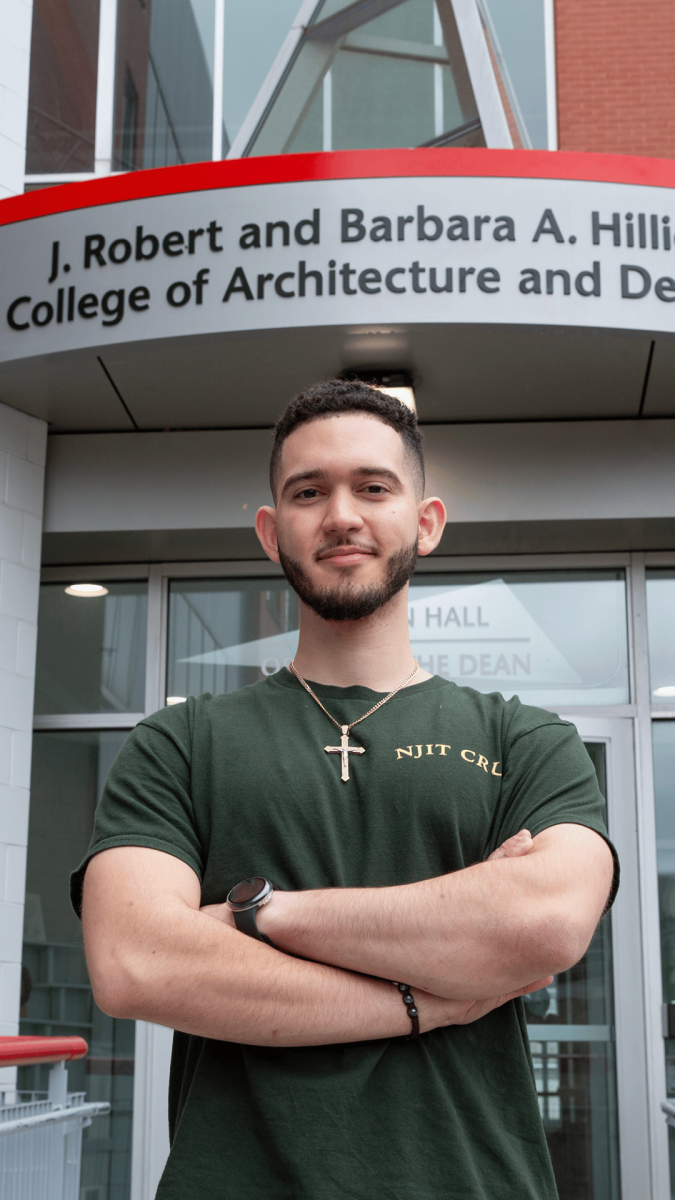
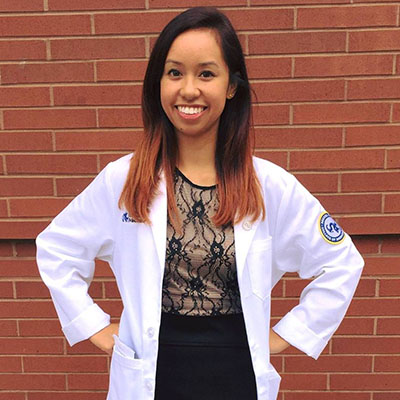
NJIT was my dream school."Hilsson Angeles -
Getting a degree from a great school like NJIT gave me the opportunity to choose the job I wanted."Seif Issa
Related Majors
Biology
What do Biology majors do?
-
NJIT has helped me pursue and foster my dream of understanding the emergent patterns in biological systems."Subashkusum Ray -
The knowledge and leadership skills I developed at NJIT has definitely prepared me for the rigors of medical school."Briana Mancenido -
My learning experience at NJIT has allowed me to pursue my lifelong dream of becoming a physician."Mohammad Nawaz
Related Majors
Degree Overview
- Delivery Format: on-campus
- Required Credits: 30
Program Details
The M.S. in Pharmaceutical Chemistry will provide advanced training to students interested in the pharmaceutical and health sciences. The program will train students in quantitative methods that are especially relevant to New Jersey’s high concentration of medical, pharmaceutical, environmental, and biotechnology industries.
The goal of the M.S. program is to prepare students for a successful career in the pharmaceutical industry with strong skills in modern chemical techniques, as well as an understanding of issues such as drug action, drug design, and drug development.
Students of the program will exhibit:
- Professionalism: Our students work on developing professional skills needed to succeed in the medical, pharmaceutical, environmental, and biotechnology industries.
- Academic Excellence: Our students work on sharpening their academic skills in the applied science and molecular-level basis of drug design.
- Commitment to Growth and Career Development: If you have a B.S. degree in the chemical or biological sciences or engineering and seek a career in the pharmaceutical industry, this program is for you.
What You Will Learn:
Through their advanced coursework and research opportunities, we aim for our students of the Pharmaceutical Chemistry M.S. program to meet the following learning outcomes:
- Discuss newer methods for the stereoselective formation of carbon-carbon double bonds, with particular emphasis on the synthesis of natural products
- Determine which strategic bond constructions are most effective in obtaining synthetic targets with high selectivity
- Become adept at identifying strengths and weaknesses of particular methods, and determining which one are optimal for particular synthetic operations
- Become familiar with cellular digestion, absorption, and metabolism, including regulatory processes and pathology-induced interruptions
- Explain the basic elements of structure of amino acids, proteins, nucleic acids, carbohydrates and lipids
- Describe higher-order structure in proteins and relate it to function
- Demonstrate the role of the intermolecular forces in macromolecular structure and function
- Apply knowledge of chemical kinetics in understanding enzyme catalysis and mechanism
- Interpret kinetic data and identify types of enzyme inhibition
- Write and describe the key biosynthetic pathways in living systems
- Apply thermodynamic principles to understand energy production in biological systems
- Discuss electron transport and energy production
- Discuss biochemical processes: replication, transcription, and translation
- Explain biosynthesis of proteins
- Demonstrate an understanding of the role of medicinal chemistry plays in drug discovery, drug action, and pharmacy practice.
- Display an understanding of how drug metabolism controls the excretion, target concentration, dosing, and efficacy of drugs
- Understand how genetic polymorphisms and drug metabolizing genes, diet, and drug-drug interactions impact their metabolism
- Display an ability to link drug structure with mechanism of action, ADME properties, and therapeutic use of drugs acting on the eicosanoid, histaminergic, cholinergic, and adrenergic systems
Admissions & curriculum
Pharmaceutical Chemistry Salaries
Starting Salary, NJIT Average
Mid-Career Salary, National Average
How much does a chemist in the federal government get paid? On average, a “Chemist” in the federal government gets paid $111,329.
Where do Pharmaceutical Chemistry majors work?
- Pharmacy Technician
- Analytical Chemist
- Laboratory Analyst
- Research & Development (R&D) Director
- Medicap Pharmacy
- New Jersey Laboratories
- Pharmula Laboratories LLC
- Sun Pharmaceuticals
- Akzo Nobel Surface Chemistry
-
NJIT was my dream school."Hilsson Angeles -
Getting a degree from a great school like NJIT gave me the opportunity to choose the job I wanted."Seif Issa
Contact Us
Need Help? We’re here to advise you.
Degree Overview
- Delivery Format: on-campus
- Required Credits: 30
Program Details
The objective of the Professional Science Master’s Cell and Gene Therapy Sciences option in Master of Science in Pharmaceutical Chemistry is to prepare students, as well as professional scientists and engineers, for dynamic careers in the biopharmaceutical industry. The program will focus on providing integrated coursework and training in current biotechnology industry practices. Students of the program will combine their advanced theoretical study with meaningful hands-on expertise gained by engaging in career-focused research at the university’s cutting-edge facilities and research partnerships.
We expect that students of the program will exhibit:
- Professionalism: Students will sharpen top-level professional skills at NJIT’s cutting-edge research facilities to excel in business administration, leadership and management.
- Academic Excellence: Our students will hone and effectively apply their technical training in biopharmaceutical chemistry, with an emphasis on biotechnology.
- Commitment to Growth and Development: Students will stay up to date on the latest biotechnology industry changes and challenges to prepare them to work in this growing and exciting industry.

What You Will Learn:
Through their advanced coursework and research opportunities, we aim for students of the program to meet the following learning outcomes:
- Become adept at identifying strengths and weaknesses of particular methods, and determining which one are optimal for particular synthetic operations
- Become familiar with cellular digestion, absorption and metabolism, including regulatory processes and pathology-induced interruptions
- Explain the basic elements of structure of amino acids, proteins, nucleic acids, carbohydrates and lipids
- Describe higher-order structure in proteins and relate it to function
- Demonstrate the role of the intermolecular forces in macromolecular structure and function
- Interpret kinetic data and identify types of enzyme inhibition
- Write and describe the key biosynthetic pathways in living systems
- Apply thermodynamic principles to understand energy production in biological systems
- Discuss electron transport and energy production
- Discuss biochemical processes: replication, transcription, and translation
- Explain biosynthesis of proteins
- Demonstrate an understanding of the role of medicinal chemistry plays in drug discovery, drug action, and pharmacy practice.
- Become familiar with cellular digestion, absorption, and metabolism, including regulatory processes and pathology-induced interruptions
- Apply knowledge of cell and molecular biology to identify the causes of disease, effects of existing drugs, and the development of new modes of treatment
- Become familiar with cellular digestion, absorption, and metabolism, including regulatory processes and pathology-induced interruptions
- Understand the role of the pharmaceutical industry in the global market and its implications
- Learn the fundamentals of the drug development cycle and the investment required to bring a drug to market
- Learn the most important drug manufacturing processes and the key elements of dosage formulation
Admissions & curriculum
Chemistry Salaries
Starting Salary, NJIT Average
In 2016, the Food and Drug Administration hired the most employees titled “Chemistry,” with an average salary of $108,445.

Where do Chemistry majors work?
- Technical Area Lead
- Operations Analyst
- Senior Scientist
- Laboratory Manager
- Mylan
- NYU Langone Health
- Bristol Myers Squibb
- Merck
-
With the excellent training I got at NJIT, I am ready to start a new journey and explore the world."Xinglei Liu -
I am gaining an excellent research experience at NJIT that is preparing me for my goal, which is to be a general surgeon."Tinghan Zhao -
The knowledge and skills acquired in NJIT enabled me to embrace a bright future in both job market and social network."Xiangshan Liu
Contact Us
Need Help? We’re here to advise you.
Degree Overview
- Delivery Format: on-campus
- Required Credits: 120
Program Details
The goals for undergraduate biology majors describe broad areas of knowledge and skill. They have been identified by the Biological Sciences Faculty as essential for all biology majors to acquire before graduation.
This knowledge and associated skills will be acquired through a course structure that guides students through required core courses, flexible breadth requirement courses, and student-centered elective courses in the Department of Biological Sciences. It is critical for students to understand that no single course provides absolute knowledge/skill for a particular goal but instead academic success is achieved through academic integration and retention across all courses in the curriculum.
What You Will Learn:
Biological Principles
Upon graduation, all biology majors should be able to integrate the principles described in the outcomes below at several levels of biological organization.
- Use the principles of gene structure and expression to deduce mechanisms by which characteristics of organisms and populations are inherited.
- Relate biological structure to function at various levels of organization and in an evolutionary context.
- Describe the mechanisms by which organisms develop from single cells.
- Use the theory of biological evolution to explain the diversity of life.
- Use the principles of bioenergetics to explain the activities of cells and the interactions of cells and organisms with each other and their environments.
Reasoning and Problem-Solving Skills
Upon graduation, all biology majors should be able to
- Use observation and experiment to investigate biological phenomena and solve problems.
- Analyze and interpret in writing scientific information gathered through laboratory, field, and library research.
- Speak effectively about scientific topics, issues, and problems in formal and informal contexts.
- Use quantitative methods to describe and analyze biological phenomena.
- Use technical skills and equipment to describe and quantify biological phenomena.
- Recognize and discuss the social and ethical implications of the conduct of research in biology and its technological application to human problems.
- Interact with others in a skilled, cooperative fashion to discuss issues and solve problems.
Admissions & curriculum
Accelerated Option
Interested in medical school or healthcare? NJIT offers accelerated (3+4) and traditional pre-health programs through Honors College with 94% accepted to US medical schools. Honors College
Biology Salaries
Starting Salary, NJIT Average
Mid-Career Salary, National Average
A bachelor’s degree in biological or biomedical sciences is the fourth most popular degree option nationwide.

Where do Biology majors work?
- Clinical Research
- Optometric technician
- Equine Veterinary Assistant
- Pharmacy Technician
- Formulation Chemist
- Performance Physical Therapy And Sports Conditioning
- Princeton Orthopaedics
- Morristown Memorial Hospital
- L'Oreal USA
- Lansdale Rx Pharmacy
-
As a biology major, NJIT has opened up a world of possibilities and opportunities for me to pursue my goal of becoming a pharmacist. "Ines Nzameyo -
My learning experience at NJIT has allowed me to pursue my lifelong dream of becoming a physician."Mohammad Nawaz -
NJIT has allowed me to transform my nearly lifelong dream of becoming a physician into a reality. "Efstathia Baronos
Contact Us
Need Help? We’re here to advise you.