Degree Overview
- Delivery Format: on-campus
- Required Credits: 33
Program Details
The graduates of this program will have in-depth knowledge of the entire lifecycle of software projects. They will acquire theoretical knowledge and practical skills that allow them to quickly integrate in software companies or businesses that develop in-house software.
What You Will Learn:
- Analyze a problem and identify and define the software requirements appropriate to its solution.
- Design, implement and evaluate software projects to meet desired needs.
- Demonstrate knowledge and skills in the design of algorithm and programs.
- Work in groups on real-life software projects.
- Demonstrate the ability to communicate the outcomes of a software project in both written and oral forms.
Admissions & curriculum
33 Required Credits
Explore this area of study
Salaries
$92,000
Mid-Career Salary, National Average
Employment of software developers is projected to grow 24 percent from 2016 to 2026, much faster than the average for all occupations.
Career Prospects
Where do Software Engineering majors work?
Common Job Titles
- Software Development Specialist
- Software Engineer
- Business Process Analyst
- Android Developer
- Teamcenter Administrator & Developer
Top Employers
- Gpshopper - A Synchrony Financial Company
- Amazon
- Accenture
- Colgate-Palmolive
What our students are saying
-
 Getting a degree from a great school like NJIT gave me the opportunity to choose the job I wanted."Seif Issa
 -
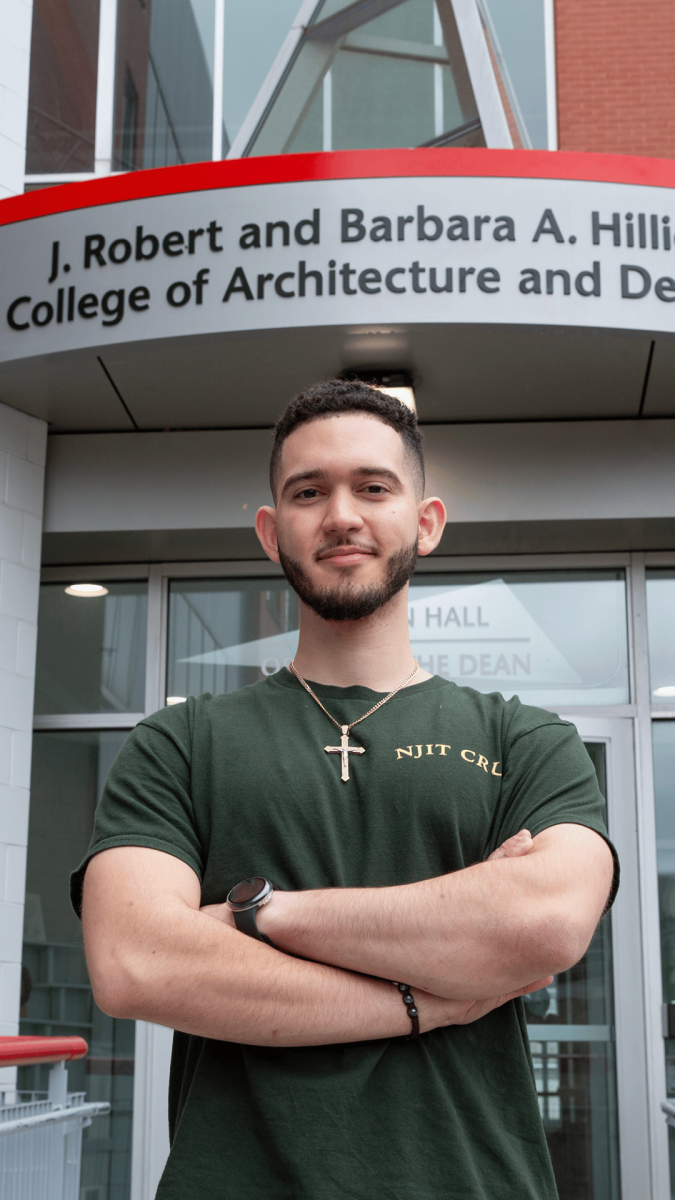 NJIT was my dream school."Hilsson Angeles
Tuition Cost
How Much does it cost to Attend NJIT?
$47,586
Average cost of attendance for NJ resident graduate students living on campus
- $18,913
Average amount of grants and scholarships per student
= $28,673
(Estimated Net Price).
Try the
Net Price Calculator
for a more
accurate estimate.
Learn More About Tuition & Costs
Degree Overview
- Delivery Format: on-campus
- Required Credits: 30
Program Details
- Provide training in three core components of data science: machine learning, big data analysis and programming for Data Science.
- Provide training in applied statistics, particularly statistical inference.
- Cover applications and contemporary topics in Data Science.
What You Will Learn:
- Apply statistical methods for decision making.
- Build and analyze predictive models from data using machine learning and statistical inference.
- Program Data Science applications in high-level languages such as Python and R.
- Analyze large datasets using high-performance computing and distributed computing methods.
- Compare the benefits and drawbacks of contemporary and advanced topics in Data Science.
- Make informed architectural decisions based on a good understanding of how available technologies differ and complement each other and what scalability and consistency trade-offs they provide.
Admissions & curriculum
30 Required Credits
Explore this area of study
Salaries
$95,000
Starting Salary, NJIT Average
$159,000
Mid-Career Salary, National Average
NJIT is the first university in New Jersey to offer an independent, standalone Master’s degree in Data Science.
Career Prospects
Where do Data Science (Computing Option) majors work?
Common Job Titles
- Computer and Information Research Scientist
- Computer and Information Systems Manager
- Software Developer
- Management Analyst
- Medical and Health Services Manager
Top Employers
- I.B.M.
- Johnson & Johnson
- JP Morgan Chase & Co.
- Takeda Pharmaceutical
- VIOLA
What our students are saying
-
NJIT was my dream school."Hilsson Angeles
-
Getting a degree from a great school like NJIT gave me the opportunity to choose the job I wanted."Seif Issa
Tuition Cost
How Much does it cost to Attend NJIT?
$43,260
Average cost of attendance for NJ resident graduate students living on campus
- $18,913
Average amount of grants and scholarships per student
= $24,347
(Estimated Net Price).
Try the
Net Price Calculator
for a more
accurate estimate.
Learn More About Tuition & Costs
Core Faculty
-
Basu Roy, Senjuti
- Professor
- Associate Professor
-
Borcea, Cristian
- Professor
- Professor
-
Geller, James
- Chair
- Chair
-
Liu, Chengjun
- Professor
- Professor
-
Oria, Vincent
- Chair
- Chair
-
Theodoratos, Dimitrios
- Associate Professor
- Associate Professor
-
Wang, Guiling
- Distinguished Professor
- Distinguished Professor
-
Wei, Zhi
- Distinguished Professor
- Distinguished Professor
-
Wu, Chase
- Professor
- Professor
Contact Us
Need Help? We’re here to advise you.
Degree Overview
- Delivery Format: on-campus
- Required Credits: 24-36
Program Details
The Ph.D. in Computer Science is a research degree. From the start, students join the faculty in original, world-level research spanning the breadth of modern computing — the theoretical foundations of algorithms; artificial intelligence, machine learning, and large language models; cybersecurity and privacy; systems, cloud, and high-performance computing; data mining and big data; computer graphics and extended reality; human-computer interaction; and the application of computing across the sciences, health, and engineering. As an R1 (very high research activity) institution and the largest producer of computing talent in the greater New York metropolitan area, the department offers an environment in which doctoral work translates into real products, services, and scientific advances.
Doctoral study is organized around research milestones rather than coursework alone: foundational graduate courses, a research-oriented qualifying examination, formation of a dissertation committee, a research proposal defense, and the final dissertation defense. Students move from coursework into sustained, advisor-supervised research, publish and present at leading international venues, and graduate as independent scholars prepared for careers in academia, industrial research, and national laboratories. Research is supported by agencies including the NSF, DARPA, NSA, NIH, DOE, and DOD, with faculty recognized through NSF CAREER awards and best-paper honors at top conferences.
Beyond the traditional track, NJIT also offers a Collaborative Ph.D. option, allowing qualified students to pursue the doctorate in partnership with external research institutions — broadening the mentorship, facilities, and problems available to a candidate.
Nearly all doctoral students are fully funded. The department offers competitive Ph.D. stipends supported through teaching assistantships (TAs) and research assistantships (RAs), at a level intended to let students focus fully on their research. (Funding is competitive; the deadline for funding consideration is December 15 for fall admission and October 15 for spring admission.)
What You Will Learn:
At the doctoral level, the thing you learn is how to discover — how to identify questions no one has yet answered and produce knowledge that did not exist before. Over the course of the program you will develop the ability to:
- Frame original research problems and judge which questions are worth pursuing.
- Build both depth and breadth — mastering a specialization while connecting it across fields, the foundation required for inquiry at the highest scientific level.
- Design, conduct, and critically evaluate research, and defend it before expert peers.
- Translate discovery into practice — building prototypes, tools, and systems, and partnering with industry and government to turn research into real products and services.
- Communicate findings clearly in writing and in talks, publishing and presenting at leading conferences and journals.
- Teach, mentor, and collaborate, including across disciplinary and institutional boundaries.
- Conduct research ethically and responsibly, and understand how research is supported, reviewed, and translated into impact.
Admissions & curriculum
24-36 Required Credits
Explore this area of study
Salaries
$92,300
Starting Salary, NJIT Average
$139,400
Mid-Career Salary, National Average
Top 50 Public Schools nationwide - U.S News & World Report, 2025
Career Prospects
Where do Computer Science majors work?
Common Job Titles
- Machine Learning Engineer
- Software Developer
- Data Engineer
- Cybersecurity Architect/Consultant
- Cloud Big Data Engineer
Top Employers
- Bank of America
- Verizon
- Lockheed Martin
- Microsoft Corporation
- Colgate-Palmolive
What our students are saying
-
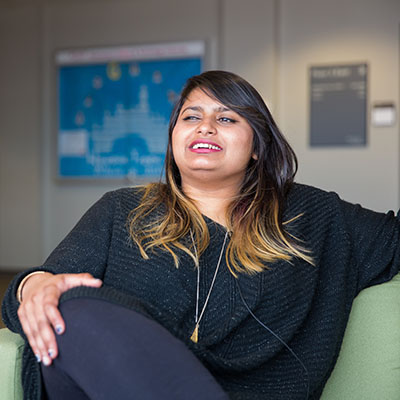 I became an advocate for women in computer science while studying at NJIT."Jinisha Patel
 -
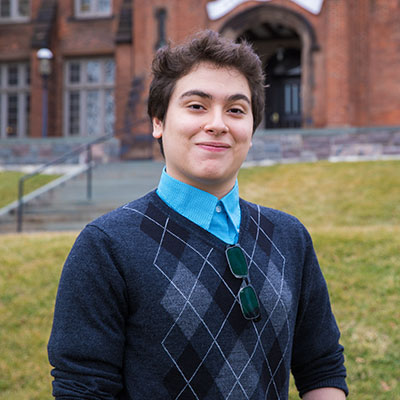 I am gaining an excellent education at NJIT that is preparing me for my goals as a researcher in academia. "JonPierre Grajales
 -
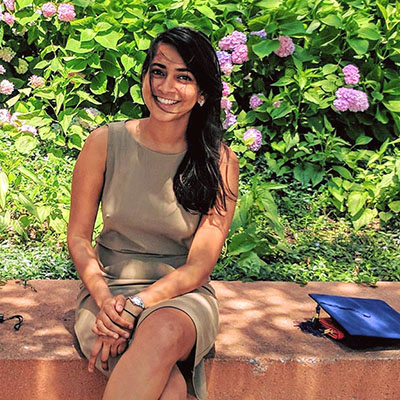 The atmosphere at NJIT fostered my growth as a female in computing."Krupali Patel
Tuition Cost
How Much does it cost to Attend NJIT?
$40,056
Average cost of attendance for NJ resident doctoral students living on campus
- $18,913
Average amount of grants and scholarships per student
= $21,143
(Estimated Net Price).
Try the
Net Price Calculator
for a more
accurate estimate.
Learn More About Tuition & Costs
Core Faculty
-
Basu Roy, Senjuti
- Professor
- Associate Professor
-
Borcea, Cristian
- Professor
- Professor
-
Ding, Xiaoning
- Associate Professor
- Associate Professor
-
Gotsman, Craig
- Distinguished Professor
- Distinguished Professor
-
Koutis, Ioannis
- Professor
- Associate Professor
-
Li, Jing
- Associate Professor
- Associate Professor
-
Musialski, Przemyslaw
- Associate Professor
- Associate Professor
-
Neamtiu, Iulian
- Professor
- Professor
-
Oria, Vincent
- Chair
- Chair
-
Perl, Yehoshua
- Professor
- Professor
-
Schieber, Baruch
- Professor
- Professor
-
Wang, Guiling
- Distinguished Professor
- Distinguished Professor
-
Wang, Jason
- Professor
- Professor
-
Wei, Zhi
- Distinguished Professor
- Distinguished Professor
-
Xu, Pan
- Assistant Professor
Degree Overview
- Delivery Format: on-campus
- Required Credits: 120
Program Details
The BS in Computer Science program's objective is to offer:
A Broad Foundation in Computing: The program offers the most comprehensive technical foundation across all computing-related degrees. You will develop a deep understanding of computing fundamentals and intelligent systems — preparing you to work on computing infrastructure, cybersecurity, energy-efficient AI systems, human oversight of AI, and large-scale agentic software systems. This breadth positions you to lead innovation across the full spectrum of computing challenges.
Pathways for Specialization: Starting with the cohort entering our program in Fall 2026, students can earn their BS degree with an optional concentration in:
- Artificial Intelligence
- Cybersecurity
Studying Computer Science at NJIT makes you part of the Ying Wu College of Computing, the region's only dedicated computing college. As a top-50 public university and R1 research institution minutes from NYC, we combine academic excellence with world-class research opportunities and access to the world's leading tech hub. You'll learn from internationally renowned faculty and industry leaders in the NYC/NJ metro area, gaining hands-on experience with industry-standard and emerging technologies.
Accreditation. NJIT's BS in Computer Science is accredited by the Computing Accreditation Commission of ABET under the commission's General Criteria and Program Criteria for Computer Science programs. For complete accreditation information, including Program Educational Objectives (PEOs) and Student Outcomes (SOs), please visit the official BS in Computer Science program page.
What You Will Learn:
Graduates of the program will be able to:
- Problem-Solving & Analysis — Break down complex computing problems and apply computer science principles — alongside relevant knowledge from other disciplines — to identify effective solutions.
- Design & Implementation — Design, build, and evaluate computing solutions that meet specific requirements while reflecting best practices in your area of focus.
- Communication — Communicate effectively with technical and non-technical audiences across professional contexts.
- Ethical Practice — Recognize professional responsibilities and make informed decisions grounded in legal and ethical principles.
- Teamwork & Leadership — Contribute effectively as a team member and step into leadership roles on computing projects.
- Technical Mastery — Apply computer science theory and software development fundamentals to build robust, well-engineered solutions.
What Our Graduates Achieve. Three to five years after graduation, our students are:
- Leading Innovation in Computing — Developing innovative computing solutions, advancing the field through research and entrepreneurship, and collaborating with industry and government to drive technological progress.
- Designing for Ethical Impact — Applying ethical principles and global perspectives to create computing solutions that address real societal challenges and benefit diverse communities.
- Growing as Lifelong Learners — Staying at the forefront of computing through continuous professional development, rapid adaptation to emerging technologies, and exploration of transdisciplinary opportunities.
Admissions & curriculum
120 Required Credits
Explore this area of study
Salaries
$92,300
Starting Salary, NJIT Average
$139,400
Mid-Career Salary, National Average
Top 50 Public Schools nationwide - U.S News & World Report, 2025
Career Prospects
Where do Computer Science majors work?
Common Job Titles
- Machine Learning Engineer
- Software Developer
- Data Engineer
- Cybersecurity Architect/Consultant
- Cloud Big Data Engineer
Top Employers
- Bank of America
- Verizon
- Lockheed Martin
- Microsoft Corporation
- Colgate-Palmolive
What our students are saying
-
I am gaining an excellent education at NJIT that is preparing me for my goals as a researcher in academia. "JonPierre Grajales
-
I became an advocate for women in computer science while studying at NJIT."Jinisha Patel
-
The atmosphere at NJIT fostered my growth as a female in computing."Krupali Patel
Tuition Cost
How Much does it cost to Attend NJIT?
$38,962
Average cost of attendance for NJ resident undergrads living on campus
- $18,913
Average amount of grants and scholarships per student
= $20,049
(Estimated Net Price).
Try the
Net Price Calculator
for a more
accurate estimate.
Learn More About Tuition & Costs
Contact Us
Need Help? We’re here to advise you.
Theatre Arts and Technology
What our students are saying
-
 My professors and advisors at NJIT have been enormously helpful. They care about my academic and personal success."Alexis Telyczka
 -
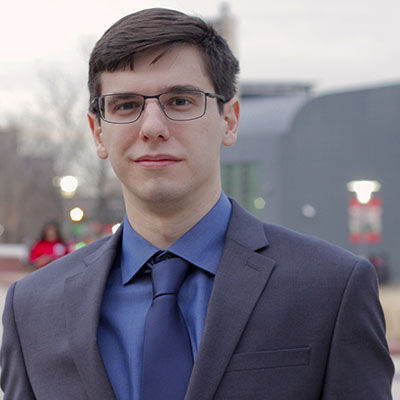 Theatre Arts & Technology strengthened my character, my confidence, and my own perception of the world around me."Eric Holzer
 -
Getting a degree from a great school like NJIT gave me the opportunity to choose the job I wanted."Seif Issa
Related Majors


Degree Overview
- Delivery Format: on-campus
- Required Credits: 120
Program Details
The NJIT Theatre Arts and Technology program's mission is to foster a vibrant and intellectually rigorous environment, cultivating technical and creative skills for excellence in design and performance. Emphasizing collaboration, curiosity, and community, the program blends theatrical history with contemporary priorities to prepare students to impactfully contribute to diverse career paths in our evolving society.
A polytechnic theatre graduate possesses a unique blend of artistic understanding and technical proficiency. Within the theatre industry, they could pursue roles such as a technical director, lighting designer, head electrician, scenic designer, or production manager. Outside of theatre, their problem-solving, collaboration, and communication skills are highly transferable to fields like event management, marketing, project coordination, or even technical roles in areas like AV production for corporate events and conferences.
What You Will Learn:
Students will cultivate a comprehensive understanding of theatrical history, dramatic literature, and pertinent methodologies and styles.
- Students will have knowledge of the historical, cultural, and theoretical foundations of theatre, enabling them to meaningfully contribute to theatremaking.
- Students will be able to connect how current theatre industry practices have been informed by past practices.
- Students will be able to brainstorm and explore how they might create their own future practices.
Students will master foundational theatrical techniques and be able to dig deeper toward mastery in an area of their choice.
- Students will learn and explore creative and technical methods within a wide array of theatrical disciplines.
- Students will be adept in the full process for their chosen discipline.
- Students will have a strong understanding of how their discipline interacts with the other theatre disciplines.
Students will develop highly effective interpersonal skills for their theatrical practice.
- Students will have a firm understanding of their own process of creativity and be able to apply that to every theatre project they engage in.
- Students will be confident and effective in their communication.
- Students will use collaboration in a positive manner that prioritizes artmaking.
- Students will be able to critically analyze their own work and apply their findings against their intentions.
- Students will be able to problem-solve and pivot with new ideas when obstacles present themselves.
Students will discover and articulate their own individual artistic voice and have a deep sense of passion for their craft.
- Students will have a strong sense of what kind of work they want to work on.
- Students will be able to articulate and capitalize on where their strengths are.
- Students will develop an artistic reflexiveness that will enable them to identify and learn new skills in their evolution as artists.
- Students will have created the foundation of their portfolio/website/resume/CV to launch their career.
Admissions & curriculum
120 Required Credits
Explore this area of study
Salaries
$43,000
Starting Salary, NJIT Average
$55,000
Mid-Career Salary, National Average
Alumni work in the entertainment industry using design, community arts development, set and www management, and teaching youth theatre.
Career Prospects
Where do Theatre Arts and Technology majors work?
Common Job Titles
- Communications Associate
- Office Manager
- Unit Computing Specialist
Top Employers
- Plast-O-Matic Valves Inc.
- The Watermill Center
What our students are saying
-
Theatre Arts & Technology strengthened my character, my confidence, and my own perception of the world around me."Eric Holzer
-
My professors and advisors at NJIT have been enormously helpful. They care about my academic and personal success."Alexis Telyczka
-
NJIT was my dream school."Hilsson Angeles
Tuition Cost
How Much does it cost to Attend NJIT?
$38,962
Average cost of attendance for NJ resident undergrads living on campus
- $18,913
Average amount of grants and scholarships per student
= $20,049
(Estimated Net Price).
Try the
Net Price Calculator
for a more
accurate estimate.
Learn More About Tuition & Costs
Degree Overview
- Delivery Format: on-campus
- Required Credits: 120
Program Details
The overall objective of the Communication and Media program is to guide students through the critical steps of developing media literacy and enriched, practical understandings of multimodal communication—enabling them to cultivate expression, to portray narratives and arguments, to conduct and reflect research using contemporary tools.
We expect that, as a student and/or graduate of the Communication and Media B.S. program, you will exhibit the following:
- Professionalism: Students will sharpen professional skills used by top communicators in every professional field.
- Academic Excellence: Our students work on sharpening their academic knowledge in a variety of communication fields, such as with videography, and sound—applying research, planning, writing, editing, and producing works through each of these media.
- Commitment to Growth and Development: Our students are passionate about gaining communications skills across a range of contemporary media, qualifying them for positions anywhere in the marketplace.
What You Will Learn:
The program provides skills that enable students to communicate effectively using all types of verbal and visual techniques in the contemporary media environment that is prominent both within the fields of the Arts and Humanities and within the culture at large. While students will learn a wide range of skills and knowledge, we specifically aim for our students to meet the following learning outcomes:
- Students will demonstrate the practical use of the processes and tools of communication media (i.e., hardware, software, and networks).
- Students will demonstrate the ability to use empirical research methods.
- Students can explain conceptual perspectives on communication media (i.e., being able to see a wider historical and social context), including ethical dimensions.
- Students will be able to apply critical frameworks (including identifying and resolving communication design problems).
- Students will demonstrate the skills needed to write and edit verbally and visually (including graphics).
- Students will demonstrate the ability to design documents of all types (written and digital media) within constraints and with regard to economic, environmental, social, political, and ethical concerns.
Admissions & curriculum
120 Required Credits
Explore this area of study
Salaries
$68,600
Starting Salary, NJIT Average
$110,000
Mid-Career Salary, National Average
Current professions feature a growing need for experts adept in both the creative and business side of the design process.
Career Prospects
Where do Communication and Media majors work?
Common Job Titles
- Corporate Communications Director
- Marketing Communications Manager
- Senior Communications Specialist
- Human Resources Manager
Top Employers
- Zen Doggo
- IBM Corp
- The Boeing Company
- Navex Global
What our students are saying
-
 My education and experiences at NJIT helped me become a versatile member of my team at Verizon."Amy Bracero
 -
 NJIT's high-quality education is preparing me for the challenges that I will face in the future."Victor Pujades
 -
NJIT was my dream school."Hilsson Angeles
Tuition Cost
How Much does it cost to Attend NJIT?
$38,962
Average cost of attendance for NJ resident undergrads living on campus
- $18,913
Average amount of grants and scholarships per student
= $20,049
(Estimated Net Price).
Try the
Net Price Calculator
for a more
accurate estimate.
Learn More About Tuition & Costs
Degree Overview
- Delivery Format: on-campus
- Required Credits: 120
Program Details
The overall objective of the Communication and Media program is to guide students through the critical steps of developing media literacy and enriched, practical understandings of multimodal communication—enabling them to cultivate expression, to portray narratives and arguments, to conduct and reflect research using contemporary tools.
We expect that, as a student and/or graduate of the Communication and Media B.S. program, you will exhibit the following:
- Professionalism: Students will sharpen professional skills used by top communicators in every professional field.
- Academic Excellence: Our students work on sharpening their academic knowledge in a variety of communication fields, such as with videography, and sound—applying research, planning, writing, editing, and producing works through each of these media.
- Commitment to Growth and Development: Our students are passionate about gaining communications skills across a range of contemporary media, qualifying them for positions anywhere in the marketplace.
What You Will Learn:
The program provides skills that enable students to communicate effectively using all types of verbal and visual techniques in the contemporary media environment that is prominent both within the fields of the Arts and Humanities and within the culture at large. While students will learn a wide range of skills and knowledge, we specifically aim for our students to meet the following learning outcomes:
- Students will demonstrate the practical use of the processes and tools of communication media (i.e., hardware, software, and networks).
- Students will demonstrate the ability to use empirical research methods.
- Students can explain conceptual perspectives on communication media (i.e., being able to see a wider historical and social context), including ethical dimensions.
- Students will be able to apply critical frameworks (including identifying and resolving communication design problems).
- Students will demonstrate the skills needed to write and edit verbally and visually (including graphics).
- Students will demonstrate the ability to design documents of all types (written and digital media) within constraints and with regard to economic, environmental, social, political, and ethical concerns.
Admissions & curriculum
120 Required Credits
Explore this area of study
Salaries
$68,600
Starting Salary, NJIT Average
$110,000
Mid-Career Salary, National Average
Current professions feature a growing need for experts adept in both the creative and business side of the design process.
Career Prospects
Where do Communication and Media majors work?
Common Job Titles
- Corporate Communications Director
- Marketing Communications Manager
- Senior Communications Specialist
- Human Resources Manager
Top Employers
- Zen Doggo
- IBM Corp
- The Boeing Company
- Navex Global
What our students are saying
-
NJIT's high-quality education is preparing me for the challenges that I will face in the future."Victor Pujades
-
My education and experiences at NJIT helped me become a versatile member of my team at Verizon."Amy Bracero
-
NJIT was my dream school."Hilsson Angeles
Tuition Cost
How Much does it cost to Attend NJIT?
$38,962
Average cost of attendance for NJ resident undergrads living on campus
- $18,913
Average amount of grants and scholarships per student
= $20,049
(Estimated Net Price).
Try the
Net Price Calculator
for a more
accurate estimate.
Learn More About Tuition & Costs