College of Architecture and Design
Digital Design
What our students are saying
-
 I launched my post-NJIT career as an applications engineer at Formlabs."Amos Dudley
 -
 Getting a degree from a great school like NJIT gave me the opportunity to choose the job I wanted."Seif Issa
 -
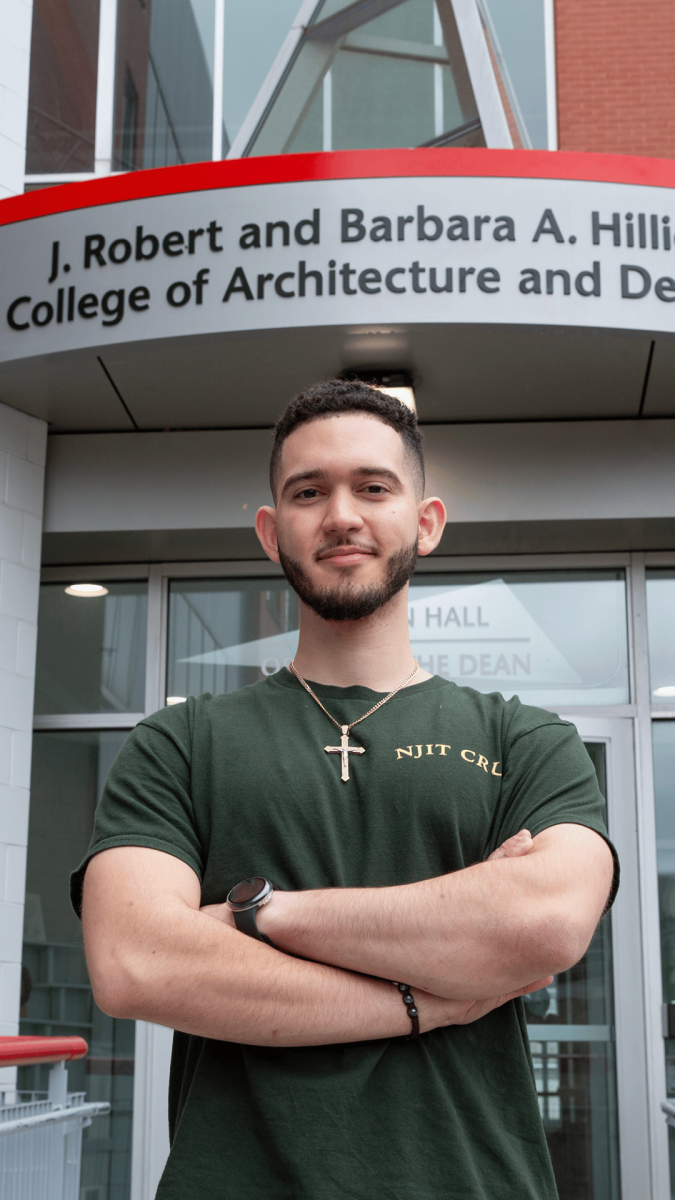 NJIT was my dream school."Hilsson Angeles
Related Majors


Architecture
What do Architecture majors do?
What our students are saying
-
 Working at Callison RTKL after graduating, I saw a lot of my experience at NJIT really having an impact in the field right away."Jonathan IsaacsClass of '18Architecture
 -
 The graduate program provided me with a diverse education."Carol Hong
 -
 NJIT put me on the right path for my career."Earl Jackson
Related Majors


Degree Overview
- Delivery Format: on-campus
- Required Credits: 72
Program Details
-
The Industrial Design program at NJIT engages the act of “making” within a critical and contemporary context by exploiting the possibilities of technology, addressing the needs of the 21st century, and inspiring the tools of tomorrow.
-
The program’s mission is to harness the optimism, entrepreneurialism and innovation of students and faculty alike as well as the institutional commitment to research and public service for the preparation of a new generation of designers.
-
The program provides educational opportunities by fully immersing students in current use of digital tools and technologies, while pursuing a progressive human-centered, interdisciplinary design approach around economic, social and environmental responsibility.
-
We seek to educate product designers who see opportunities where others see problems; creative thinkers with a wide knowledge base and skill set; artists who explore aesthetics through form, color, texture and materiality; engineers who optimize user experiences by harnessing innovative materials and technologies; entrepreneurs who observe market trends, exploit innovation and protect intellectual property; manufacturers who streamline production and increase profit; environmentalists who assume responsibility for production, use and disposal of the objects created.
What You Will Learn:
-
Development of an ability to design products and systems, including but not limited to a foundational understanding of how products and systems are made; what makes them valuable, how they are developed, realized and distributed; and how they are related to environmental and societal issues and responsible design.
-
Development of an ability to use technologies and tools associated with multidimensional design representation, development, dissemination and application.
-
Development of a foundational knowledge of the history of Industrial Design as well as art and design in general, including but not limited to the influences of works and ideas on the evolution of design study and practice over time and across cultures.
-
Can demonstrate knowledge of user experience, human factors, applied ergonomics, contextual inquiry and usability studies.
-
Have an ability to research, define and communicate about problems, variables and requirements; conceptualize and evaluate alternatives; and test and refine solutions, including the ability to synthesize user needs in terms of value, aesthetics and safety.
-
Have an ability to communicate concepts and specifications in verbal, written and multiple media at levels ranging from abstraction and sketches, to detailed multidimensional, functional and visual representations.
-
Develop an understanding and functional knowledge of professional design practices and processes, including but not limited to ethical behaviors and intellectual property issues such as patents, trademarks and copyrights.
-
Have knowledge of basic business practices and their relationship to industrial design as well as the ability to investigate and reconcile the needs related to entrepreneurship, marketing, engineering, manufacturing, servicing and ecological and social responsibility in the process associated with specific design projects.
-
Demonstrate the acquisition of collaborative skills and ability to work effectively in interdisciplinary or multidisciplinary teams.
-
Development of a commitment to lifelong learning and active engagement in professional communities.
Admissions & curriculum
72 Required Credits
Explore this area of study
Industrial Design Salaries
$60,000
Starting Salary, NJIT Average
$65,757
Mid-Career Salary, National Average
Value Colleges recently ranked Industrial Design as the 16th Best Value for Undergraduate Programs in the U.S. NASAD accredited.
Career Prospects
Where do Industrial Design majors work?
Common Job Titles
- Toy Designer
- Furniture Designer
- Product/Industrial Designer
- Lighting Designer
- Exhibit Designer
Top Employers
- American Design Club
- Artistic Tile
- Cambridge Silversmiths
- Dauphin North America
- Enchanté Lites
What our students are saying
-
 Through my design class I was able to work alongside a ton of industry experts. I have definitely grown because of the connections I have made."Andrew Elcock
 -
 NJIT taught me that design is about telling a story."Jonathan Ferrer
 -
 My current interests involve using art and design as a tool for social change."Andrew Carter
Core Faculty
-
Alcala, Jose
- Coordinator, Industrial Design
- University Lecturer
-
Brothers, David
- Coordinator, Interior Design
- Senior University Lecturer
-
Cays, John
- Professor of Practice
-
Garcia Figueroa, Julio
- University Lecturer
-
Goldman, Glenn
- Professor
- Director Emeritus, School of Art + Design
-
Harp, Cleveland
- University Lecturer
-
Ogorzalek, Thomas
- Senior University Lecturer
-
Penalba Estebanez, Ana
- University Lecturer
-
Schwartz, Mathew
- Associate Professor
- Chair, School of Art + Design
-
Von Koenig, Gretchen
- University Lecturer
-
Wendell, Augustus
- Adjunct Instructor
Degree Overview
- Delivery Format: on-campus
- Required Credits: 70
Program Details
-
It is the mission of the Interior Design program to provide students the opportunity to participate in the design, development and implementation of creative and technical solutions for a variety of interior environments in which all people exist and function.
-
The program offers coursework that synthesizes design history and theory, structural and technical systems, legal, ethical, and economic frameworks for professional practice along with the social, cultural and environmental context of the built environment.
-
Students will deal with Interior Design in the context of the architectural and engineering environments in which their anticipated projects reside.
-
The program prepares students to fully utilize 21st century technology, specifically information technology and digital media, in the process and products of Interior Design.
-
An additional and critical goal of the program is the preparation of students to work in maintaining the health, safety and welfare of the public by understanding and adhering to building and life safety codes, having an awareness of ergonomics, universal design, and ADA requirements, and becoming knowledgeable about environmentally responsible building practices and materials. And, as designers, we want everything to look good.
What You Will Learn:
-
Ability to conceive and design for interior spaces, incorporating knowledge and skills.
-
Understanding the basic principles of design and color in two and three dimensions, particularly with regard to human response and behavior. Design principles include, but are not limited to, an understanding of basic visual elements, principles of organization and expression and design problem solving.
-
Ability to apply design and color principles in a wide variety of residential and non-residential projects. This requires an in-depth knowledge of the aesthetic and functional properties of structure and surface, space and scale, materials, furniture, artifacts, textiles, lighting, acoustics, heating and cooling systems, air quality systems, and the ability to research and solve problems creatively in ways that pertain to the function, quality and effect of specific interior programs.
-
Understanding of the technical issues of human factors and basic elements of human behavior, including areas such as programming, environmental control systems, anthropometrics, ergonomics, proxemics, wayfinding, sustainability, universal design, and design for the physically and mentally challenged. In making design decisions, the ability to integrate human-behavior and human-factor considerations with project goals and design elements.
-
Knowledge of the technical aspects of construction and building systems, and energy conservation, as well as working knowledge of applicable legal codes, contract documents, specifications protocols, schedules and regulations related to construction, environmental systems, accessibility, human health and safety, and the ability to apply such knowledge appropriately in specific design projects.
-
Ability to hear, understand and communicate to the broad range of professionals and clients involved or potentially involved in the concepts and requirements of Interior Design projects. Such communication involves verbal, written and representational media in both two and three dimensions and encompasses a range from initial sketch to finished design. Capabilities with technical tools, conventions of rendering and representation, global measuring systems, and systems of projection, including perspective, are essential.
-
Acquisition of collaborative skills and the ability to work effectively in interdisciplinary or multidisciplinary teams.
-
Functional knowledge of the history of art, architecture, decorative arts and Interior Design, including but not limited to the influences of work and ideas on the evolution of Interior Design practice.
-
Functional knowledge of professional design practices and processes, including but not limited to professional and ethical behaviors and intellectual property issues such as patents, trademarks and copyrights.
-
Functional knowledge of basic business practices including, but not limited to entrepreneurship, marketing, accounting and manufacturing; and basic practices associated with the overall business of interior design such as ethics, intellectual property, labor issues, and decisions associated with ecological and social responsibility and sustainability.
-
The ability to gather information, conduct research and apply research and analysis to design projects. Familiarity with research theories and methodologies related to or concerned with Interior Design is essential.
-
Development of a commitment to lifelong learning and active engagement in professional communities.
Admissions & curriculum
70 Required Credits
Explore this area of study
Interior Design Salaries
$48,480
Starting Salary, NJIT Average
$58,693
Mid-Career Salary, National Average
Aspiring design professionals can combine Interior Design and Architecture degrees to qualify for certification/licensure in both fields.
Career Prospects
Where do Interior Design majors work?
Common Job Titles
- Interior Designer
- Project Coordinator
- Manufacturer’s Representative
- Lighting Designer
Top Employers
- Environetics
- Gensler
- HLW International
- L’Oreal
- Tricarico Architecture and Design PC
What our students are saying
-
 I learned how to get involved and create opportunities. I’ve really enjoyed my time at NJIT."Michael Chiappa
 -
 From architecture to construction – all the elements of design exist in the program."Elouie Gaspar
 -
 Hillier College has taught me the essence of interior design."Alexandra DePalo
Core Faculty
-
Alcala, Jose
- Coordinator, Industrial Design
- University Lecturer
-
Altin, Ersin
- Adjunct Instructor
-
Bess, Mark
- Coordinator, Undergraduate Architecture
- Senior University Lecturer
-
Brothers, David
- Coordinator, Interior Design
- Senior University Lecturer
-
Cays, John
- Professor of Practice
-
Decker, Martina
- Associate Dean of Strategic Initiatives
- Associate Professor
-
Garcia Figueroa, Julio
- University Lecturer
-
Goldman, Glenn
- Professor
- Director Emeritus, School of Art + Design
-
Harp, Cleveland
- University Lecturer
-
Ogorzalek, Thomas
- Senior University Lecturer
-
Penalba Estebanez, Ana
- University Lecturer
-
Schwartz, Mathew
- Associate Professor
- Chair, School of Art + Design
-
Von Koenig, Gretchen
- University Lecturer
-
Wendell, Augustus
- Adjunct Instructor
Degree Overview
- Delivery Format: on-campus
- Required Credits: 135
Program Details
-
The Digital Design degree is a liberal arts, generalized undergraduate program that provides exposure to the varied design fields in media and prepares students for employment or graduate study in a wide range of industries.
-
Because the field is evolving and broad, exposure to the breadth of opportunities is an explicit objective, as is comprehensive education in the basic principles of visual design using computer technologies.
-
Initial coursework emphasizes intellectual development of relevant principles of art and design, hand-eye coordination and development of student projects with both traditional, analog and digital tools.
-
The program progressively builds in complexity and provides opportunities for student-selected detailed investigation into areas of interest (e.g. game design, character design, interactive product design), or continued exploration in the breadth of opportunities.
-
It is an additional objective that students understand and be able to utilize a variety of applications and tools to be able to select the right one for the design problem at hand, and develop strategies for learning new tools and techniques in order to grow and learn when those change and evolve.
What You Will Learn:
-
Development of knowledge related to the visual, spatial, sound, motion, interactive and temporal elements and features of digital technology and principles for their use in the creation and application of digital media-based work.
-
Understanding of narrative and other information and language structures for organizing content in time-based or interactive media; the ability to organize and represent content structures in ways that are responsive to technological, social, and cultural systems.
-
Understanding of the characteristics and capabilities of various technologies (hardware and software); their appropriateness for particular expressive, functional and strategic applications; their positions within larger contexts and systems; and their influences on individuals and society.
-
Knowledge of the processes for the development and coordination of digitally based art and design strategies (e.g. storyboarding, concept mapping, and the use of scenarios and personas).
-
Ability to analyze and synthesize relevant aspects of human interaction in various contexts (physical, cognitive, cultural, social, political and economics) with respect to technologically mediated communication, objects and environments.
-
Understanding of what is useful, usable, effective and desirable with respect to user-centered and audience-centered digitally based communication, objects and environments.
-
Knowledge of history, theory and criticism with respect to such areas as film, video, technology and digital art and design.
-
Ability to work in teams and to organize collaborations among people from different disciplines.
-
Ability to use the above competencies in the creation and development of professional quality digital media productions.
-
Development of a commitment to life-long learning and active engagement in professional communities.
Admissions & curriculum
135 Required Credits
Explore this area of study
Digital Design Salaries
$52,000
Starting Salary, NJIT Average
$75,000
Mid-Career Salary, National Average
UI/UX and Motion Graphics Designers earn around $100K median annually
Career Prospects
Where do Digital Design majors work?
Common Job Titles
- UI/UX Designer and Researcher
- Compositor
- Animator
- Art Director
- Motion Graphics/Character Designer
Top Employers
- NBCUniversal
- Framestore
- Method Studios
- Moving Picture Company
- Cantina Creative
What our students are saying
-
I launched my post-NJIT career as an applications engineer at Formlabs."Amos Dudley
-
Getting a degree from a great school like NJIT gave me the opportunity to choose the job I wanted."Seif Issa
-
NJIT was my dream school."Hilsson Angeles
Core Faculty
-
Alcala, Jose
- Coordinator, Industrial Design
- University Lecturer
-
Altin, Ersin
- Adjunct Instructor
-
Brothers, David
- Coordinator, Interior Design
- Senior University Lecturer
-
Goldman, Glenn
- Professor
- Director Emeritus, School of Art + Design
-
Miller, Bruce
- Adjunct Instructor
-
Narahara, Taro
- Associate Professor
-
Schwartz, Mathew
- Associate Professor
- Chair, School of Art + Design
-
Wendell, Augustus
- Adjunct Instructor
-
Zdepski, Stephen
- Associate Professor
Degree Overview
- Delivery Format: on-campus
- Required Credits: 133
Program Details
As an Architecture school within a research university, we are a platform for innovation. Our emphasis on research faculty offers students the opportunity to collaborate in growing areas from nanotechnology to augmented and virtual reality, and to explore the frontiers of robotics and digital fabrication. Our program objectives are grounded in professional accreditation requirements.
What You Will Learn:
- Build abstract relationships and understand the impact of ideas based on the study and analysis of multiple theoretical, social, political, economic, cultural and environmental contexts.
- Use a diverse range of skills to think about and convey architectural ideas, including writing, investigating, speaking, drawing and modeling.
- Comprehend the technical aspects of design, systems and materials and be able to apply that comprehension to architectural solutions considering their impact on the environment.
- Demonstrate the ability to synthesize a wide range of variables into an integrated design solution.
- Understand business principles for the practice of Architecture, including management, advocacy, and the need to act legally, ethically and critically for the good of the client, society and the public.
Admissions & curriculum
133 Required Credits
Explore this area of study
Architecture Salaries
$63,300
Starting Salary, NJIT Average
$79,000
Mid-Career Salary, National Average
NJIT is home to the only accredited undergraduate architecture program in the State of New Jersey
Career Prospects
Where do Architecture majors work?
Common Job Titles
- Architect
- Architectural Designer
- Designer I
- Project Manager
- Assistant Project Manager
Top Employers
- Gensler
- Perkins Eastman
- AECOM
- Perkins+Will
- Turner Construction
What our students are saying
-
 I appreciated the intellectual challenges, career preparation and diverse student body."Karen CilentoClass of '12Interior Design
 -
 I worked very hard at NJIT, and I'll be honest--that degree has gotten me exactly where I am today."Tom BuryClass of '02Architecture
 -
The graduate program provided me with a diverse education."Carol Hong
Core Faculty
-
Celik, Zeynep
-
Decker, Martina
- Associate Dean of Strategic Initiatives
- Associate Professor
-
Esperdy, Gabrielle
- Dean, Hillier College of Architecture & Design
- Professor
-
Franck, Karen
-
Moore, Sandy
-
Narahara, Taro
- Associate Professor
-
Riether, Gernot
- Associate Professor
- Chair, New Jersey School of Architecture
-
Schuman, Anthony
-
Schwartz, Mathew
- Associate Professor
- Chair, School of Art + Design
-
Sollohub, Darius
- Professor
-
Theodore, Georgeen
- Coordinator, Master of Urban Design Program
- Professor
-
Zarzycki, Andrzej
- Associate Professor
-
Zdepski, Stephen
- Associate Professor
Degree Overview
- Delivery Format: on-campus
- Required Credits: 150
Program Details
As an Architecture school within a research university, we are a platform for innovation. Our emphasis on research faculty offers students the opportunity to collaborate in growing areas from nanotechnology to augmented and virtual reality, and to explore the frontiers of robotics and digital fabrication. Our program objectives are grounded in professional accreditation requirements.
What You Will Learn:
- Build abstract relationships and understand the impact of ideas based on the study and analysis of multiple theoretical, social, political, economic, cultural and environmental contexts.
- Use a diverse range of skills to think about and convey architectural ideas, including drawing, modeling, writing, investigating and speaking.
- Comprehend the technical aspects of design, systems and materials and be able to apply that comprehension to architectural solutions considering their impact on the environment.
- Demonstrate the ability to synthesize a wide range of variables into an integrated design solution.
- Understand business principles for the practice of Architecture, including management, advocacy, and the need to act legally, ethically and critically for the good of the client, society and the public.
Admissions & curriculum
150 Required Credits
Explore this area of study
Architecture Salaries
$63,300
Starting Salary, NJIT Average
$79,000
Mid-Career Salary, National Average
NJIT is home to the only accredited undergraduate architecture program in the State of New Jersey
Career Prospects
Where do Architecture majors work?
Common Job Titles
- Architect
- Architectural Designer
- Designer I
- Project Manager
- Assistant Project Manager
Top Employers
- Gensler
- Perkins Eastman
- AECOM
- Perkins+Will
- Turner Construction
What our students are saying
-
 At NJIT I've had the pleasure to study and work among commendable faculty and students."Albina Gode
 -
 Going to an architecture school so close to New York City felt like the perfect fit for me."Ian Bentley
 -
Working at Callison RTKL after graduating, I saw a lot of my experience at NJIT really having an impact in the field right away."Jonathan IsaacsClass of '18Architecture
Core Faculty
-
Bess, Mark
- Coordinator, Undergraduate Architecture
- Senior University Lecturer
-
Cays, John
- Professor of Practice
-
Esperdy, Gabrielle
- Dean, Hillier College of Architecture & Design
- Professor
-
Garcia Figueroa, Julio
- University Lecturer
-
Harp, Cleveland
- University Lecturer
-
Hurtado de Mendoza, Maria
- Associate Professor
-
Kim, Hyojin
- Associate Dean for Research
- Associate Professor
- Director, PhD. Program
-
Ko, Won Hee
- Assistant Professor
-
Narahara, Taro
- Associate Professor
-
Ogorzalek, Thomas
- Senior University Lecturer
-
Parlac, Vera
- Associate Professor
-
Sollohub, Darius
- Professor
-
Taher, Rima
- Senior University Lecturer
-
Zarzycki, Andrzej
- Associate Professor
-
Zdepski, Stephen
- Associate Professor
Degree Overview
- Delivery Format: on-campus
- Required Credits: 51
Program Details
- Offer advanced graduate education to develop a knowledge base in urban systems or elements of the built environment, including buildings, infrastructure, transportation, humans, socio-economics, and the interconnections between them, through original research.
- Prepare students for extensive research and careers in academia, industry, or government to provide visionary leadership in the fields of urban technology, urban environment, and global urban studies.
- Progress as an apprentice scholar, and graduate as a colleague of his or her mentor.
What You Will Learn:
- An ability to demonstrate an extended knowledge of urban problems in particular areas of the student’s choice and how those problems have been studied in the past.
- An ability to synthesize, in a thorough and analytic manner, research conducted by others and detect both strengths and weaknesses in the framing of that research, the methods used for collecting and analyzing the data, and its interpretation.
- An ability to devise one’s own research questions to frame a short-term or a long-term research project and to select the appropriate sources of information and data collection instruments to answer those questions.
- An ability to present and communicate effectively in written and graphic forms and in oral presentations.
- An ability to teach at the collegiate level and recognize ethical and professional responsibilities.
- An ability to collect and analyze empirical data from various sources and instruments and present the findings from that analysis in graphic and narrative forms to answer the research questions posed.
Admissions & curriculum
51 Required Credits
Explore this area of study
Urban Systems Salaries
$61,000
Starting Salary, NJIT Average
$91,000
Mid-Career Salary, National Average
This major offers three areas of specialization: Technology, Environment, and Global Urban Studies.
Career Prospects
Where do Urban Systems majors work?
Common Job Titles
- Assistant Professor
- Postdoctoral Researcher
- Research Scientist
- Urban Planner
Top Employers
- Universities
- Research Institutes
- Government
What our students are saying
-
 The faculty offered me lots of support."Ha Pham
 -
NJIT was my dream school."Hilsson Angeles
-
Getting a degree from a great school like NJIT gave me the opportunity to choose the job I wanted."Seif Issa
Core Faculty
-
Celik, Zeynep
-
Cohen, Maurie
- Professor
-
Decker, Martina
- Associate Dean of Strategic Initiatives
- Associate Professor
-
Esperdy, Gabrielle
- Dean, Hillier College of Architecture & Design
- Professor
-
Franck, Karen
-
Kim, Hyojin
- Associate Dean for Research
- Associate Professor
- Director, PhD. Program
-
Maher, Neil
- Professor
-
Narahara, Taro
- Associate Professor
-
Pemberton, Stephen
- Associate Professor
-
Riether, Gernot
- Associate Professor
- Chair, New Jersey School of Architecture
-
Schuman, Anthony
-
Sollohub, Darius
- Professor
-
Theodore, Georgeen
- Coordinator, Master of Urban Design Program
- Professor
-
Zarzycki, Andrzej
- Associate Professor
Contact Us
Need Help? We’re here to advise you.
Degree Overview
- Delivery Format: on-campus
- Required Credits: 30
Program Details
As an Architecture school within a research university, we are a platform for innovation. Our emphasis on research faculty offers students the opportunity to collaborate in growing areas from nanotechnology to augmented and virtual reality, and to explore the frontiers of robotics and digital fabrication. Our program objectives are grounded in professional accreditation requirements.
What You Will Learn:
- Build abstract relationships and understand the impact of ideas based on the study and analysis of multiple theoretical, social, political, economic, cultural and environmental contexts.
- Use a diverse range of skills to think about and convey architectural ideas, including writing, investigating, speaking, drawing and modeling.
- Comprehend the technical aspects of design, systems and materials, and be able to apply that comprehension to architectural solutions considering their impact on the environment.
- Demonstrate the ability to synthesize a wide range of variables into an integrated design solution.
- Understand business principles for the practice of Architecture, including management, advocacy and the need to act legally, ethically and critically for the good of the client, society and the public.
Admissions & curriculum
30 Required Credits
Explore this area of study
Architecture Salaries
$63,300
Starting Salary, NJIT Average
$79,000
Mid-Career Salary, National Average
NJIT is home to the only accredited undergraduate architecture program in the State of New Jersey
Career Prospects
Where do Architecture majors work?
Common Job Titles
- Architect
- Architectural Designer
- Designer I
- Project Manager
- Assistant Project Manager
Top Employers
- Gensler
- Perkins Eastman
- AECOM
- Perkins+Will
- Turner Construction
What our students are saying
-
The graduate program provided me with a diverse education."Carol Hong
-
Working at Callison RTKL after graduating, I saw a lot of my experience at NJIT really having an impact in the field right away."Jonathan IsaacsClass of '18Architecture
-
NJIT put me on the right path for my career."Earl Jackson
Core Faculty
-
Altin, Ersin
- Adjunct Instructor
-
Bess, Mark
- Coordinator, Undergraduate Architecture
- Senior University Lecturer
-
Celik, Zeynep
-
Decker, Martina
- Associate Dean of Strategic Initiatives
- Associate Professor
-
Esperdy, Gabrielle
- Dean, Hillier College of Architecture & Design
- Professor
-
Franck, Karen
-
Hurtado de Mendoza, Maria
- Associate Professor
-
Moore, Sandy
-
Riether, Gernot
- Associate Professor
- Chair, New Jersey School of Architecture
-
Schuman, Anthony
-
Sollohub, Darius
- Professor
-
Theodore, Georgeen
- Coordinator, Master of Urban Design Program
- Professor
-
Zarzycki, Andrzej
- Associate Professor
-
Zdepski, Stephen
- Associate Professor