College of Science and Liberal Arts

Psychology

What do Psychology majors do?

What our students are saying
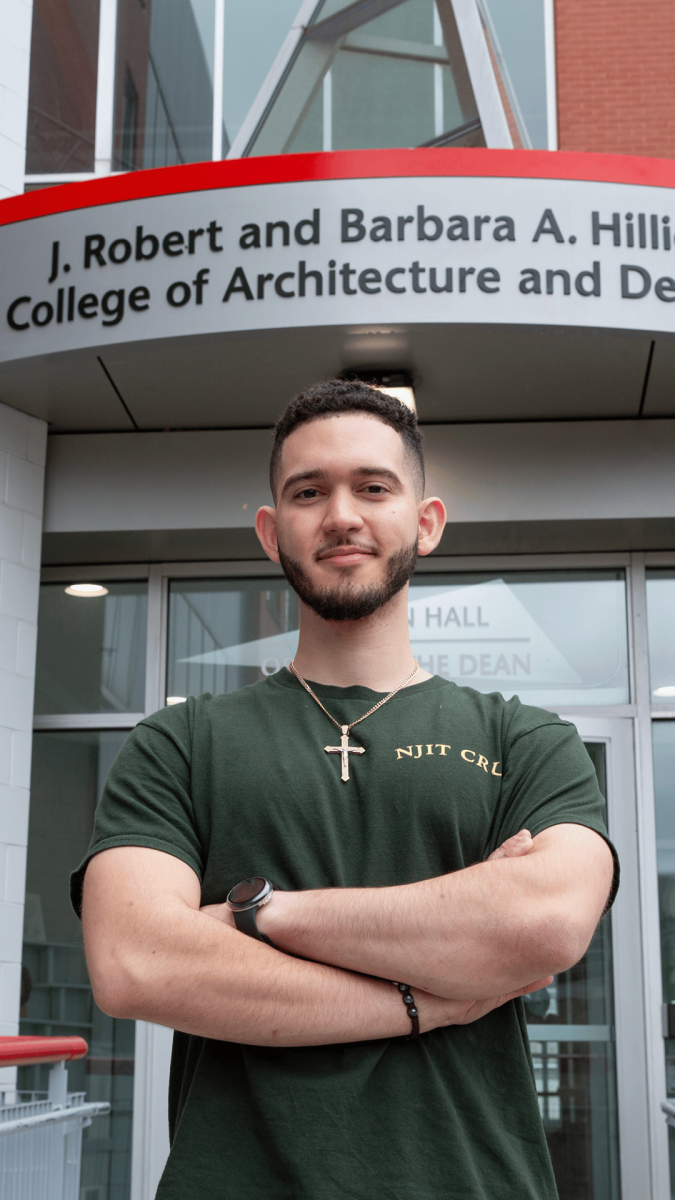
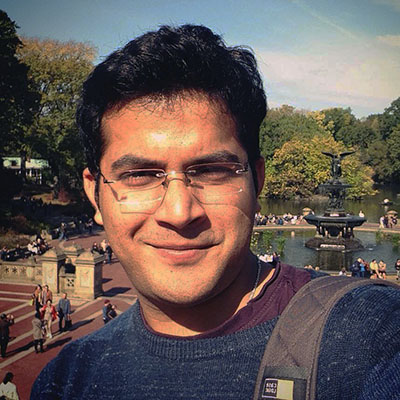
  • Seif Issa
    Getting a degree from a great school like NJIT gave me the opportunity to choose the job I wanted."
    Seif Issa
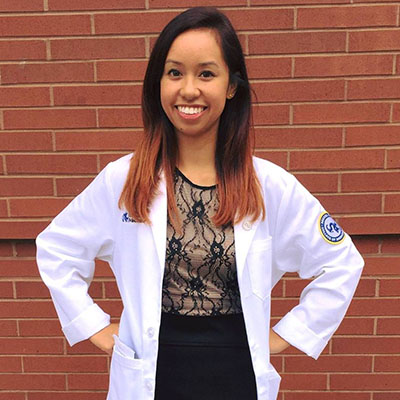
  • Hilsson Angeles
    NJIT was my dream school."
    Hilsson Angeles

Related Majors

Explore all the degrees you can earn at NJIT

Explore Now

Degree Overview

  • Delivery Format: on-campus
  • Required Credits: 120

Program Details

Psychology builds on the same core courses as the Bachelor of Science in Science, Technology and Society, which introduces students to the relationships between society, technology and the global environment. After establishing a foundation in psychology, technology studies and research methods, students complete coursework in social psychology, social network analysis, and user experience as well as a senior thesis project of their own design.

Ultimately, students of the program will exhibit and/or engage in:

  • Professional Communication and Conduct: Students will conduct themselves ethically, as well as learn to articulate ideas soundly through traditional forms of print and new forms of digital literacy.
  • Academic Excellence: After establishing a foundation in psychology, technology studies and research methods, students complete coursework in social psychology, social network analysis and user experience, as well as complete a senior thesis project of their own design.
  • Professional Skillset for Diverse Professions: Graduates are well equipped to pursue numerous career opportunities, including user experience researcher, user experience designer, market researcher, advertising analytics and sales, digital analyst, consultant, brand strategist, graduate education in the social and behavioral sciences.

View the Curriculum

Course listing and prerequisites

What You Will Learn:

While students in Psychology will learn and apply their knowledge in diverse areas of computer, social and cognitive sciences, we specifically aim for our students to meet the following learning outcomes:

  • In-depth theoretical knowledge in foundations in psychology, technology studies and research methods, as well as coursework in social psychology, social network analysis and user experience.
  • Application of theoretical knowledge through successful completion of a senior thesis project of the student’s own design.
  • Mastery of core concepts expanded from the Science, Technology and Society curriculum, including Science, Technology and Society Core coursework, Mind, Behavior & Society Core coursework, User Experience Core coursework and additional Psychology electives.
  • Preparation for graduate degree programs in the social and cognitive sciences, as well as a wide variety of careers such as computer and information research scientist and market research analyst.

Admissions & curriculum

Explore this area of study

Cyberpsychology Salaries

$51,000

Starting Salary, NJIT Average

$75,985

Mid-Career Salary, National Average

Job growth for computer and information research scientists to increase faster than average

Career Prospects

Where do Psychology majors work?

Common Job Titles
  • Advertising Account Executive
  • Brand Strategist
  • Digital Analyst
  • Market Researcher
  • User Experience Designer/Researcher
What our students are saying
  • Hilsson Angeles
    NJIT was my dream school."
    Hilsson Angeles
  • Seif Issa
    Getting a degree from a great school like NJIT gave me the opportunity to choose the job I wanted."
    Seif Issa

Forensic Science

What do Forensic Science majors do?

What our students are saying
  • Hilsson Angeles
    NJIT was my dream school."
    Hilsson Angeles
  • Seif Issa
    Getting a degree from a great school like NJIT gave me the opportunity to choose the job I wanted."
    Seif Issa

Related Majors

Explore all the degrees you can earn at NJIT

Explore Now

Degree Overview

  • Delivery Format: on-campus
  • Required Credits: 120

Program Details

The Forensic Science B.S. program aims to provide students with strong foundational knowledge in biology, chemistry, physics, and mathematics, as well as mastery of forensic field practices and laboratory procedures.

Students enrolled in the Forensic Science program will also gain concentrated expertise through one of the program's three options: forensic biology, forensic chemistry, and digital forensics. Ultimately, students of the program will exhibit and/or engage in:

  • Professional, Ethical and Legal Conduct: Students will conduct ethical research, as well as learn legal procedures and strong courtroom communication skills required by forensic science professionals.

    *Background checks similar to those required for law enforcement officers are likely to be a condition of employment (Reference: NIJ Report NCJ 203099 -- "Qualifications for a Career in Forensic Science," pp.7-10)
  • Forensic Research and Field Experience: Students will participate in a forensic science capstone experience (professional internship, cutting-edge forensic science research or professional workshops) to gain working knowledge of all aspects of the forensic science field and establish a professional network before graduation.
  • Academic Excellence: Students will excel in the program’s “Forensic Science Core” curriculum, designed to equip students with a background in core forensic science concepts, evidence collection, technical analysis, data interpretation and professional regulatory practices.

NJIT's BS in Forensic Science degree with concentrations in Forensic Biology, Forensic Chemistry, and Digital Forensics is now accredited by FEPAC.

What You Will Learn:

While students in the Forensic Science B.S. program will learn and apply their knowledge in diverse areas of the chemical, biological and computer sciences, we specifically aim for our students to meet the following learning outcomes:

  • In-depth theoretical knowledge in forensic science practices, such as trace evidence analysis, DNA identification, forensic microscopy, chain of custody procedures, and expert witness courtroom testimony.
  • Application of theoretical knowledge through the program’s “Forensic Science Capstone” experience, including a co-op position in a forensic science laboratory, series of professional workshops, or extensive forensic science research.
  • Mastery of core concepts taught in the “Forensic Science Core” curriculum, including Forensic Science, Crime Scene Investigation, Law and Evidence, Physical Methods of Forensic Analysis, Forensic Chemistry, Forensic Microscopy and Forensic Biology.
  • Completion of advanced coursework in analytical chemistry, as well as concentrated courses in one of the program’s three options: forensic biology, forensic chemistry, or digital forensics option.
  • Ability to learn and stay current with forensic field methods and evidence collection, as well as technical analysis, data interpretation, and professional regulatory practices.
  • Ability to effectively collect, process and document evidence, as well as communicate results and provide expert courtroom testimony.
  • Mastery of foundational biology, chemistry, physics, and mathematics coursework needed to pursue graduate degrees in STEM, medicine, dentistry or law, as well as careers in fields such as environmental and pharmaceutical industries, biotechnology, chemistry, homeland security, and regulatory agencies.

Admissions & curriculum

Explore this area of study

Forensic Science Salaries

$56,320

Starting Salary, NJIT Average

$67,440

Mid-Career Salary, National Average

Employment of forensic science technicians is projected to grow 13 percent from 2024 to 2034, much faster than the average for all occupations.

Career Prospects

Where do Forensic Science majors work?

Common Job Titles
  • Bloodstain Pattern Analyst
  • Crime Scene Investigator
  • Crime Laboratory Analyst
  • Forensic Ballistics Expert
  • Medical Examiner
Top Employers
  • Investigation and Security Services
  • Local and State Government
  • Medical and Diagnostic Laboratories
What our students are saying
  • Seif Issa
    Getting a degree from a great school like NJIT gave me the opportunity to choose the job I wanted."
    Seif Issa
  • Hilsson Angeles
    NJIT was my dream school."
    Hilsson Angeles

Contact Us

Need Help? We’re here to advise you.

Pharmaceutical Chemistry

What do Pharmaceutical Chemistry majors do?

What our students are saying
  • Seif Issa
    Getting a degree from a great school like NJIT gave me the opportunity to choose the job I wanted."
    Seif Issa
  • Hilsson Angeles
    NJIT was my dream school."
    Hilsson Angeles

Related Majors

Explore all the degrees you can earn at NJIT

Explore Now

Degree Overview

  • Delivery Format: on-campus
  • Required Credits: 30

Program Details

The mission of the Materials Science and Engineering M.S. program is to provide graduate education and research opportunities for students and professionals in the theoretical, experimental and analytical foundations of materials science, and in the engineering use, modification and application to the structures and products of the technological age. We expect that, as a student and/or graduate of the Materials Science and Engineering M.S. program, you will exhibit the following:

  • Students will excel in the academic study of principles of materials science and engineering, as well as research focuses they choose from a wide range of areas, such as electronic and photonic materials, particulate and nanomaterials, polymer and biomaterials and others.
  • Real-World Experience: Students will gain expertise in basic laboratory equipment and field techniques through on-campus opportunities at NJIT and the university’s distinguished research partnerships.
  • Communication and Collaboration: Students will effectively collaborate on research toward their thesis and may play a supporting role in the form of searching and preparing literature reviews based on research papers that are relevant to the topic of their thesis.

What You Will Learn:

If you are interested in interdisciplinary problem-solving, the Materials Science and Engineering M.S. program will offer you an engaging and challenging educational opportunity. While students in the Materials Science M.S. program learn a wide range of skills and knowledge, we specifically aim for our students to meet the following learning outcomes:

  • Upon graduation, students should acquire the fundamental set of knowledge covered by the required courses.
  • Upon graduation, most of the students who consider the next level of graduate education should be able to prepare for Ph.D. qualifier exams in Materials Science and Engineering, Physics and Applied Physics at NJIT or other universities.
  • Upon graduation, most of the students should be able to acquire a necessary depth of knowledge in the area of specialization, such as electronic and photonic materials, particulate and nano materials, and polymer and biomaterials to be admitted to and successfully proceed with the Ph.D. studies at NJIT or other universities.
  • Upon graduation, students should be able to acquire skills to identify scientific problems, perform a literature review on the problem, and identify the solution venues in a research environment.
  • Upon graduation, students should be able to demonstrate the ability to function effectively as a member of a research team with improved qualification as members of technical staff in the industry. Students should become more knowledgeable and competitive in a job market.
  • Upon graduation, a student should be able to formulate a research question and develop a systematic approach to address it, at both the conceptual and technical levels.

Admissions & curriculum

Explore this area of study

Materials Science and Engineering Salaries

$73,000

Starting Salary, NJIT Average

$77,500

Mid-Career Salary, National Average

According to the Bureau for Labor Statistics, the median income for materials scientists is $101,570.
Career Prospects

Where do Materials Science and Engineering (Materials Science Option) majors work?

Common Job Titles
  • Researcher
  • Research Engineer
  • Design Engineer
  • Metallurgist
Top Employers
  • TTX Company
  • Owens Corning
  • Croda
What our students are saying
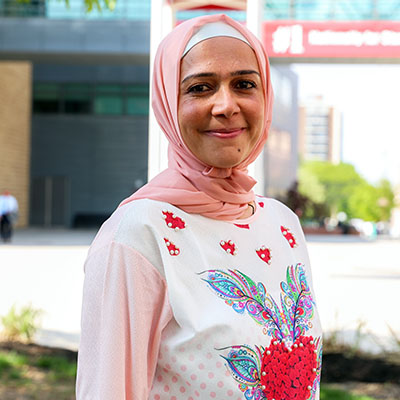
  • Emine S.  Karaman
    I have enjoyed my time in the Materials Science and Engineering Program, particularly the small classes and individual attention that help in hands-on learning."
    Emine S. Karaman
  • Hilsson Angeles
    NJIT was my dream school."
    Hilsson Angeles
  • Seif Issa
    Getting a degree from a great school like NJIT gave me the opportunity to choose the job I wanted."
    Seif Issa

Contact Us

Need Help? We’re here to advise you.

Degree Overview

  • Delivery Format: on-campus
  • Required Credits: 60

Program Details

The mission of the Materials Science and Engineering Ph.D. program is to provide advanced education and research opportunities for students and professionals in the theoretical, experimental, and analytical foundations of materials science and in the engineering use, modification, and application to the structures and products of the technological age. We expect that, as a student and/or graduate of the Materials Science and Engineering M.S. program, you will exhibit the following:

  • Academic Excellence: Students will demonstrate compressive knowledge in their area of concentrations, formulate advanced research questions independently and propose methods of investigation to research currently unsolved problems.
  • Real-World Research Experience: Students will gain expertise and demonstrate a broad knowledge of their field, its tools, and techniques, and use this to develop new knowledge using ethical standards of conduct.
  • Professional Communication and Collaboration: Students will develop top-level communication skills to collaborate and speak effectively about scientific topics, issues, and research at national and international meetings.

What You Will Learn:

Upon graduation all Ph.D. students in Applied Physics should be able to meet the following learning outcomes:

  • Formulate advanced research questions independently and propose methods of investigation, including the design of experiments to investigate currently unsolved problems.
  • Demonstrate and apply comprehensive knowledge in the area of concentration to identify, find, evaluate, articulate and use scientific information at a high level of proficiency.
  • Apply quantitative methods to describe and analyze phenomena.
  • Publish at least one scientific article as the first author in peer-reviewed journals in the area of concentration.
  • Present at least one professional talk at the national or international conference in the area of concentration.
  • Demonstrate broad knowledge of the field, its tools, and techniques to develop new knowledge.
  • Identify, find, evaluate, articulate and use scientific information associated with their field.
  • Interact with other professional and student researchers in a skilled, cooperative fashion to discuss issues and solve scientific problems at a high level of proficiency.
  • Conduct research and develop relationships using ethical, professional standards of conduct.

Admissions & curriculum

Explore this area of study

Materials Science and Engineering Salaries

$73,000

Starting Salary, NJIT Average

$77,500

Mid-Career Salary, National Average

According to the Bureau for Labor Statistics, the median income for materials scientists is $101,570.


Career Prospects

Where do Materials Science and Engineering (Materials Science Option) majors work?

Common Job Titles
  • Researcher
  • Research Engineer
  • Design Engineer
  • Metallurgist
Top Employers
  • TTX Company
  • Owens Corning
  • Croda
What our students are saying
  • Emine S.  Karaman
    I have enjoyed my time in the Materials Science and Engineering Program, particularly the small classes and individual attention that help in hands-on learning."
    Emine S. Karaman
  • Seif Issa
    Getting a degree from a great school like NJIT gave me the opportunity to choose the job I wanted."
    Seif Issa
  • Hilsson Angeles
    NJIT was my dream school."
    Hilsson Angeles

Contact Us

Need Help? We’re here to advise you.

Communication and Media

What do Communication and Media majors do?

What our students are saying
  • Amy  Bracero
    My education and experiences at NJIT helped me become a versatile member of my team at Verizon."
    Amy Bracero
  • Victor  Pujades
    NJIT's high-quality education is preparing me for the challenges that I will face in the future."
    Victor Pujades
  • Seif Issa
    Getting a degree from a great school like NJIT gave me the opportunity to choose the job I wanted."
    Seif Issa

Related Majors

Explore all the degrees you can earn at NJIT

Explore Now

Biology

What do Biology majors do?

What our students are saying
  • Neha  Thati
    I have built a strong foundation at NJIT to carry throughout my future endeavors."
    Neha Thati
  • Mohammad  Nawaz
    My learning experience at NJIT has allowed me to pursue my lifelong dream of becoming a physician."
    Mohammad Nawaz
  • Subashkusum  Ray
    NJIT has helped me pursue and foster my dream of understanding the emergent patterns in biological systems."
    Subashkusum Ray

Related Majors

Explore all the degrees you can earn at NJIT

Explore Now

Theatre Arts and Technology

What do Theatre Arts and Technology majors do?

What our students are saying
  • Alexis  Telyczka
    My professors and advisors at NJIT have been enormously helpful. They care about my academic and personal success."
    Alexis Telyczka
  • Eric  Holzer
    Theatre Arts & Technology strengthened my character, my confidence, and my own perception of the world around me."
    Eric Holzer
  • Seif Issa
    Getting a degree from a great school like NJIT gave me the opportunity to choose the job I wanted."
    Seif Issa

Related Majors

Explore all the degrees you can earn at NJIT

Explore Now