Degree Overview

  • Delivery Format: on-campus
  • Required Credits: 120

Program Details

Rooted in the foundations of traditional Information Systems, our Bachelor of Science in Enterprise AI brings a modern touch, equipping students with the skills to design, develop, and deploy next-generation smart information systems. By integrating core principles of system analysis and data management with cutting-edge AI and machine learning technology, this program prepares you to create intelligent technologies that anticipate needs, automate processes, and enhance user experiences.

What You Will Learn:

  • Design, implement and fine-tune machine learning and LLM models to solve business problems 
  • Architect enterprise solutions that scale with AI capabilities
  • Apply responsible and ethical AI principles in system development and deployment 
  • Lead teams through complex implementations
  • Communicate effectively with stakeholders at all levels. 

Admissions & curriculum

Tuition Cost

How Much does it cost to Attend NJIT?

$38,962
Average cost of attendance for NJ resident undergrads living on campus
- $18,913
Average amount of grants and scholarships per student
= $20,049
Learn More About Tuition & Costs

Convocation 2026

WELCOME TO HIGHLANDER NATION!

Convocation is more than a welcome. It’s your first chance to experience what it means to be a Highlander — surrounded by the classmates, traditions and opportunities that will shape your next few years.
Be a part of the official first-year class photo, and don’t miss exclusive NJIT giveaways available only to attendees.

Wednesday, September 2nd | 2:30 p.m.

The Turf – Lubetkin Field at Mal Simon Stadium

Gates open at 2:15 p.m.

The Involvement Fair will take place immediately after Convocation

Image
A student and Highlander at Convocation

THE ALMA MATER

To Alma Mater fair and great,
our voices now we raise,
Our gratitude we demonstrate,
Her steady voice we praise.
Her challenge on us ever falls,
a world of knowledge calls.
In heart and mind,
our trust we’ll bind
to our NJIT.
We’ll hold her memory ever dear,
Her spirit we’ll revere.
To her we’ll promise loyalty,
our own NJIT.
NJIT makes

Degree Overview

  • Delivery Format: on-campus
  • Required Credits: 12

Program Details

This primarily online certificate is designed for recent STEM graduates and working professionals. The curriculum consists of two required core courses and two electives. Students study biotechnology processes and bioprocess unit operations, then select electives in areas such as pharmaceutical quality and regulation, operations and technology management, digital biomanufacturing, or biologically driven engineering systems. An optional three-credit summer capstone, project, or internship may be completed in addition to the 12 required credits.

What You Will Learn:

  • Microbial and mammalian bioprocessing principles
  • Industrial biotechnology manufacturing workflows
  • Upstream and downstream bioprocess operations
  • Filtration, centrifugation, chromatography, and separation processes
  • Bioprocess scale-up and manufacturing systems
  • Good Manufacturing Practice compliance
  • Pharmaceutical quality systems, validation, and regulatory requirements
  • Process data analysis and digital biomanufacturing
  • Project management, technology transfer, and production operations

Admissions & curriculum

Explore this area of study

Salaries

$75,900

Starting Salary, NJIT Average

$86,991

Mid-Career Salary, National Average

NJIT’s Chemical Engineering program is in the top 100 in the country

Career Prospects

Where do Chemical Engineering majors work?

Common Job Titles
  • Chemical Engineer
  • Process Engineer
  • Manufacturing Engineer
  • Product Engineer
  • Research And Development Engineer
Top Employers
  • Colgate-Palmolive
  • FM Global
  • L'Oreal USA
  • Phillips 66
  • TEVA Pharmaceuticals

What our students are saying

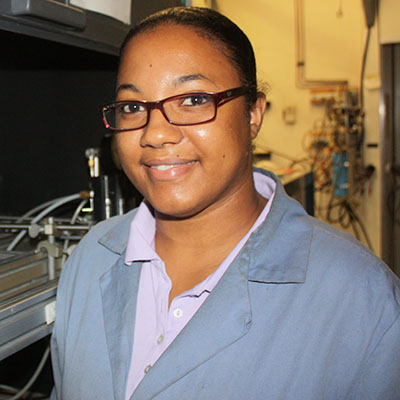
  • Kerri-Lee  Chintersingh
    I’m interested in current challenges the energy community faces."
    Kerri-Lee Chintersingh
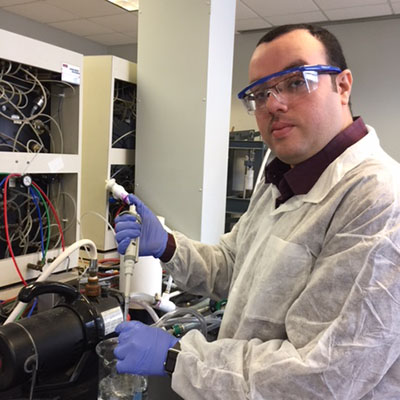
  • Victoria Harbour
    What I love about research at NJIT is that primary investigators draw on creative and hardworking thinkers throughout the campus community. "
    Victoria Harbour
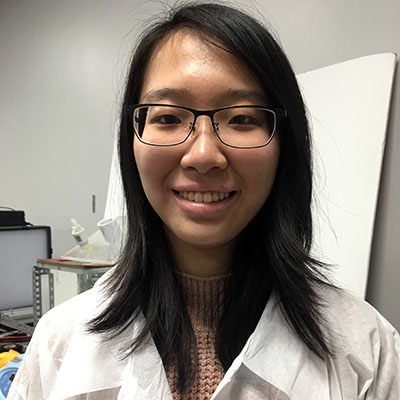
  • Mehnaz  Mursalat
    I’m working on microfluidic biosensors for cancer detection. We hope this technology will replace invasive biopsies. "
    Mehnaz Mursalat

Degree Overview

  • Delivery Format: on-campus
  • Required Credits: 12

Program Details

The program consists of two required core courses and two electives. Core coursework covers pharmaceutical engineering principles and pharmaceutical unit operations. Electives allow students to explore facility design, pharmacokinetics and drug delivery, validation and regulatory requirements, or particle-processing technology. All certificate credits may be applied toward NJIT’s M.S. in Pharmaceutical Engineering.

What You Will Learn:

  • Principles of pharmaceutical engineering and industry operations
  • Drug discovery and development processes
  • FDA requirements, regulatory compliance, and approval processes
  • Drug dosage forms and pharmaceutical manufacturing systems
  • Quantitative analysis and design of pharmaceutical unit operations
  • Processing of liquid and dispersed-phase systems
  • Pharmaceutical facility design
  • Pharmacokinetics, drug delivery, and drug transport
  • Particle-processing principles relevant to solid pharmaceutical products

Admissions & curriculum

Explore this area of study

Salaries

$75,900

Starting Salary, NJIT Average

$86,991

Mid-Career Salary, National Average

NJIT’s Chemical Engineering program is in the top 100 in the country

Career Prospects

Where do Chemical Engineering majors work?

Common Job Titles
  • Chemical Engineer
  • Process Engineer
  • Manufacturing Engineer
  • Product Engineer
  • Research And Development Engineer
Top Employers
  • Colgate-Palmolive
  • FM Global
  • L'Oreal USA
  • Phillips 66
  • TEVA Pharmaceuticals

What our students are saying

  • Kerri-Lee  Chintersingh
    I’m interested in current challenges the energy community faces."
    Kerri-Lee Chintersingh
  • Mehnaz  Mursalat
    I’m working on microfluidic biosensors for cancer detection. We hope this technology will replace invasive biopsies. "
    Mehnaz Mursalat
  • Victoria Harbour
    What I love about research at NJIT is that primary investigators draw on creative and hardworking thinkers throughout the campus community. "
    Victoria Harbour

Degree Overview

  • Delivery Format: on-campus
  • Required Credits: 12

Program Details

The program consists of two required core courses and two electives. Students study pharmaceutical facility design and packaging technology while selecting specialized coursework in pharmaceutical engineering principles, validation and regulatory requirements, particle technology, or independent study. Applicants typically need an undergraduate degree in science or engineering and a minimum cumulative GPA of 2.8. All certificate credits may be applied toward NJIT’s M.S. in Pharmaceutical Engineering.

What You Will Learn:

  • Design principles for modern pharmaceutical manufacturing and R&D facilities
  • Pharmaceutical packaging machinery, processes, and unit operations
  • Drug development, dosage forms, and manufacturing processes
  • FDA requirements, approval processes, and regulatory compliance
  • Validation practices used in pharmaceutical and allied industries
  • Sterile and aseptic processing, cleanrooms, HVAC systems, and pharmaceutical utility systems
  • Particle-processing principles relevant to pharmaceutical unit operations

Admissions & curriculum

Explore this area of study

Salaries

$75,900

Starting Salary, NJIT Average

$86,991

Mid-Career Salary, National Average

NJIT’s Chemical Engineering program is in the top 100 in the country

Career Prospects

Where do Chemical Engineering majors work?

Common Job Titles
  • Chemical Engineer
  • Process Engineer
  • Manufacturing Engineer
  • Product Engineer
  • Research And Development Engineer
Top Employers
  • Colgate-Palmolive
  • FM Global
  • L'Oreal USA
  • Phillips 66
  • TEVA Pharmaceuticals

What our students are saying

  • Kerri-Lee  Chintersingh
    I’m interested in current challenges the energy community faces."
    Kerri-Lee Chintersingh
  • Mehnaz  Mursalat
    I’m working on microfluidic biosensors for cancer detection. We hope this technology will replace invasive biopsies. "
    Mehnaz Mursalat
  • Victoria Harbour
    What I love about research at NJIT is that primary investigators draw on creative and hardworking thinkers throughout the campus community. "
    Victoria Harbour

Degree Overview

  • Delivery Format: on-campus
  • Required Credits: 120

Program Details

The mission of the Department of Civil and Environmental Engineering is to educate a diverse student body to be employed in the engineering profession, to encourage research and scholarship among our faculty and students and to promote service to the engineering profession and society. Our program objectives are reflected in the achievements of our recent alumni in these areas:  

  • Engineering Practice: Alumni will successfully engage in the practice of environmental engineering within industry, government, and private practice, applying engineering analysis and design toward sustainable solutions across a wide array of technical specialties, including water and wastewater treatment system design, environmental microbiology, site remediation engineering, sustainability planning, environmental policy, and environmental systems analysis.
  • Professional Growth: Alumni will advance their skills through professional growth and development activities such as graduate study in engineering, research and development, professional registration, and continuing education; some graduates will transition into other professional fields such as business and law through further education.
  • Service: Alumni will perform service to society and the engineering profession through membership and participation in professional societies,  including the American Academy of Environmental Engineers and Scientists, the American Society of Civil Engineers, and allied organizations, as well as government, educational institutions, civic organizations, charitable giving, and other humanitarian endeavors.

What You Will Learn:

By the time they graduate from the environmental engineering program, our students should have acquired the following:

  • An ability to identify, formulate and solve complex engineering problems by applying principles of engineering, science and mathematics
  • An ability to apply engineering design to produce solutions that meet specified needs with consideration of public health, safety and welfare, as well as global, cultural, social, environmental and economic factors
  • An ability to communicate effectively with a range of audiences
  • An ability to recognize ethical and professional responsibilities in engineering situations and make informed judgments, which must consider the impact of engineering solutions in global, economic, environmental and societal contexts
  • An ability to function effectively on a team whose members together provide leadership, create a collaborative and inclusive environment, establish goals, plan tasks and meet objectives
  • An ability to develop and conduct appropriate experimentation, analyze and interpret data and use engineering judgment to draw conclusions
  • An ability to acquire and apply new knowledge as needed, using appropriate learning strategies

Admissions & curriculum

Explore this area of study

Salaries

$48,750

Starting Salary, NJIT Average

$63,447

Mid-Career Salary, National Average

NJIT’s graduate programs in Environmental Engineering rank in the top 75 in the U.S.

Career Prospects

Where do Environmental Engineering majors work?

Common Job Titles
  • Environmental Engineer
  • Water Resources/Drainage Engineer
  • Environmental Specialist
  • Senior Environmental Project Manager
  • Air Quality Engineer
Top Employers
  • AECOM
  • Jacobs Engineering Group Inc.
  • WSP Parsons Brinckerhoff
  • Langan
  • Stantec

What our students are saying

  • Wenxin  Ye
    I’m from Beijing, and I’ve been aware of environmental issues since I was a kid. I’m here to learn how to improve and fix these problems."
    Wenxin Ye
  • Ahmed Khaled  Abdella
    I work on nanobubbles. My target is to help develop simple, cheap, eco-friendly and safe technologies for all parts of the world."
    Ahmed Khaled Abdella
  • Hilsson Angeles
    NJIT was my dream school."
    Hilsson Angeles

Tuition Cost

How Much does it cost to Attend NJIT?

$38,962
Average cost of attendance for NJ resident undergrads living on campus
- $18,913
Average amount of grants and scholarships per student
= $20,049
Learn More About Tuition & Costs

Update: Research Security Requirements on Federally Funded Research Grants and Contracts

Dear Colleagues,

 Effective October 10, 2025 the National Science Foundation requires research security training certifications for all proposers and senior/key personnel. This training must cover cybersecurity, international collaboration, foreign interference, proper use of funds, disclosure, and conflicts of interest/commitment.

Specifically:

  • Senior/key personnel must complete their required research security training within 12 months prior to proposal submission.  NJIT must certify that all senior/key personnel have completed this training.  Accordingly, it is even more important to initiate pre-award approvals as early as possible.
  • NJIT must also certify that the institution has a plan for Responsible and Ethical Conduct of Research training for all relevant personnel (students, faculty, etc.). This training must include mentor training, awareness of research security threats, and federal export control/disclosure requirements.

More details related to these federal requirements may be found here.

Going forward, in post-award phase, all personnel, including students, postdocs, etc., working on the project will be required to take the research security training as a part of the federal or institutional policy.

Through CITI Program, NJIT has the required courses available.  Our use of CITI Program for training integrates into our existing compliance training and allows for documentation and certification.  NJIT has single sign-on access with CITI Program to facilitate accessibility (choose to log-in through my organization).

For those that have not yet have an account with CITI Program, some basic instructions to get research security classes active are: 

  • Navigate to the CITI Program webpage.
  • The Login button is located near the upper right, click it.
  • You will then want to choose "Log in through my organization" and in the search use New Jersey Institute of Technology in full.
  • Continue to SSO/Login Instructions, and sign in as normal.
  • You will be prompted to associate your account, if you do not already have an account, this is the time to create your account.
  • You will be asked to update your profile, please do so.
  • For NJIT compliance purposes, the licensed professional question will have no impact.
  • You will then find yourself presented with a set of questions; these questions help determine which training is required.
  • For the purposes of research security training, you only need to answer Question 10, and please choose "Research Security Advanced Refresher."  This class contains all the required modules in one. 

Continued Institutional Guidelines on Impact of Changes in Federal Policies on Research Grants and Contracts

If you receive any notification including any specific stop order, termination, budget change on indirect costs rate on your award/proposal, or request to sign any attestation from any funding agency, please forward the notification with any attachment to me immediately at dhawan@njit.edu and copy Eric Hetherington at erich@njit.edu

Please do not sign any document sent to you regarding any attestation on the federal research grants. 

We will continue to carefully review at the institutional level with the provost and general counsel offices to advise and follow up. The Office for Research and the Office of General Counsel will review the request and respond with instructions for you to follow.

Please visit our website periodically for updates on this situation.

Sincerely,
Atam Dhawan
Senior Vice Provost for Research

Important Update Regarding Federal Regarding Research Funding

Dear Colleagues,

As we have shared over the past few months, federal policies regarding research funding are evolving rapidly. We are seeing new certification requirements and conditions being included in grant awards and applications from federal agencies, and we need your assistance in identifying any new certifications or conditions on funding. This is essential to preserve NJIT’s eligibility to receive federal grants.

Please immediately bring to our attention any new certifications or conditions you find in a grant application, Notice of Award, or other communication with the funding agency, which may include language specifically related to:

  • Presidential Executive Orders
  •  Indirect cost caps (e.g., a 15% cap) that fall outside our standard negotiated rates
  • DEI/DEIA or equity initiatives
  •  "Gender ideology" or definitions of sex
  • Any other atypical language or requirements

Please forward any such language to Eric Hetherington, Associate Vice Provost for Sponsored Research Administration, at eric.d.hetherington@njit.edu. If you find this language in a grant application, a grant renewal, or during discussions with an agency (before a Notice of Award), please pause and wait for guidance from Eric before taking any further action.

We appreciate your partnership as we work to protect our research enterprise. Thank you for your cooperation.

Sincerely,

John A. Pelesko
Provost and Executive Vice President for Academic Affairs

Guidance on Evaluating Promotion and Tenure Cases in the Context of Federal Actions

Dear Colleagues,

I am writing to share with you new guidance, entitled Recognizing the Impact of External Events on the Tenure, Promotion, and Evaluation of NJIT Faculty. This document was prepared by the Provost’s Ad Hoc Task Force on Federal Developments, endorsed by that group, and reviewed and supported by the University Promotion and Tenure Committee.

As you know, recent federal actions have disrupted traditional patterns of research funding, altered agency priorities, and placed new constraints on scholarly work. These developments have the potential to affect faculty productivity in ways that are outside an individual’s control. This guidance offers recommendations on how Promotion and Tenure committees may take such factors into account when evaluating cases.

I want to emphasize that this guidance does not change NJIT’s Promotion and Tenure policy. Instead, it provides a framework for committees to fairly assess faculty achievements in light of these external realities. The goal is to ensure that our processes remain both rigorous and equitable, recognizing the resilience and adaptability of our colleagues in navigating a shifting environment.

I am grateful to the Task Force and the University Promotion and Tenure Committee for their thoughtful work. I trust that both tenure-track faculty and promotion and tenure committees will find this guidance helpful throughout the promotion and tenure process.

Sincerely,
John A. Pelesko
Provost and Executive Vice President for Academic Affairs

Updates Following Recent Federal Developments

Dear NJIT Faculty and Staff,

I would like to start by thanking the faculty, staff, and students who attended the open forum hosted by the Provost's Ad Hoc Task Force on Federal Developments on April 28, 2025. The participation and thoughtful input from attendees greatly contributed to our understanding of these complex and evolving issues. In the months ahead, I encourage each of you to continue to engage with the Task Force as we work to navigate federal developments.

As shared at the open forum, I am pleased to report that all 21 visas previously revoked for NJIT students have been fully restored. Our Office of Global Initiatives (OGI) continues to monitor these situations closely and will provide guidance to any community member impacted by visa-related matters. To contact OGI, please call 973-596-2451 or email global@njit.edu.  

Additionally, I want to bring to your attention recent actions by the National Science Foundation (NSF). Effective May 5, 2025, the NSF has implemented a standard indirect cost rate of 15% for all new grants and cooperative agreements awarded to institutions of higher education. This new policy, Policy Notice: Implementation of Standard 15% Indirect Cost Rate | NSF - National Science Foundation, has significant implications for NJIT and our research community. Further, over the past several weeks, the NSF has terminated more than 1000 awards and has halted all funding actions until further notice.

As we’ve shared previously, if you receive any specific stop-work order, grant termination, notice of indirect cost rate change on your award/proposal, or request to sign any attestation from any funding agency, please forward the notification with any attachment to the Research Office immediately to Senior Vice Provost Atam Dhawan at dhawan@njit.edu and copy Associate Vice Provost Eric Hetherington at erich@njit.edu

Please do not sign any document sent to you regarding any attestation, certification, or substantially similar document on any federal research grants. 

We recognize the potential difficulties these actions and proposed cuts pose to our research community. In response, NJIT has established a Stop-Gap funding policy designed to support researchers affected by these federal developments, ensuring continuity and mitigating disruptions to ongoing research activities. The full text of this policy has been distributed to Deans and Department Chairs and any faculty or lecturers impacted by grant terminations should discuss the application process with their Department Chair.

Furthermore, to acknowledge the extraordinary circumstances impacting research and academic activities, faculty seeking promotion are now encouraged to include an impact statement in their promotion dossiers detailing how these federal developments have influenced their professional work. Detailed guidance about preparing this impact statement can be found on the Provost’s webpage.

I also want to note that the President’s recently proposed federal budget for FY 2026 indicates substantial funding reductions for many agencies crucial to our research enterprise, including:

  • NSF: 55.8% reduction
  • U.S. Department of Energy: 9.4% reduction
  • U.S. Department of Health and Human Services: 26.2% reduction
  • NASA: 24.3% reduction

While the development of the FY26 federal budget is in its early stages, we will continue to monitor these proposed changes and share additional information as it becomes available.

Thank you once again for your dedication, resilience, and commitment during these challenging times. We remain committed to supporting our entire community and will continue to keep you updated as further developments occur.

Best,

John A. Pelesko
Provost and Senior Vice President for Academic Affairs