Factors of Biological Risk Assessments
Biological Agent
- Pathogenicity
- Virulence
- Environment
- Host
- Mode of Transmission
- Viability
- Immunizations & Treatments
Laboratory Procedures
- Creation of Aerosols & Droplets
- Use of Sharps
- Use of Live Animals
Laboratory Staff
- Training & Proficiency
- Knowledge & Experience
Routes of Entry
- Absorption
- Non-Intact Skin
- Eyes
- Mucus Membranes
- Injection
- Contaminated needle or sharps
- Ingestion
- Eating
- Applying lip balm
- Inhalation
- Breathing
Routes of Transmission
- Contact
- Direct Contact
- Indirect Contact
- Droplet Contact
- Vehicle-borne
- Contaminated Food
- Contaminated Water
- Blood
- Tissues/Organs
- Airborne
- Droplet Nuclei
- Dust
- Vector-borne
- Insects
- Arthropods
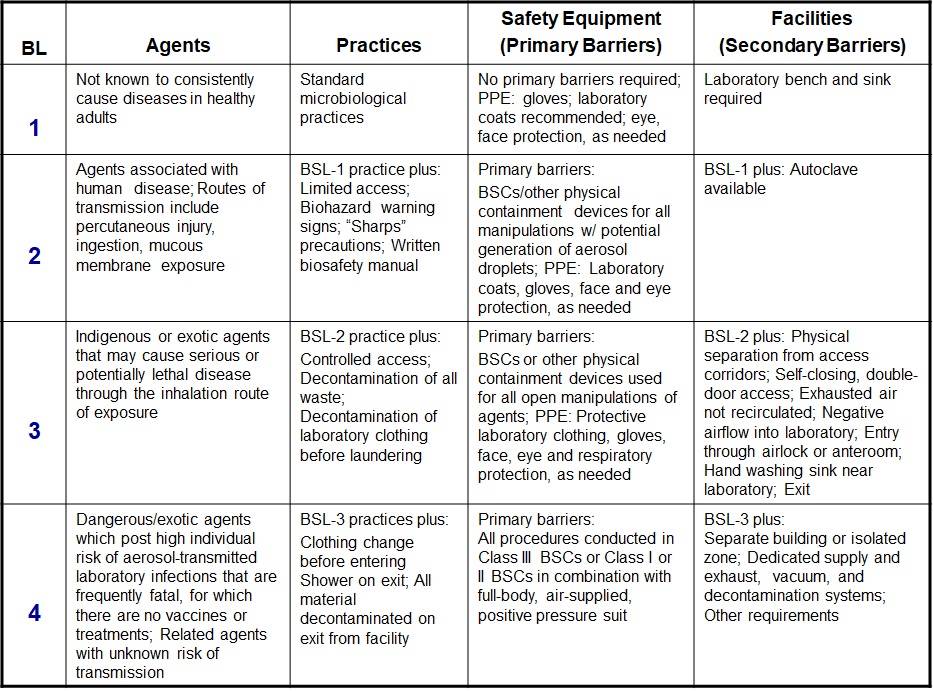
Biological Safety Levels
Biological safety levels consist of combinations of laboratory practices and techniques, safety equipment, and laboratory facilities to appropriately safeguard against the hazards and risks associated with the specific work activities.