NJIT Corporate Partners

NJIT is pleased to offer partner employees an application fee waiver as well as $100 in book vouchers for every eligible course for each semester of eligible enrollment for the majority of our graduate degree programs (several of which are available fully online) and all of our undergraduate programs. 

Faculty & Staff Resources

General Information

Administrative Services

Computing & Technology

Getting Around

Academic Information

Faculty Resources

Employee Resources

Campus Life

Prospective Faculty

Forensic Science

What do Forensic Science majors do?

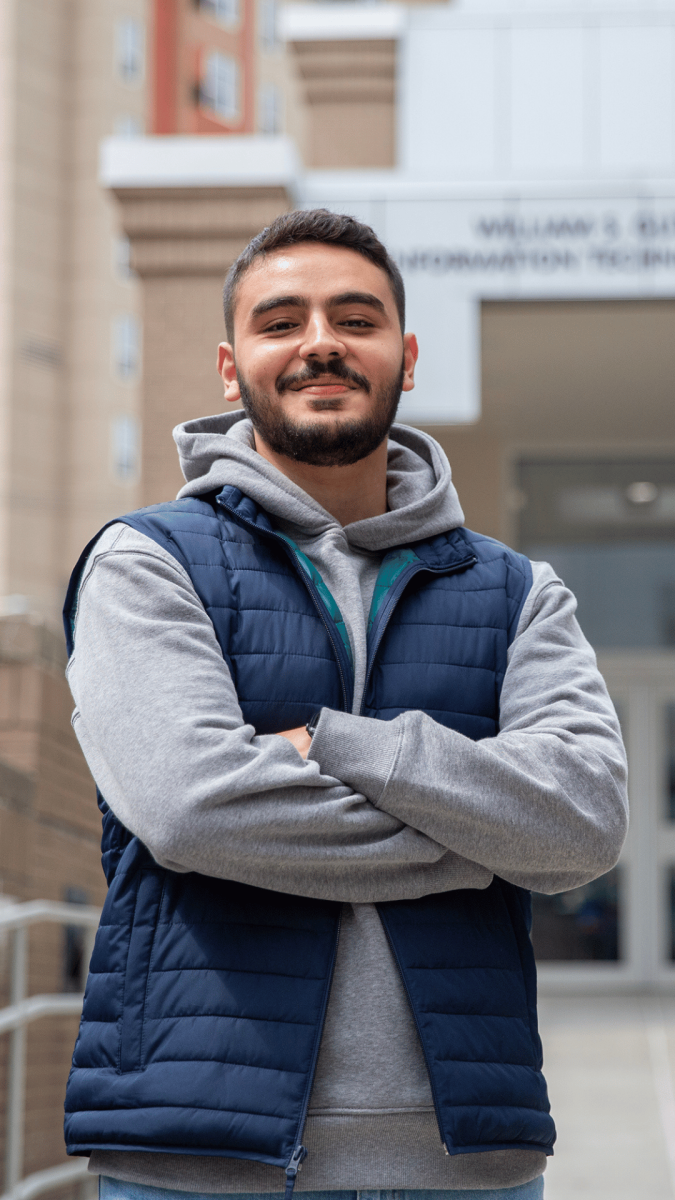
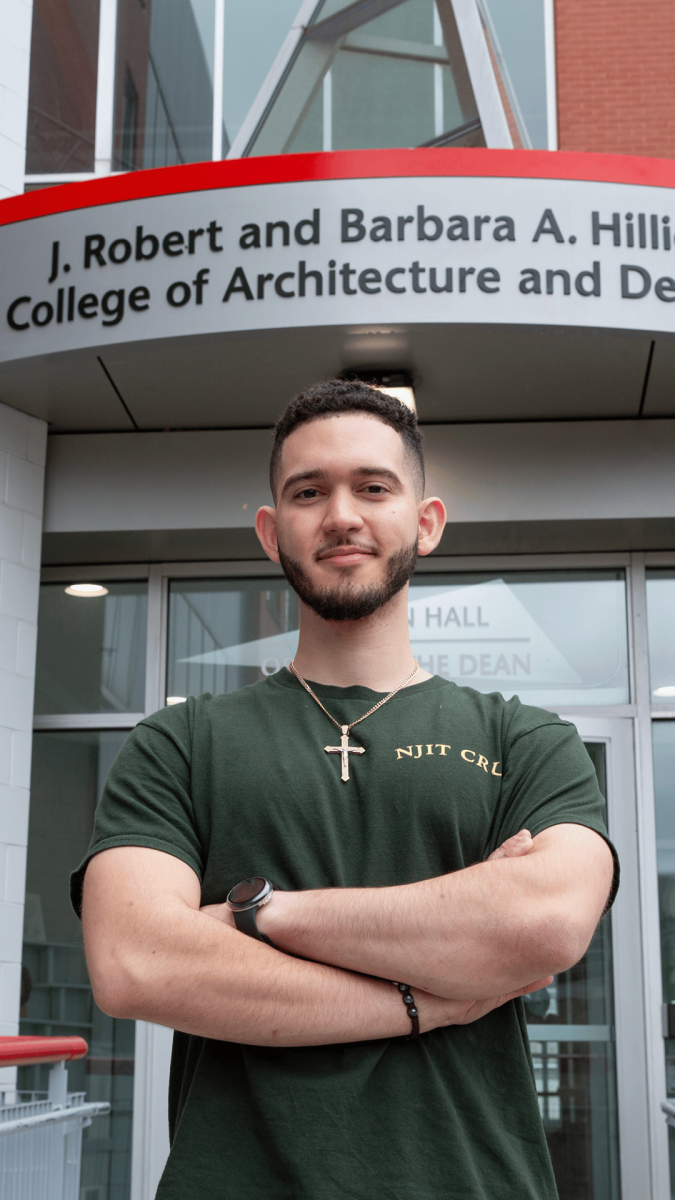
What our students are saying
  • Hilsson Angeles
    NJIT was my dream school."
    Hilsson Angeles
  • Seif Issa
    Getting a degree from a great school like NJIT gave me the opportunity to choose the job I wanted."
    Seif Issa

Related Majors

Explore all the degrees you can earn at NJIT

Explore Now

Degree Overview

  • Delivery Format: on-campus
  • Required Credits: 120

Program Details

The Forensic Science B.S. program aims to provide students with strong foundational knowledge in biology, chemistry, physics, and mathematics, as well as mastery of forensic field practices and laboratory procedures.

Students enrolled in the Forensic Science program will also gain concentrated expertise through one of the program's three options: forensic biology, forensic chemistry, and digital forensics. Ultimately, students of the program will exhibit and/or engage in:

  • Professional, Ethical and Legal Conduct: Students will conduct ethical research, as well as learn legal procedures and strong courtroom communication skills required by forensic science professionals.

    *Background checks similar to those required for law enforcement officers are likely to be a condition of employment (Reference: NIJ Report NCJ 203099 -- "Qualifications for a Career in Forensic Science," pp.7-10)
  • Forensic Research and Field Experience: Students will participate in a forensic science capstone experience (professional internship, cutting-edge forensic science research or professional workshops) to gain working knowledge of all aspects of the forensic science field and establish a professional network before graduation.
  • Academic Excellence: Students will excel in the program’s “Forensic Science Core” curriculum, designed to equip students with a background in core forensic science concepts, evidence collection, technical analysis, data interpretation and professional regulatory practices.

NJIT's BS in Forensic Science degree with concentrations in Forensic Biology, Forensic Chemistry, and Digital Forensics is now accredited by FEPAC.

What You Will Learn:

While students in the Forensic Science B.S. program will learn and apply their knowledge in diverse areas of the chemical, biological and computer sciences, we specifically aim for our students to meet the following learning outcomes:

  • In-depth theoretical knowledge in forensic science practices, such as trace evidence analysis, DNA identification, forensic microscopy, chain of custody procedures, and expert witness courtroom testimony.
  • Application of theoretical knowledge through the program’s “Forensic Science Capstone” experience, including a co-op position in a forensic science laboratory, series of professional workshops, or extensive forensic science research.
  • Mastery of core concepts taught in the “Forensic Science Core” curriculum, including Forensic Science, Crime Scene Investigation, Law and Evidence, Physical Methods of Forensic Analysis, Forensic Chemistry, Forensic Microscopy and Forensic Biology.
  • Completion of advanced coursework in analytical chemistry, as well as concentrated courses in one of the program’s three options: forensic biology, forensic chemistry, or digital forensics option.
  • Ability to learn and stay current with forensic field methods and evidence collection, as well as technical analysis, data interpretation, and professional regulatory practices.
  • Ability to effectively collect, process and document evidence, as well as communicate results and provide expert courtroom testimony.
  • Mastery of foundational biology, chemistry, physics, and mathematics coursework needed to pursue graduate degrees in STEM, medicine, dentistry or law, as well as careers in fields such as environmental and pharmaceutical industries, biotechnology, chemistry, homeland security, and regulatory agencies.

Admissions & curriculum

Explore this area of study

Forensic Science Salaries

$56,320

Starting Salary, NJIT Average

$67,440

Mid-Career Salary, National Average

Employment of forensic science technicians is projected to grow 13 percent from 2024 to 2034, much faster than the average for all occupations.

Career Prospects

Where do Forensic Science majors work?

Common Job Titles
  • Bloodstain Pattern Analyst
  • Crime Scene Investigator
  • Crime Laboratory Analyst
  • Forensic Ballistics Expert
  • Medical Examiner
Top Employers
  • Investigation and Security Services
  • Local and State Government
  • Medical and Diagnostic Laboratories
What our students are saying
  • Hilsson Angeles
    NJIT was my dream school."
    Hilsson Angeles
  • Seif Issa
    Getting a degree from a great school like NJIT gave me the opportunity to choose the job I wanted."
    Seif Issa

Contact Us

Need Help? We’re here to advise you.

Degree Overview

  • Delivery Format: on-campus
  • Required Credits: 36

Program Details

The objective of the MS CSP – Cyber Defense option is to create leaders with strong communication and management skills in addition to the strong technical knowledge in security and privacy of computer systems, networks, and web applications. This option is designed for working professionals or students who already have acquired some professional experience.


Professional Science Master's (PSMs)

What You Will Learn:

Cryptography and Security

  • Understand the difference between the symmetric key and public key cryptography approaches.
  • Select appropriate symmetric and public key cryptography protocols for a given application.
  • Develop an efficient implementation of a cryptographic protocol based on a Discrete Logarithm Problem, RSA (Factoring) Problem or Elliptic Curve Discrete Logarithm Problem.

Security and Privacy in Computing

  • Understand the various models to evaluate the security of computer systems.
  • Interpret security guarantees and assess the level of security provided by a cryptographic protocol.
  • Understand the various security goals for communication over an insecure network.
  • Identify the appropriate types of cryptographic primitives that should be used to achieve each of these goals.
  • Understand the advantages and limitations of using symmetric key versus public-key cryptography.

Network Protocols Security

  • Identify the appropriate security primitives that should be used to achieve specific security goals for communication over insecure networks.
  • Analyze the security of the main mechanisms used on the internet to secure communication between computer systems at various network layers, including physical, network, transport and application layers.
  • Describe common attacks against wired and wireless network protocols using standard terminology, allowing them to communicate effectively with other security professionals.

Admissions & curriculum

Explore this area of study

Cybersecurity Salaries

$70,000

Starting Salary, NJIT Average

$94,500

Mid-Career Salary, National Average

The cybersecurity profession is projected to grow 36.5 percent by 2022.

Career Prospects

Where do Cybersecurity and Privacy majors work?

Common Job Titles
  • Information Security Analyst
  • Technical Specialist
  • Software Engineer
Top Employers
  • Akkadian Labs
  • Celgene Corp.
  • Flashtalking Inc.
  • Nokia (formerly Alcatel-lucent)
What our students are saying
  • Theresa  Wagner
    NJIT filled me with confidence and helped me to discover and assess my leadership style."
    Theresa Wagner
  • Hilsson Angeles
    NJIT was my dream school."
    Hilsson Angeles
  • Seif Issa
    Getting a degree from a great school like NJIT gave me the opportunity to choose the job I wanted."
    Seif Issa

Graduate Advisors

After meeting with your advisor below, please review this document here on how to register for classes.


Applied Mathematics
Professor Yuan-Nan Young (Masters)
973-642-7034
yyoung@njit.edu

Professor David Shirokoff (Ph.D.)
973-642-7031
david.shirokoff@njit.edu

Applied Physics
Professor Bin Chen (Masters and Ph.D.)
973-596-3565
bin.chen@njit.edu

Applied Statistics
Professor Antai Wang (Masters)
973-596-4853
antai.wang@njit.edu

Professor Sunil Dhar (Ph.D.)
973-596-3488
sunil.k.dhar@njit.edu

Architecture
Sasha Corchado (Masters)
973-642-4983
corchado@njit.edu

Artificial Intelligence
Shanna McCormick (On-Campus)
973-596-3389
shanna.mccormick@njit.edu

Michele Bell (Online)
973-596-3391
michele.bell@njit.edu

Bioinformatics

Shanna McCormick
973-596-3389
shanna.mccormick@njit.edu

Biology

Dr. Daphne Soares (Masters)
daphne.f.soares@njit.edu

Dr. Phillip Barden (PhD)
phillip.m.barden@njit.edu
973-596-5863

Biology of Health

Dr. Daphne Soares
daphne.f.soares@njit.edu

Biomedical Engineering
Professor Berivan Cecen (Masters)
973-596-5379
berivan.cecen@njit.edu

Professor Mesut Sahin (Ph.D.)
973-596-5573
​mesut.sahin@njit.edu

Biostatistics
Professor Sundar Subramanian
973-642-4496
sundars@njit.edu

Business and Information Systems

Shanna McCormick (On-Campus)
973-596-3389
shanna.mccormick@njit.edu

Michele Bell (Online)
973-596-3391
michele.bell@njit.edu

Business Data Science
Ming Fang Taylor
973-596-3294
ming.f.taylor@njit.edu

Chemical Engineering 
Professor Gordana Obuskovic (Masters)
973-596-5451
gordana@njit.edu  

Professor Edward Dreyzin (Ph.D.)
973-596-5751
dreyzin@njit.edu

Chemistry
Professor Edgardo Farinas (Masters and Ph.D.)
973-642-7363
edgardo.t.farinas@njit.edu

Civil Engineering
Professor Fadi A. Karaa (Masters)
973-642-4198
fadi.a.karaa@njit.edu

Professor I Jy Steven Chien (Ph.D.)
973-596-6083
i.jy.chien@njit.edu

Professor Taha Marhaba (MS Online)
973-642-4599
taha.f.marhaba@njit.edu

Computer Engineering
Professor Roberto Rojas-Cessa (Masters)
973-596-3508
rojasces@njit.edu

Professor Durga Misra (Ph.D.)
973-596-5739
durgamadhab.misra@njit.edu

Computer Science

Shanna McCormick (On-Campus)
973-596-3389
shanna.mccormick@njit.edu

Michele Bell (Online)
973-596-3391
michele.bell@njit.edu

Reza Curtmola (Ph.D.)
973-596-5776
crix@njit.edu

Cyber Security & Privacy

Shanna McCormick (On-Campus)
973-596-3389
shanna.mccormick@njit.edu

Michele Bell (Online)
973-596-3391
michele.bell@njit.edu

Data Science - Computational Track

Shanna McCormick (On-Campus)
973-596-3389
shanna.mccormick@njit.edu

Michele Bell (Online)
973-596-3391
michele.bell@njit.edu

Hai Phan (Ph.D.)
phan@njit.edu
973-596-6367

Data Science - Statistics Track
Professor Andrew Pole (Masters)
973-596-4097
andrew.pole@njit.edu

Digital Design
Professor Mathew Schwartz (Masters)
973-596-6095
mathew.schwartz@njit.edu

Electrical Engineering 
Professor Ali Abdi (Masters)
973-596-5621
ali.abdi@njit.edu

Professor Cong Wang (Ph.D.)
973-596-5744
cong.wang@njit.edu

Engineering Management
Professor Athanassios Bladikas (Masters)
973-596-3653
bladikas@njit.edu

Engineering Science
Professor Prateek Shekhar (Masters and Ph.D.)
973-596-6822
prateek.shekhar@njit.edu

Environmental Engineering
Professor Fadi A. Karaa (Masters)
973-642-4198
fadi.a.karaa@njit.edu

Professor I Jy Steven Chien (Ph.D.)
973-596-6083
i.jy.chien@njit.edu

Environmental Science 
Professor Mengyan Li (Masters)
973-642-7095
mengyan.li@njit.edu

Professor Somenath Mitra (Ph.D.)
973-596-5611
somenath.mitra@njit.edu

Healthcare Systems Management
Professor Sanchoy Das (Masters)
973-596-3654
das@njit.edu

Industrial Engineering 
Professor Sanchoy Das (Masters and Ph.D.)
973-596-3654
das@njit.edu

Information Systems

Shanna McCormick (On-Campus)
973-596-3389
shanna.mccormick@njit.edu

Michele Bell (Online)
973-596-3391
michele.bell@njit.edu

Yvette Wohn (Ph.D.)
973-596-5291
wohn@njit.edu

Internet Engineering 
Professor Roberto Rojas-Cessa (Masters)
973-596-3508
roberto.rojas-cessa@njit.edu

IT Administration & Security
Click here for Advising

Shanna McCormick (On-Campus)
973-596-3389
shanna.mccormick@njit.edu

Michele Bell (Online)
973-596-3391
michele.bell@njit.edu

Management
Noelle Conforti (MSM admitted students)
973-596-3260
noelle.conforti@njit.edu

Benjamin Manyindo (MSM - prospective inquiries)
973-596-6378
Benjamin.manyindo@njit.edu 

MBA: Management of Technology
Tamicha Adams (Masters - admitted students)
973-596-8238
Tamicha.adams@njit.edu

Benjamin Manyindo (Certificate - admitted students, Masters - prospective inquiries)
973-596-6378
Benjamin.manyindo@njit.edu 

Manufacturing Systems Engineering
Professor Sanchoy Das (Masters)
973-596-3654
das@njit.edu

Materials Science and Engineering - Materials Science Option
Professor Keun Hyuk Ahn (Masters and Ph.D.)
973-596-5227
kenahn@njit.edu

Materials Science and Engineering - Materials Engineering Option
Professor Gordana Obuskovic (Masters)
973-596-5451
gordana@njit.edu  

Professor Edward Dreyzin (Ph.D)
973-596-5751
dreyzin@njit.edu

Mechanical Engineering
Professor Dibakar Datta (Masters and Ph.D.)
973-596-3647
dibakar.datta@njit.edu

Occupational Safety and Health
Professor Arijit Sengupta (Masters)
973-642-7073
sengupta@njit.edu

Pharmaceutical Chemistry
Professor Kevin Belfield (Masters)
973-596-3676
kevin.d.belfield@njit.edu

Pharmaceutical Engineering
Professor Gordana Obuskovic (Masters)
973-596-5451
gordana@njit.edu

Pharmaceutical Systems Management
Professor Sanchoy Das
973-596-3654
das@njit.edu

Power and Energy Systems 
Professor Philip Pong (Masters)
973-596-3533
philip.pong@njit.edu

Software Engineering

Shanna McCormick
973-596-3389
shanna.mccormick@njit.edu

Telecommunications 
Professor Roberto Rojas-Cessa (Masters)
973-596-3508
roberto.rojas-cessa@njit.edu

Transportation
Professor I Jy Steven Chien (Masters and Ph.D.)
973-596-6083
i.jy.chien@njit.edu

Urban Design
Sasha Corchado (Masters)
973-642-4983
corchado@njit.edu

Urban Systems
Professor Hyojin Kim (Ph.D.)
973-642-7199
hyojin.kim@njit.edu

Open Public Records Act (OPRA)

Records request process:

  1. Ms. Natalie Mallamaci has been designated the university’s Custodian of Records.  Any public request for records or other information must be made in writing, during normal business hours, to Natalie Mallamaci.  The university’s business hours are typically 8:30 a.m. to 4:30 p.m., Monday through Friday, excluding holidays.

     
  2. Anyone requesting university records may submit a completed Records Request Form, including a brief but clear description of the records sought, to the Custodian of Records. The Records Request Form is available from the Office of the Custodian of Records and on the university website, www.njit.edu. The requestor must sign and date the form.

     
  3. OPRA provides that records are to be made accessible within seven business days of the submitted Records Request Form, unless they are in storage, archived, or otherwise cannot be made available within that time. The Custodian of Records will advise the requestor in writing whether the records will be provided in whole or in part and, if they will not be provided, will state the reasons why the requested records or some part thereof will not be provided. OPRA also permits the Records Custodian and the requestor to discuss and agree upon the timing according to which the University will provide the records to the requestor.

     
  4. OPRA provides access to existing university records but does not require NJIT to create documents for the purpose of replying to records requests. 

     
  5. Persons requesting copies of records in accordance with OPRA are responsible for all costs associated with reproducing records. All requests with fees estimated to exceed $25 require payment of a 50% deposit. The schedule for duplicating printed records is:
    • $0.05 per page for letter sized pages and smaller;
    • $0.07 per page for legal sized pages and larger;
    • If the actual cost to produce paper copies exceeds the $0.05 and $0.07 rates, the custodian may charge the actual cost of duplication;
    • Electronic records are FREE OF CHARGE (i.e., records sent via email and fax);
    • Actual cost to provide records in another medium (i.e., computer disc, CD-ROM, DVD)

       
  6. In cases where records cannot be reproduced by ordinary document copying equipment in ordinary business size or where extraordinary time and effort are necessary to accommodate a request, OPRA allows a special service charge.

     
  7. The requestor has an opportunity under OPRA to review and object to any charges before they are incurred, but payment must be made before a copy of the record is provided to the requestor.

     
  8. If a request for records is denied or unfilled, a requestor may contact the Custodian of Records to attempt a resolution of any dispute. The requestor also has the statutory right to appeal by filing a complaint with the Government Records Council (GRC), New Jersey Department of Community Affairs (toll-free 866-850-0571 or 609-292-6830 or online at www.nj.gov/grc or, in lieu thereof, file suit in Superior Court.

OPRA Request Form

Request records.

Custodian of Records

Natalie Mallamaci
(973) 596-5461-office
(973) 642-4056-fax
email: OPRA@njit.edu

Faculty and Staff Resources

Faculty and Staff Resources

  General Information

Administrative Services


Computing & Technology

Getting Around

Academic Information

Faculty Resources

Employee Resources

Campus Life

Prospective Faculty