Dating Violence
The Office of Prevention is committed to providing confidential support to students experiencing domestic or dating violence, as well as to their friends and peers. You deserve to know your options, understand campus resources, and be heard.
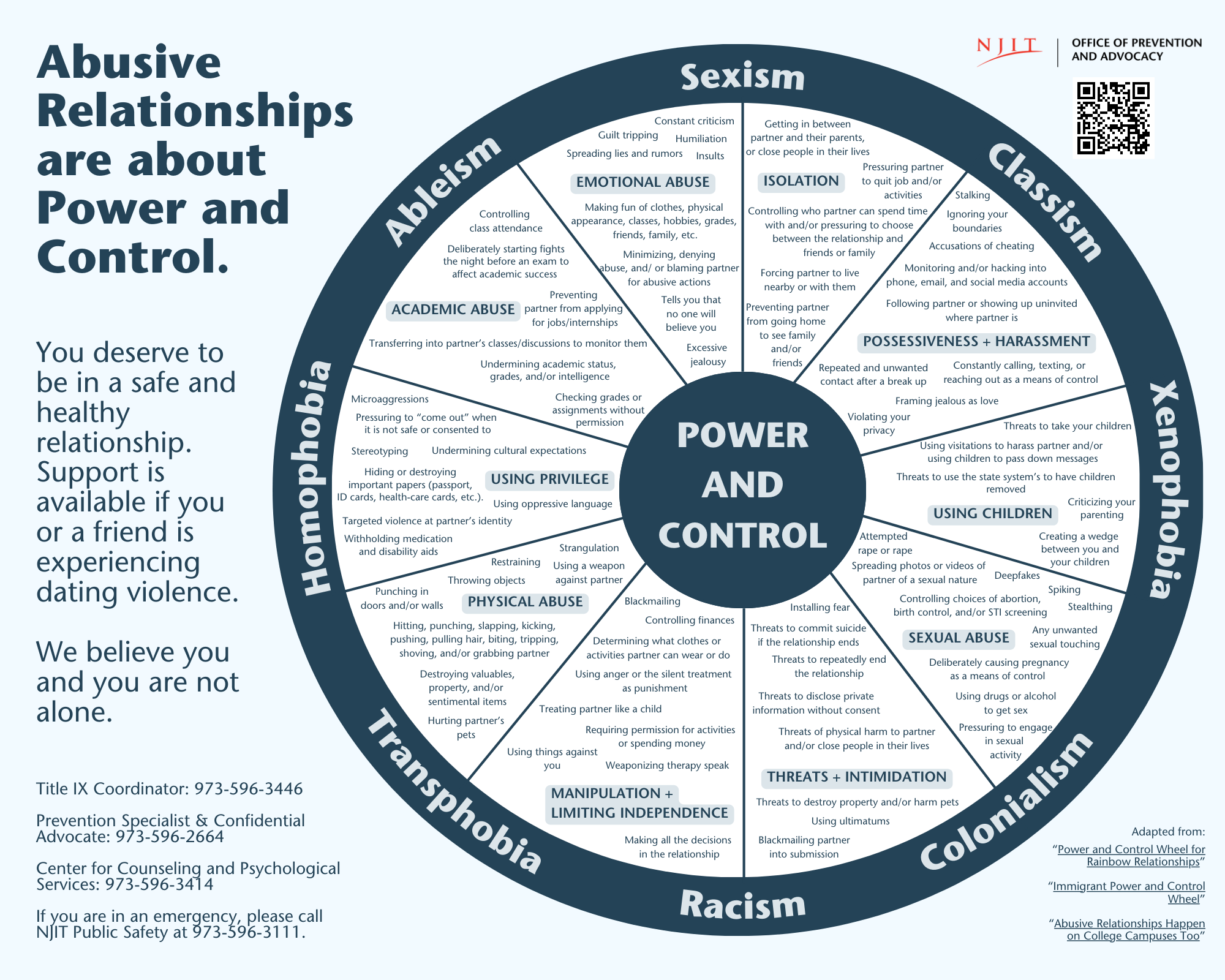
Dating violence is a pattern of abusive behaviors used to exert power and control over a current or former partner. Anyone can be impacted by domestic and dating violence. Individuals of all races, genders, sexual orientations, economic backgrounds, educational levels, and other social identities can experience this type of abuse. It is never your fault.
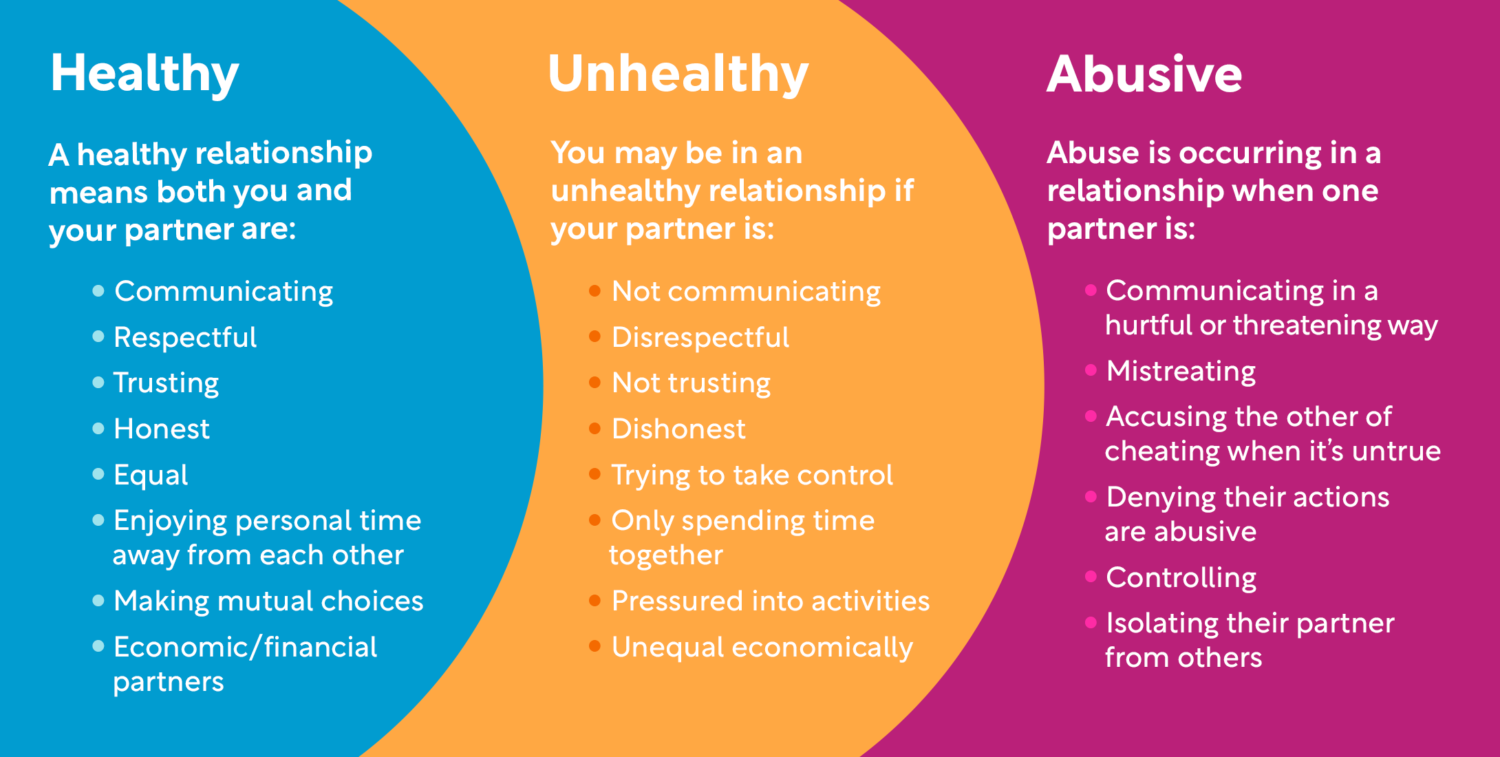
All relationships live on a spectrum. As culture shifts, new terms such as 'toxic' are often used to describe harmful behaviors that can be classified as either unhealthy or abusive. Remember that abuse relies on a pattern of power and control, whereas unhealthy relationships reflect attempts to exert control. Unhealthy relationships can become abusive.
Information and Resources
Whether you’re in a relationship or just thinking about dating, remember your rights:
- You have the right to privacy, both online and off.
- You have the right to feel safe and respected.
- You have the right to decide who you want to date or not date.
- You have the right to choose when/if you have sex and who you have sex with.
- You have the right to say no at any time (to sex, to drugs/alcohol, to a relationship), even if you’ve said yes before.
- You have the right to hang out with your friends and family and do the things that you enjoy, without your partner getting jealous or controlling.
- You have the right to leave a relationship that isn’t right or healthy for you.
- You have the right to live free from violence and abuse.
Source: loveisrespect.org
Below are some common examples of abusive behaviors. If you need support or want to talk through what you are experiencing, contact the Prevention Specialist.
Physical abuse is any intentional, unwanted contact with you or something close to your body, or any behavior that causes or has the intention of causing you injury, disability, or death.
- Scratching, punching, biting, strangling, choking, or kicking.
- Throwing items at you like a phone, book, shoe, or plate.
- Pulling your hair.
- Pushing or pulling you, or forcibly grabbing your clothing.
- Threatening to use or using a gun, knife, box cutter, bat, mace, or other weapon against you.
- Touching any part of you without your permission or consent.
- Forcing you to have sex or perform a sexual act.
- Grabbing your face to make you look at them.
- Preventing you from leaving or forcing you to go somewhere.
Emotional and verbal abuse includes non-physical behaviors such as threats, insults, constant monitoring or “checking in,” excessive texting, humiliation, intimidation, isolation, or stalking.
- Calling you names or putting you down.
- Telling you what to do or wear.
- Preventing you from seeing or communicating with friends or family.
- Blaming abusive or unhealthy behavior on you or your actions.
- Being jealous of outside relationships or accusing you of cheating.
- Threatening to harm you, your pet(s), or people in your life.
- Threatening to harm themselves to keep you from ending the relationship.
- Making you feel guilty or immature when you don’t consent to sexual activity.
- Gaslighting is a specific type of emotional abuse that causes you to question your own reality or memory.
Sexual abuse refers to any behavior that pressures or coerces someone to do something sexually that they don’t want to do.
- Unwanted kissing or touching.
- Unwanted rough or violent sexual activity.
- Refusing to use condoms or restricting your access to birth control.
- Preventing someone from using protection against sexually transmitted infections (STIs).
- Sexual contact with someone who is intoxicated, unconscious, asleep, or otherwise unable to give clear consent.
- Threatening, pressuring, or otherwise forcing someone to have sex or perform sexual acts.
Financial abuse often operates in more subtle ways than other forms of abuse, but it can be just as harmful to those who experience it.
- Giving you an allowance or tracking what you buy.
- Putting your paycheck into an account you can’t access.
- Stop you from working or limiting the hours you do.
- Taking your keys or car so you can’t go to work.
- Getting you fired by harassing you, your employer, or your co-workers.
- Using your social security number to obtain loans or credit cards without your permission.
- Maxing out your credit cards without permission.
- Refusing to give you with money, food, rent, medicine, or clothing.
Technology-facilitated abuse is the use of technologies like texting and social media to bully, harass, stalk, or intimidate a partner. This behavior is often a form of verbal or emotional abuse, conducted online.
- Telling you who you can follow or be friends with on social media.
- Using social media to track where you go and what you do.
- Sending, requesting, or pressuring you to send unwanted explicit photos or videos, sexts, or otherwise compromising messages.
- Stealing or pressuring you to share your account passwords.
- Constantly texting you or making you feel like you can’t be separated from your phone.
- Looking through your phone or checking up on your pictures, texts, and phone records.
- Using any kind of technology (such as spyware or GPS in a car or phone) to monitor your activities.
Stalking occurs when someone watches, follows, or harasses you repeatedly, making you feel afraid or unsafe.
- Showing up at your home or workplace uninvited.
- Sending you unwanted texts, messages, letters, emails, or voicemails.
- Leaving you unwanted items, gifts, or flowers.
- Using social media or technology to track your activities.
- Spreading rumors about you online or in person.
- Asking your friends or family for information about you.
- Damaging your home, car, or other property.
Source: loveisrespect.org
In recent years, the term 'toxic' has become increasingly overused in popular culture and media. This overuse can create conflicting definitions and often downplays the severity of unhealthy or even abusive relationships.
Toxic, unhealthy, and abusive relationships can all be harmful. Unhealthy and toxic behaviors can escalate into abuse, especially if left unaddressed or unacknowledged.
For more on the relationship spectrum, please visit Love is Respect for more information. Love is Respect also provides these resources to help people navigate and better understand relationship dynamics.
- Love is Respect PDF
- Love is Respect Spectrum Image
- Dating Violence on a College Campus Power and Control Wheel

Source: PsychologyToday.com
According to the Domestic Violence Hotline, "Leaving is not easy. On average, it takes a victim seven times to leave before staying away for good. Exiting the relationship is the most unsafe time for a victim. As the abuser senses that they’re losing power, they will often act in dangerous ways to regain control over their victim."
Every survivor's journey is unique and presents its specific obstacles. If you’re contemplating leaving an abusive relationship or struggling in one that you cannot leave, consider contacting the Office of Prevention and Advocacy or other resources. If you are a friend supporting someone who is contemplating leaving an abusive relationship, remember to actively listen and share helpful resources, such as safety planning.
The Office of Prevention and Advocacy recognizes that in order to end dating violence, all parties deserve specialized services and care. In order to engage with this form of recovery, individuals must be open to accountability and difficult conversations. You don't need to navigate this alone—OPA is available for you.
How can I help a friend who is an abuser?
- Learn about domestic violence so that you can recognize unhealthy or abusive behaviors.
- Do not support your friend’s attempts to justify or minimize the severity of their behavior.
- Only if you feel completely safe doing so, suggest that your friend consider seeking professional help.